


Paleontologists have recently discovered a new genus and species of soft-bodied tubular polypoid mesozoan, named Paleocanna tentaculum, from a remarkably preserved specimen located approximately 50 kilometers northeast of Quebec City, Canada.
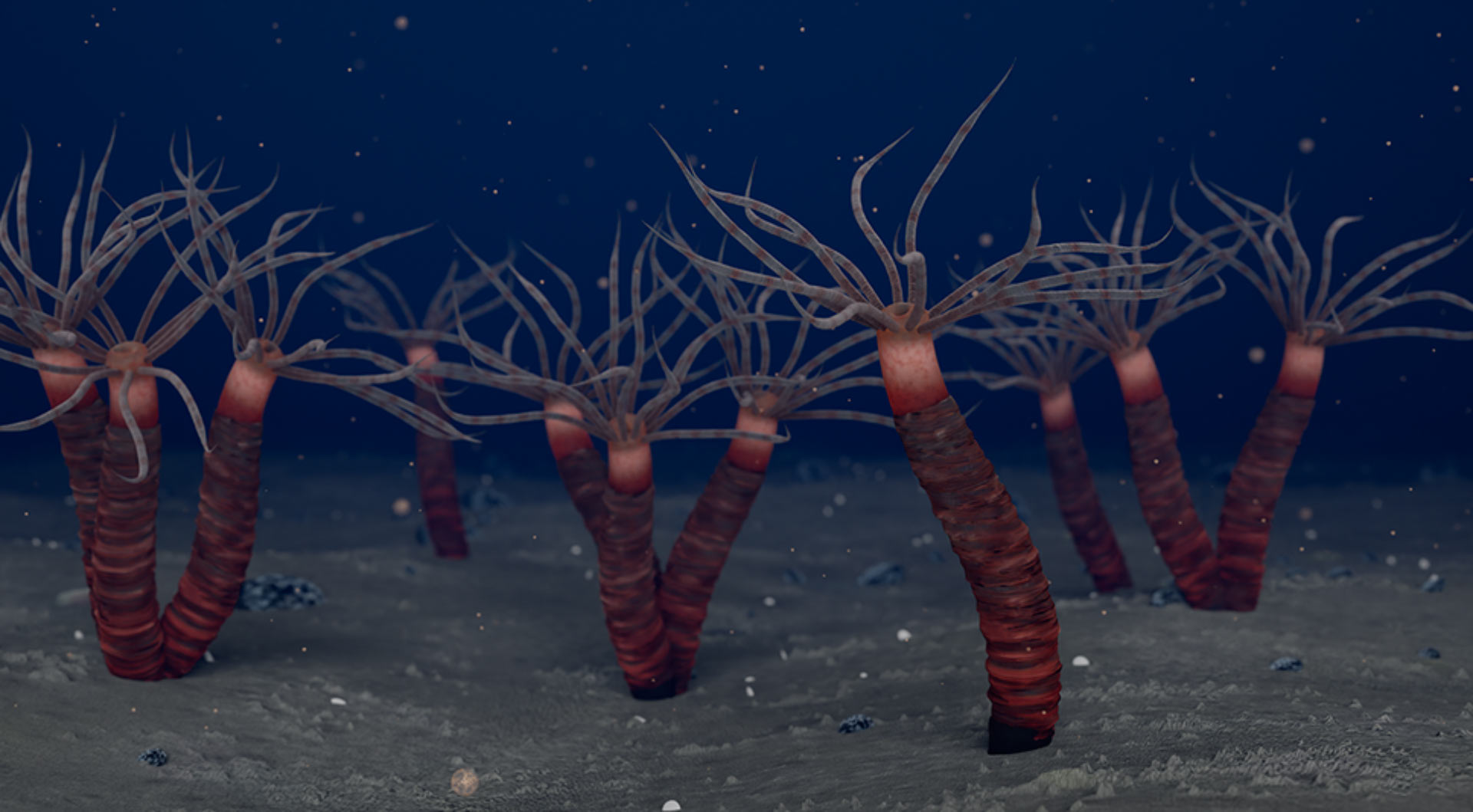
Depiction of Paleocanna tentaculum. Individuals are found living in a single tube or in clusters of two or three interconnected tubes. Image credit: Ramirez-Guerrero et al., doi: 10.1017/jpa.2025.10211.
“Jellyfish and their related polyps belong to an ancient group known as cnidarians,” stated Professor Christopher Cameron from the University of Montreal and his research team.
“Due to their soft bodies, these organisms are rarely preserved as fossils, creating gaps in our understanding of their evolutionary history.”
The recently identified species thrived in the Ordovician seas around 450 million years ago.
Paleocanna tentaculum represents ancient life forms that existed either solitarily or in groups within upright tubes.
The polyp features an elongated structure with a crown of tentacles extending past the tube’s edge.
“This species is closely related to modern jellyfish,” paleontologists noted, emphasizing the rarity of this find.
“Only a handful of other species from this subphylum have been documented in the fossil record.”
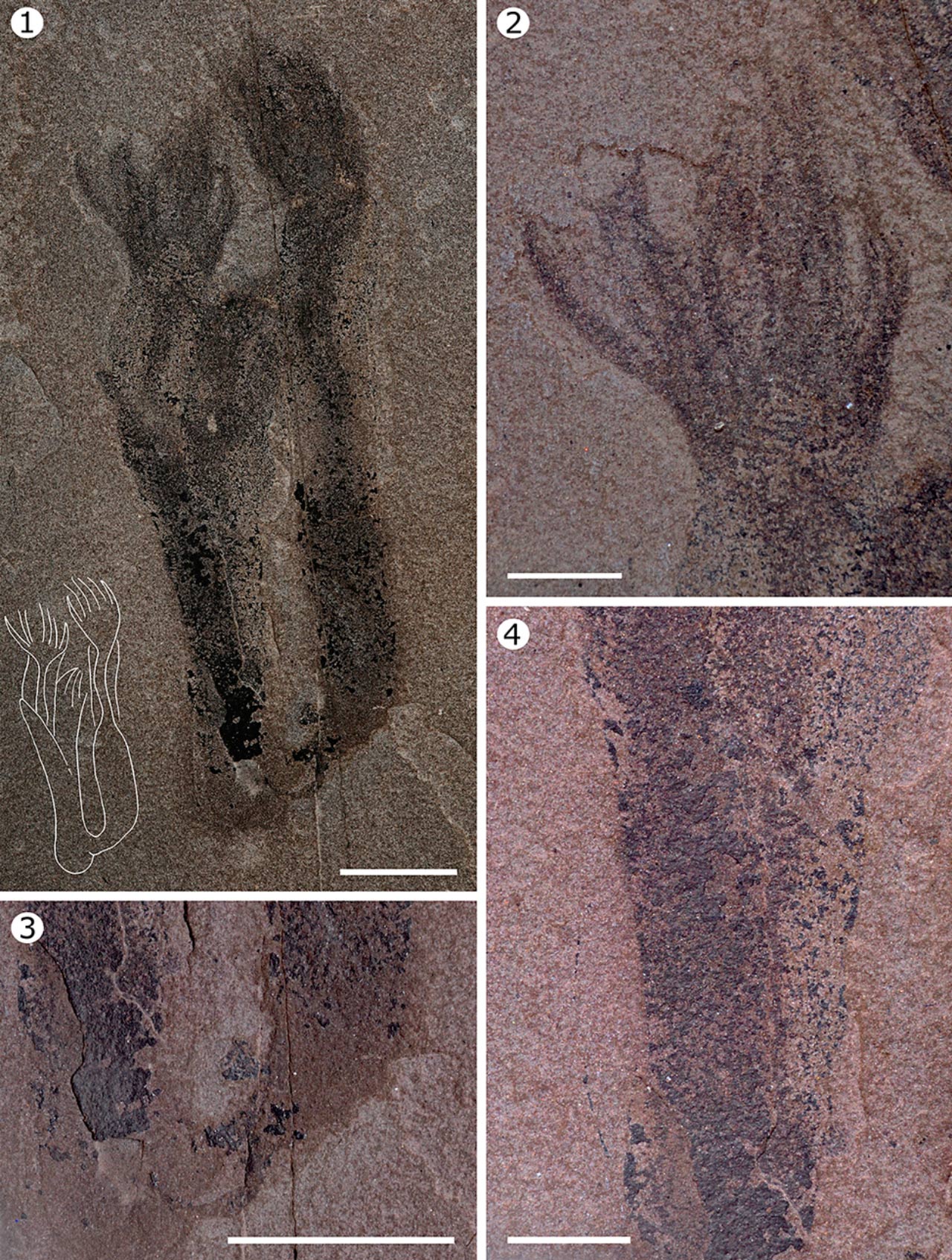 Paleocanna tentaculum. Image credit: Ramirez-Guerrero et al., doi: 10.1017/jpa.2025.10211.
The fossil remains are found on the upper surface of a shallow limestone layer, discovered in a small quarry within the Neuville Formation in Quebec, Canada.
“This area is regarded as one of the most diverse fossil locations globally for Ordovician specimens,” Professor Cameron remarked.
The team analyzed 15 slabs of sandy limestone that contained approximately 135 specimens of Paleocanna tentaculum.
“Soft-bodied organisms are less likely to be preserved compared to their hard-bodied counterparts, making these fossils particularly valuable for understanding life’s history,” noted Louis-Philippe Bateman, a graduate student at McGill University.
“This discovery underscores the significance of Quebec’s fossil records.”
“Often, the fossil record is perceived as less appealing compared to regions like British Columbia or Alberta.”
“Findings like this highlight the potential for new discoveries and insights here.”
By comparing Paleocanna tentaculum, scientists have revealed that it is more closely related to present-day jellyfish species, including box jellyfish, true jellyfish, and stalk jellyfish, than to other extinct tubular genera.
This indicates that Paleocanna tentaculum occupies a more modern position on the evolutionary tree than many other known fossil polyps.
“The extraordinary preservation of these fossils marks this discovery as one of the rare instances of delicate, soft-bodied organisms found in Ordovician sediments,” the authors concluded.
For more details, refer to their paper published in the Paleontology Journal on February 13, 2026.
_____
Greta Ramirez-Guerrero et al. Upper Ordovician Tecate stem mesozoan polyp of Quebec. Paleontology Journal published online on February 13, 2026. doi: 10.1017/jpa.2025.10211
Source: www.sci.news