


It all began with disagreements on how to address Kimi, a free and open-source AI model launched last week by the Chinese AI company Moonshot. This model’s capabilities are comparable to those of proprietary models from OpenAI and Anthropic, which require costly subscriptions.
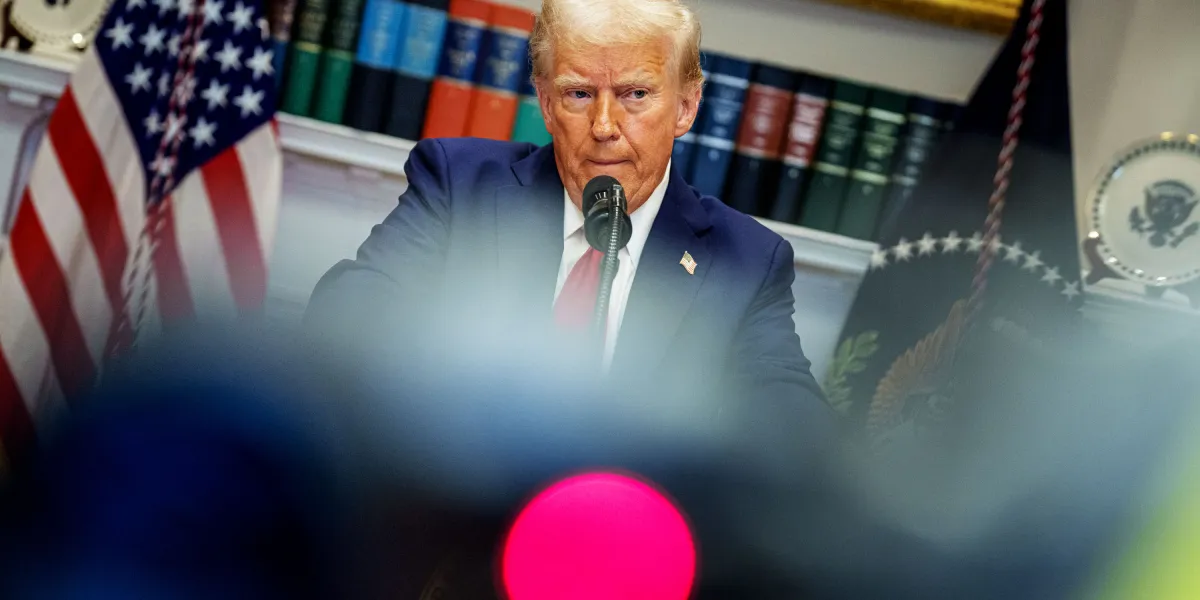
Kimi and similar Chinese AI models present significant challenges for Trump. These developments have created divisions among his top AI strategists, splitting them into various factions. Each time a new, advanced free model from China, like Kimi, is introduced, American companies find less incentive to invest in models from Anthropic and OpenAI. As interest in these and other AI businesses fuels a considerable portion of economic growth, China’s AI models introduce both economic and political dilemmas for the administration. Anton Leicht, a fellow at the Carnegie Endowment, noted that these new models present “a threat to an administration that doesn’t want any more negative economic news.” I wrote that tensions in X have already made US stocks shaky.
What steps should Trump take? It’s essential to note that this situation arises just one week after New York State implemented the first state-level ban on new data centers. There is a growing skepticism among Americans regarding AI companies. A significant portion may lack sympathy for OpenAI and Anthropic as they fend off cost-effective competition, suggesting it isn’t the government’s responsibility to shield these corporations.
On this matter, there’s a slight (albeit minimal) alignment with David Sachs. He criticized major AI corporations for wanting governments to eliminate open-source competition. Sachs argued that Chinese AI models are gaining popularity due to fewer usage restrictions (aside from existing state censorship).
However, Sachs is no longer in a position to influence Trump. His advocacy for a more open AI landscape has been overshadowed within the administration by a prevailing belief that government intervention is essential. The rationale behind this perspective is that AI models have become powerful enough to threaten national security, necessitating government oversight over their usage.
This approach is now central to the new White House review process, designed to assess the security of AI models prior to their release. Dean Ball, a former Trump AI advisor currently associated with OpenAI, criticized this process over the weekend, labeling it a “de facto licensing system for frontier AI.” Ball anticipates that Trump might tackle the challenge posed by China’s open-source models through some form of soft power, potentially scaring American firms away from using models like Kimi. This comment incited a reaction from Michael, who, alongside Secretary of Defense Pete Hegseth, has been the primary liaison between the agency and AI companies. Michael called Ball the AI industry’s “biggest idiot in the village,” expressing anger at the notion that the government would quietly bolster powerful companies instead of engaging in a “democratic process rather than a deep state agenda,” as he put it.
Notably absent from the discussion is how models like Kimi achieved such advanced capabilities in the first place. For a considerable period, preventing China from acquiring top-tier chips was a priority for much of the Biden administration and even during the initial days of Trump’s second term. Recently, export restrictions have softened following Trump’s controversial decision to allow Nvidia to sell more chips to China in exchange for tax breaks from the U.S. government, which later raised concerns regarding potential smuggling of technology. Nevertheless, China still faces limitations in computing power, leaving uncertainty about the types of chips used by the company behind Kimi to train its models.
The training likely involved distillation, a technique where a new AI model is trained based on the outputs of an existing model. OpenAI and Anthropic have long criticized Chinese AI firms for engaging in distillation and have sought government intervention to curtail these practices. They were aware of efforts initiated when the Trump administration announced multiple initiatives aimed at regulating this issue.
Nonetheless, Kimi is available for free and rivals the capabilities of established models which the U.S. government previously deemed so formidable that it temporarily shut them down due to national security concerns. The ongoing discussions illustrate that many within Trump’s circle view this situation as a wake-up call. However, consensus on the underlying reasons remains elusive.
Source: www.technologyreview.com