


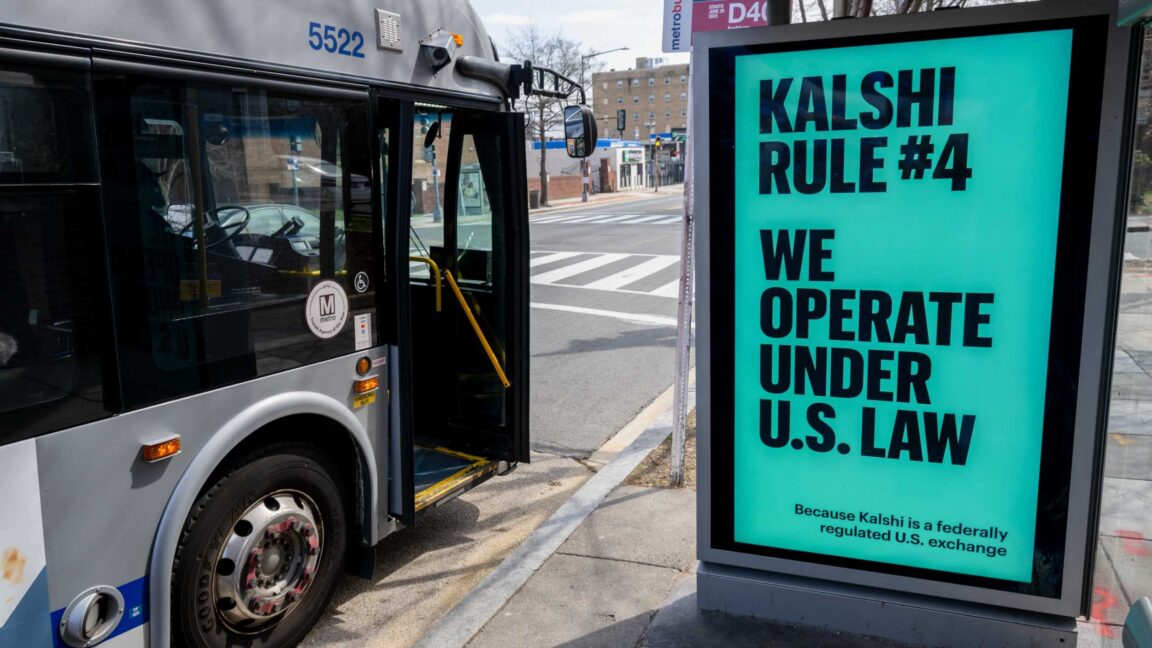
The Commodity Futures Trading Commission (CFTC) has argued that it holds exclusive jurisdiction over prediction markets, challenging state efforts to regulate or prohibit these platforms. Under the Commodity Exchange Act (CEA), the CFTC has exclusive authority over swaps. The law defines a swap as “any agreement, contract, or transaction that provides for any purchase, sale, payment, or delivery, subject to the occurrence, nonoccurrence, or degree of occurrence of an event or contingency that relates to potential financial, economic, or commercial consequences.”
Judge Susan Nelson wrote that the sports contracts offered by Kalshi constitute sports betting, regardless of whether the company labels them swaps. Quoting Shakespeare’s Romeo and Juliet—“That which we call a rose by any other name would smell as sweet”—Nelson wrote, “Even if called a rose by another name, placing bets on sports is still gambling.”
Although the broadest interpretation of the legal definition of a swap “could encompass the sporting event contracts at issue here and thereby preempt Nevada law,” the judges wrote that Kalshi’s proposed interpretation conflicts with the broader statutory framework and lacks a limiting principle. “Congress has addressed gambling issues in other statutes,” the ruling stated, and those laws were not repealed or amended by the Dodd-Frank Act, which expanded the CFTC’s authority over swaps.
Nelson’s decision was joined by Justice Bridget Bade, while Justice Kenneth Lee wrote a concurring opinion. “I agree,” Lee wrote, explaining that the majority’s position is that the more natural interpretation of the word “event” in the legal definition of a swap does not include the outcome of a sporting event.
“For example, few people would describe the New York Mets’ recent loss as an ‘event,’” Lee wrote. “Similarly, I do not believe that the outcome of a typical sports game is ‘related to potential financial, economic, or commercial consequences,’ as required by the definition of a swap. Returning to the Mets example, some fans may drink more beer to drown their sorrows, so the team’s loss could technically have a minor economic impact. But it seems fanciful to claim that the result of a single game in a 162-game season is ‘related to’ the financial, economic, or commercial consequences contemplated by a swap agreement.”
Source: arstechnica.com