


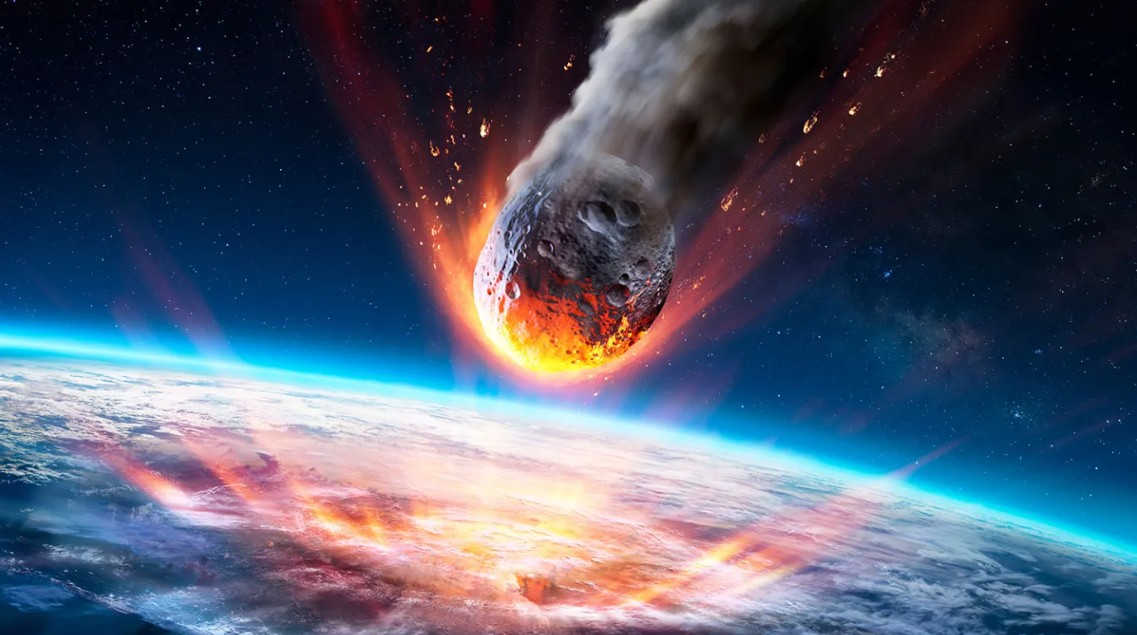
Asteroids are a natural part of our solar system. Millions of rocky objects orbit the Sun, and some of them – known as near-Earth asteroids – occasionally pass close to our planet. While Hollywood often portrays asteroid impacts as sudden and unstoppable disasters, scientists say the real risk is far more manageable and, importantly, largely preventable.
So what are the actual chances of an asteroid hitting Earth? Recent research offers clearer answers and some surprising perspective.
How Likely Is an Asteroid to Hit Earth?
If a large asteroid were to strike Earth, the effects would be noticeable worldwide. Depending on where it landed, it could splash harmlessly into the ocean or cause severe damage to a populated area.
“A medium or large asteroid impact would be something almost everyone on the planet would be aware of,” says Carrie Nugent, a planetary scientist at Olin College of Engineering in Massachusetts.
However, Nugent stresses that catastrophic impacts are extremely rare. While Earth has experienced devastating asteroid strikes in the distant past, including the one that contributed to the extinction of the dinosaurs 66 million years ago. Modern science shows there is no immediate cause for alarm.
New Research on Asteroid Impact Probability
Nugent and a team of six undergraduate students from Aalborg University in Denmark used computer simulations to study asteroid impact risk. Their work focused on asteroids similar to known near-Earth objects (NEOs).
Using NASA’s publicly accessible JPL Horizons system, the team simulated asteroid orbits to determine how often these objects might cross Earth’s path. This allowed researchers to estimate how frequently large asteroids could potentially collide with our planet.
Their findings, published on August 12 in The Planetary Science Journal, show that:
- Asteroids larger than 140 meters (460 feet) – roughly the length of a small cruise ship
- Strike Earth about once every 11,000 years
Putting Asteroid Risk Into Perspective
Large numbers like “once every 11,000 years” can be difficult to grasp. To make the risk easier to understand, Nugent compared asteroid impacts with other real-world events people are more familiar with.
Her analysis found that:
- A person is more likely to be alive during an asteroid impact than to be struck by lightning
- However, dying in a car accident is still far more likely than being harmed by an asteroid
Some events with similarly low probability but high risk, such as collapses of deep holes dug in dry sand cause fatalities despite being largely unknown to the public.
“It’s an extremely rare cause of death that most people don’t even know about,” Nugent explains, highlighting how human perception often misjudges risk.
Are Asteroid Impacts Preventable?
Contrary to popular movies and books, asteroid impacts are not unstoppable. In fact, scientists have already demonstrated that changing an asteroid’s path is possible.
In 2022, NASA’s DART mission successfully altered the orbit of a small asteroid that posed no threat to Earth. The test proved that, with enough warning, humanity could potentially deflect a dangerous asteroid and avoid a collision altogether.
“This is the one natural disaster we can totally prevent,” Nugent says.
Why Asteroid Tracking Matters
Ongoing research and sky-survey programs play a crucial role in planetary defense. By identifying and tracking near-Earth asteroids early, scientists gain the time needed to assess risks and, if necessary, take action.
Modern asteroid detection systems continue to improve, reducing uncertainty and increasing Earth’s preparedness against space threats.
The Bottom Line
While asteroid impacts capture the public imagination, scientific data shows they are rare, measurable, and preventable. Advances in tracking technology and successful missions like NASA’s DART test demonstrate that Earth is better protected than ever before.
Rather than fear, experts say asteroid research should inspire confidence and continued investment in planetary defense.