


Close Menu
HitechubHitechub
    What's Hot
    Science

    Unlocking Stonehenge: A New Breakthrough in Solving Its Greatest Mystery

    Science

    Timeless Math Memes That Have Captivated Mathematicians for Over a Century

    Technology

    How many cars there are on Earth right now?

    Important Pages:
    • About Us
    • Privacy Policy
    • Terms & Conditions
    Facebook X (Twitter) Instagram Pinterest
    Facebook X (Twitter) Instagram
    HitechubHitechub
    Sunday, June 14
    • Technology
      1. AI
      2. Gadgets
      3. View All

      This is the most popular CEO in the world

      Sectors in which “Chat-GPT” is most often used

      AI Pioneer Expresses Concern About Potential for AI to Surpass Humanity

      Artificial intelligence has begun to “swallow” professions

      What’s new in Android 14

      Europeans have about 700 million old mobile phones in their drawers

      Here’s how you can tell if your phone is being tapped

      “Sneaker X” – computer case in the shape of a sneaker

      Russian Gamers Unite to Prevent Nuclear War: Join the Fight Online

      Challenges of Space Travel: Why Journeying to Space is So Difficult

      NASA Astronaut Casts Historic Vote from Space

      Discover the Future of Comfort: What If You Could Wear a Chair?

    • Science
      1. Space
      2. Wheels
      3. View All

      Galaxies in the universe are growing more slowly than they should

      “Espace” presented the new lander “Apex 1.0”

      The largest asteroid sample ever collected has arrived on Earth

      (VIDEO) Incredible flight of the Parker Solar Probe

      Toyota wants to make a new generation battery with a range of up to 1,200 km

      Meet Toyota’s lunar “baby” that could make exploring the Moon easier

      Microlino – Is this the perfect city car?

      Alfa Romeo 4C gets an electric successor

      Reversing Aging: Experts Share New Findings That Changed Their Perspective

      Harvard Study Challenges the Five-Meal-A-Day Diet: Time to Rethink Your Eating Habits

      20-Year-Old Director Achieves Success with Sci-Fi Horror Film ‘Backrooms’

      Can Lab-Grown Sperm Help Infertile Men Conceive Their Own Children?

    HitechubHitechub
    Home » Coin tossing is not as perfectly fair as it is thought to be
    Science

    Coin tossing is not as perfectly fair as it is thought to be

    Share Facebook Twitter Pinterest WhatsApp
    coin toss
    Share
    Facebook Twitter LinkedIn Pinterest WhatsApp

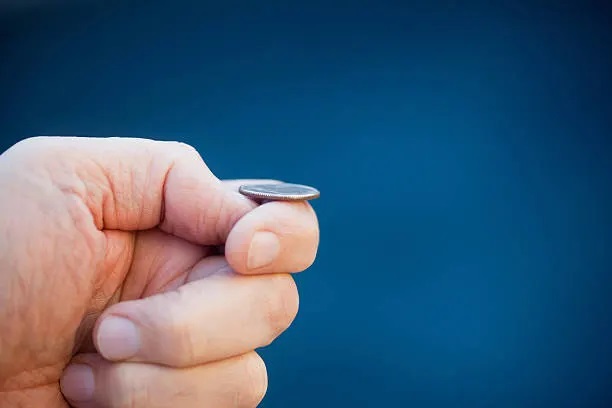
    After more than 350,000 systematic coin tosses and recording the results, the research showed that any coin will land on the same side it was tossed from “as much as” 50.8% of the time.

    As one of the completely random events, which we ourselves can cause every day, the coin toss has long stood out. The process was believed to be completely fair, unless it was a manipulated coin, i.e. it would produce any result, letters or heads, with a 50% probability. Therefore, coin toss is used to determine who gets the first move in many sports, and in the past, for example, whole football matches, which would normally end in a draw, were decided this way. But taking the fairness of coin tossing for granted, no one has bothered to systematically study the process and see if there are factors that could make it less fair, so that the coin “leans” towards one of the outcomes. Until now.

    The heads-tails is not entirely random

    A large team of scientists gathered around this idea and conducted interesting research. During the experiment, 48 people tossed coins minted in 46 different countries into the air, to avoid bias related to the design of the coins themselves, and recorded the results. In total, they recorded the results of 350,757 coin flips in this way, and in the obtained results they later received statistical confirmation: coin flips are not perfectly fair.

    Namely, during the experiment, the initial state was recorded, i.e. the side of the coin facing up before the toss, and then the state after the coin falls back into the palm. The analysis of such extensive and systematically collected data showed that coins, no matter what they are, will fall on the same side in 50.8% of cases.

    The reason for this lies in the physics and the way the coin is thrown, i.e. the precession in its movement during flight. This confirms the hypothesis from 2007, which says that due to such wobble in the air, any coin in flight spends a little more time on average oriented the way it was thrown – which leads to a more frequent end of flight on the same side. The prediction said that coins would drop this way 51% of the time, and the empirical data now almost completely confirms this.

    How to get a fair throw?

    Coin tossing, this experiment further shows, is perfectly fair when it comes to the final outcome: 50% of the time the coin will land on letters and 50% on heads. But the tendency towards one of the outcomes comes only when its initial state is taken into account, and then we see that the roll loses the perfect randomness of the results.

    So how do you ensure a completely fair outcome the next time you need to flip a coin? It is recommended to toss the coin several times or before tossing (and choosing the desired result) not to look at its initial position. Or you can use, for example, a digital coin, which you will “throw” by typing “coin toss”, “flip a coin” or “tossing a coin” into the Google search engine.

    Share. Facebook Twitter Pinterest LinkedIn WhatsApp
    Previous ArticleDriverless taxi in Japan
    Next Article Enjoy a spectacular flight over the “night maze” on Mars

    Related Posts

    Science

    Reversing Aging: Experts Share New Findings That Changed Their Perspective

    Science

    Harvard Study Challenges the Five-Meal-A-Day Diet: Time to Rethink Your Eating Habits

    Science

    20-Year-Old Director Achieves Success with Sci-Fi Horror Film ‘Backrooms’

    Science

    Can Lab-Grown Sperm Help Infertile Men Conceive Their Own Children?

    Science

    Ancient Anesthetic Unearthed in Chinese Doctor’s Grave: A Historical Breakthrough

    Science

    Space Storm Threatens Train Signals, Potentially Leading to Serious Accidents

    Science

    First Quantum Grandfather Clock: Exploring the Origins of Gravity

    Science

    Nasa’s Ambitious Lunar Base Project: A Massive Facility Covering Hundreds of Square Kilometers

    Add A Comment
    Leave A Reply Cancel Reply

    Stay In Touch
    • Facebook
    • Twitter
    • Instagram
    • Pinterest
    Top Picks
    Science

    NASA Unveils Astronauts for Artemis III Mission to Test Innovative Lunar Lander

    NASA has officially announced the four astronauts selected for the Artemis III mission, marking a…

    Uncovering the Truth: The Migration of Ancient Humans from Africa Explained

    Sherp vehicle – still the best truck in the world

    5 Fascinating Facts About Space

    What will the first “Xiaomi” on four wheels be called?

    Most Popular
    Science

    Unlocking Multitasking: How Science Reveals Your Brain’s Potential with Practice

    Science

    Silent Spring: How Rachel Carson’s 1962 Science Book Transformed the World

    Categories
    • AI (13)
    • Gadgets (10)
    • Science (228)
    • Space (9)
    • Technology (37)
    • Wheels (9)
    Our Picks
    Science

    Jupiter’s Electron Acceleration Near-Light Speed: Unveiling the Origins of Cosmic Rays

    Science

    Top 5 Expert-Approved Strategies for Managing Hair Loss, According to a Psychologist

    © 2026 Hitechub.
    • Home
    • About Us
    • Privacy Policy
    • Terms & Conditions

    Type above and press Enter to search. Press Esc to cancel.

    We are using cookies to give you the best experience on our website.

    You can find out more about which cookies we are using or switch them off in .

    Ad Blocker Enabled!
    Ad Blocker Enabled!
    Our website is made possible by displaying online advertisements to our visitors. Please support us by disabling your Ad Blocker.
    Go to mobile version
    Hitechub
    Powered by  GDPR Cookie Compliance
    Privacy Overview

    This website uses cookies so that we can provide you with the best user experience possible. Cookie information is stored in your browser and performs functions such as recognising you when you return to our website and helping our team to understand which sections of the website you find most interesting and useful.

    Strictly Necessary Cookies

    Strictly Necessary Cookie should be enabled at all times so that we can save your preferences for cookie settings.