


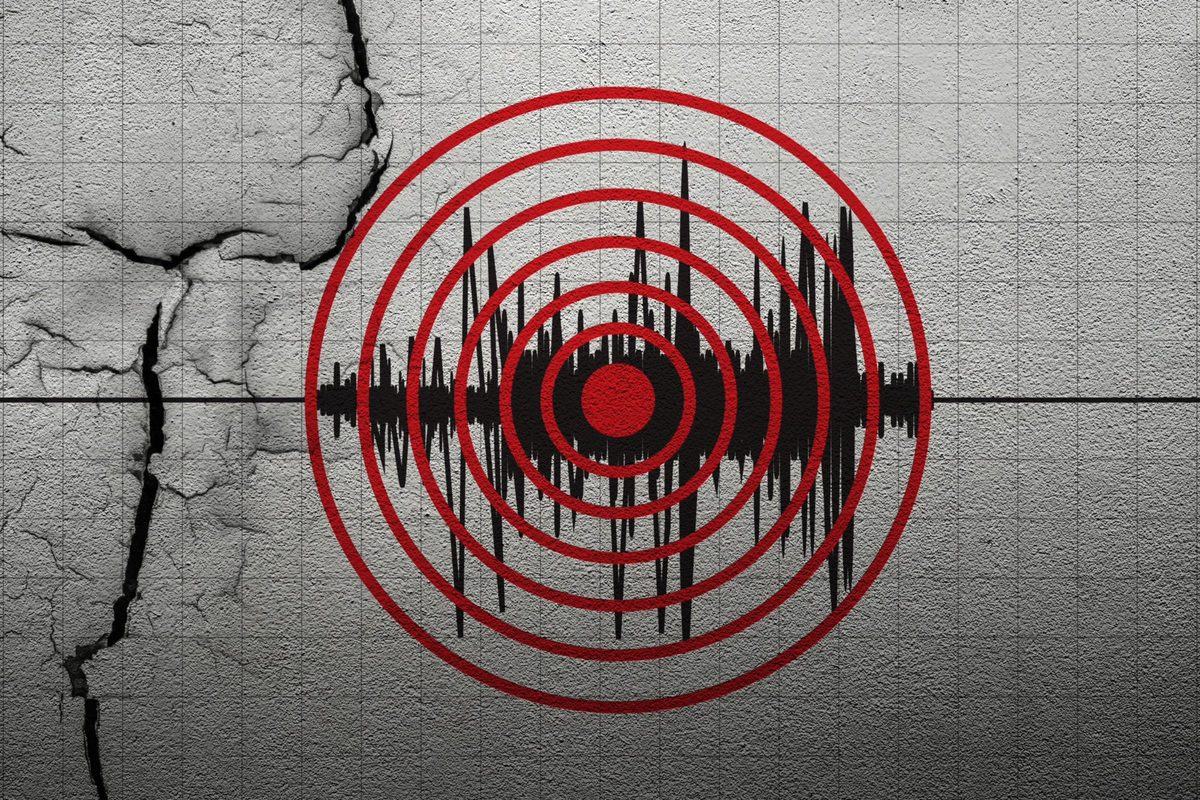
Developed by seismologist Dr. Charles Richter in 1935, the Richter Scale provides a standardized numerical representation to quantify the strength of an earthquake. Before its inception, earthquakes were subjectively labeled as “violent” or “strong,” complicating comparisons between seismic events globally.
The Richter scale measures the maximum amplitude of seismic waves recorded by seismometers—devices often depicted in disaster films. These seismometers feature pens tracing on rolls of paper, capturing the earthquake’s energy.
As a logarithmic scale, an increase from a magnitude 4 earthquake (which can knock books off shelves) to a magnitude 5 (which can damage poorly constructed buildings) results in the seismometer needle moving 10 times further and releasing about 32 times more energy.
However, the Richter Scale is based on a specific type of seismometer no longer in regular use, leading to inaccuracies in measuring large or distant earthquakes. Specifically, values exceeding magnitude 7 do not reflect the actual energy release proportionately, underestimating potential damage to structures and infrastructure.
In 1979, Professor Hiroo Kanamori and Dr. Thomas C. Hanks introduced the Moment Magnitude Scale, which effectively measures the strength of prolonged seismic vibrations, typically ranging from 30 seconds to several minutes. These lower frequency waves penetrate the Earth’s crust more efficiently and dissipate more evenly according to the earthquake’s magnitude.
This shift to the Moment Magnitude Scale has allowed seismologists to better estimate seismic energy from equipment positioned far from the earthquake’s epicenter. Since the early 2000s, all significant seismological organizations have adopted this scale. Interestingly, however, Richter Scale measurements are occasionally used for earthquakes below magnitude 1 since this scale provides unreliable data for very minor seismic events.
This article by Britt Gill from Peterborough addresses “What is the best way to measure earthquakes?”
If you have any questions, feel free to contact us: [email protected] or reach out via our social media: Facebook, Twitter, or Instagram (please include your name and location).
Explore our ultimate collection of fun facts for more amazing scientific insights!
Read more:
Source: www.sciencefocus.com