


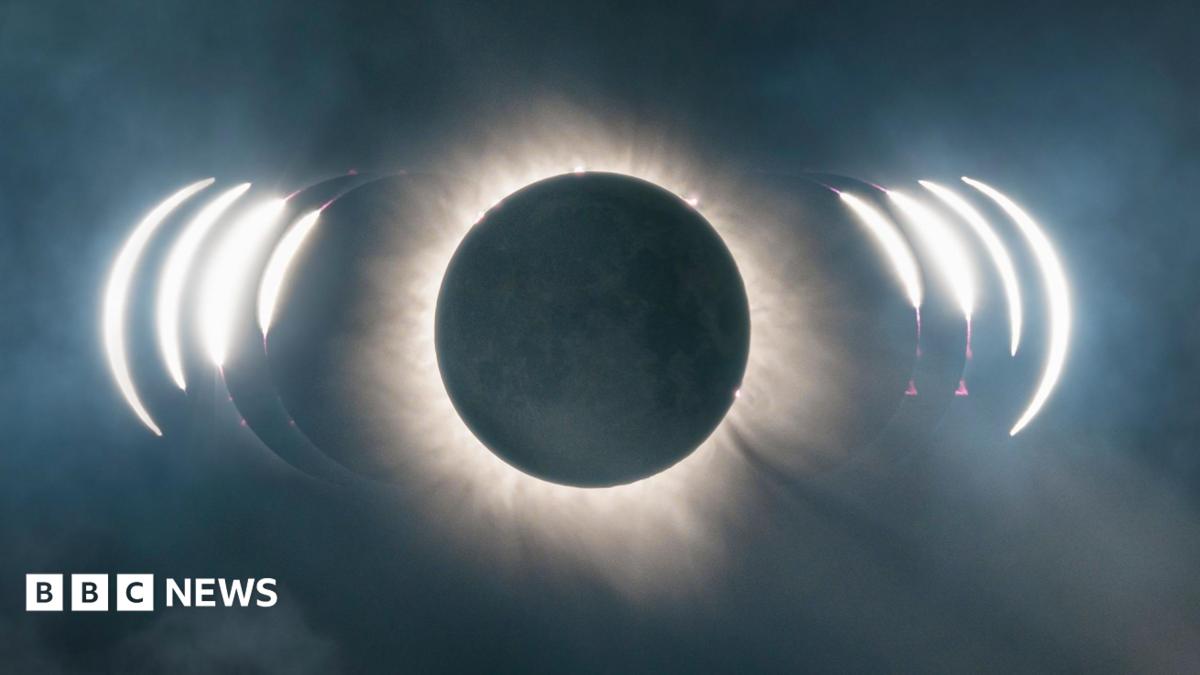
People viewing a solar eclipse have been urged not to look directly at the sun without certified eye protection, as doing so can cause serious and permanent damage to eyesight.
After the 1999 total solar eclipse, the Royal College of Ophthalmologists reported, external around 70 cases of people experiencing vision problems after watching the event.
The college said about 40% of those affected had looked at the eclipse for less than one minute.
The UK Health Security Agency (UKHSA) has issued a solar eclipse eye-safety warning. It said the sun may appear less bright during an eclipse, making it easier to look at directly and increasing the risk of retinal damage.
The UKHSA recommends using genuine, certified eclipse glasses or handheld solar viewers when watching the sun during an eclipse. Ordinary sunglasses do not provide sufficient protection.
Safer alternatives include using a pinhole viewer, watching the sun’s image projected through a colander or the gaps between tree leaves, or projecting the image onto a sheet of paper with a simple pinhole projector. Never look directly at the sun through binoculars, telescopes or cameras unless they have the correct solar filters.
Follow BBC Cornwall on X, external, Facebook, external and Instagram, external. Follow BBC Devon on X, external, Facebook, external and Instagram, external. Send your story ideas to [email protected], external. Follow BBC Guernsey on X, external and Facebook, external.
Source: www.bbc.co.uk