


Newly discovered Neoazhdarchian pterosaur footprints in South Korea unveil critical insights into the hunting behaviors of some of the largest flying reptiles.
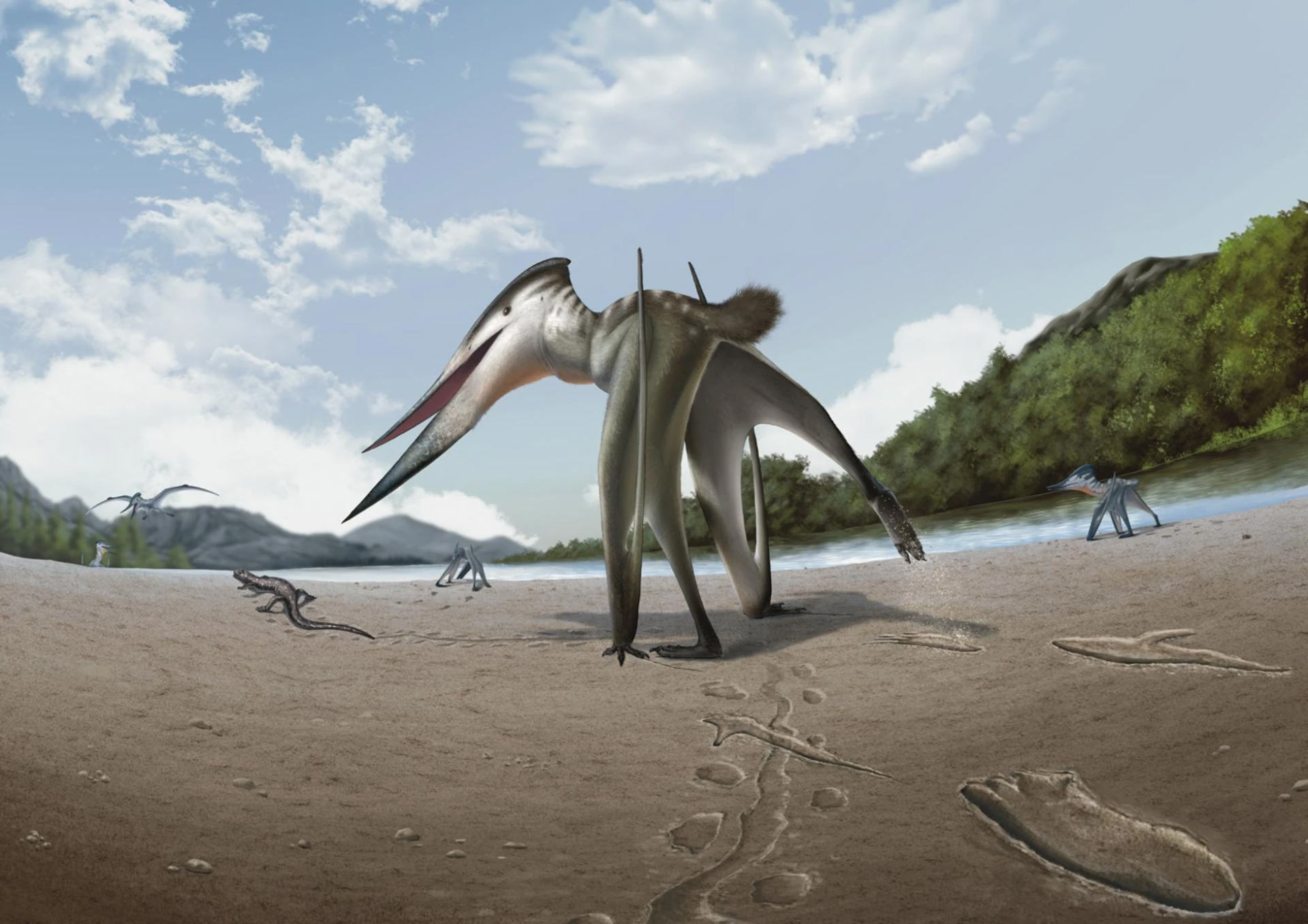
Life reconstruction of Jinjuichnus procerus and its tetrapod trackmaker, showcasing how Neoazhdarchian pterosaurs hunted small vertebrates. Image credit: Jun Soon-yi.
Pterosaurs, recognized as the first vertebrates to achieve powered flight, are often portrayed soaring over ancient oceans.
However, paleontologists have long posited that many pterosaur species spent considerable time on land, pursuing prey similarly to modern wading birds.
Despite this, concrete evidence supporting such behavior has remained scarce.
“Pterosaurs played vital roles in the Mesozoic ecosystem, flourishing from the late Triassic to the end of the Cretaceous,” stated Dr. Jeongyun Jeong from the University of Texas at Austin, along with collaborators from the Korea Dinosaur Research Center at Chonnam University.
“They occupied diverse ecological niches and showcased varied dietary adaptations.”
Specifically, Neo Azhdarchia species, including Thalaminoptera, Hemiptera, and Azhdarchidae, are thought to be primarily terrestrial carnivorous hunters based on their anatomical features and fossil evidence.
“These insights suggest some groups may have utilized hunting strategies akin to modern terrestrial stalkers such as storks and cranes.”
Nonetheless, the fossil record has not yet yielded direct evidence of pterosaurs preying on land.
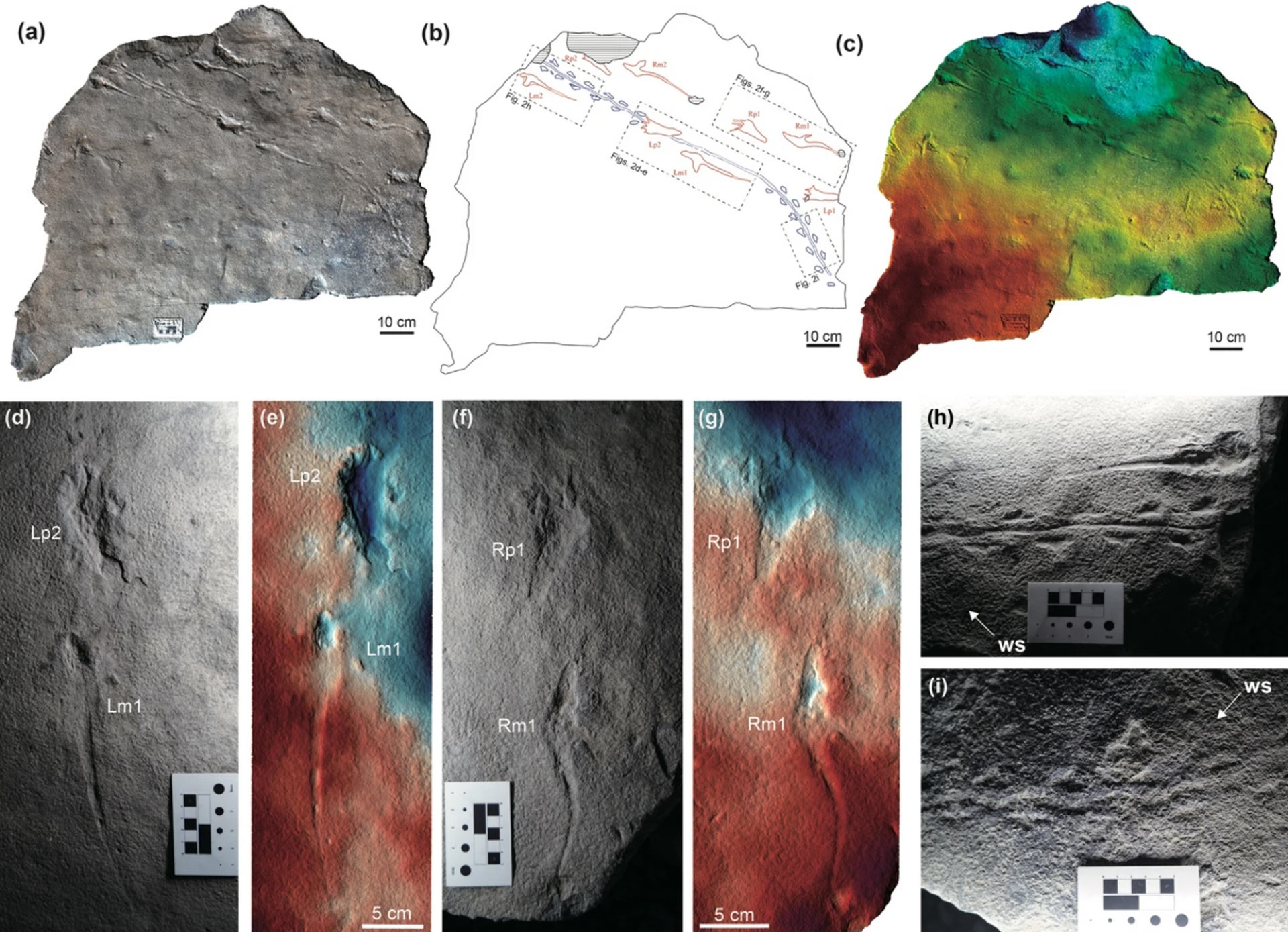
Jinjuichnus procerus footprints and associated small vertebrate tracks preserved on a single slab. Image credit: Chong et al., doi: 10.1038/s41598-026-48019-y.
The newly identified footprints, dating back 106 million years, are preserved in the Jinju Formation, potentially shedding light on this behavioral gap.
These large, asymmetrical tracks with elongated fingers are attributed to Neoazhdarchian pterosaurs, specifically Jinjuichnus procerus.
The footprints are situated in close proximity to other tracks likely made by small terrestrial animals, such as salamanders or lizards, suggesting possible prehistoric interactions.
The animal’s track indicates a sudden change in direction and a noticeable increase in stride length, hinting at a fast burst of movement.
Pterosaurs displayed impressive speed for their size, moving at approximately 0.8 meters per second.
This aligns with the theory that Neoazhdarchians were highly adapted as terrestrial predators.
However, the possibility of coincidental association between these tracks cannot be dismissed.
“This correlation presents significant ichthyological evidence of terrestrial vertebrate interactions with pterosaurs,” the paleontologists concluded.
“Yet, direct communication between the trackmakers remains difficult to ascertain, as alternative interpretations of these tracks exist.”
“Paired trackways offer valuable insights into factors to consider when evaluating potential interactions involving trackmakers.”
“While scenarios like predation remain uncertain, they highlight the complexities involved in interpreting behavioral associations preserved in ancient trackways.”
The research team’s study is published in the journal Scientific Reports.
_____
J. Jung et al. 2026. New large pterosaur footprints from Korea and implications for terrestrial behavior. Scientific Reports 16, 12363; doi: 10.1038/s41598-026-48019-y
Source: www.sci.news