


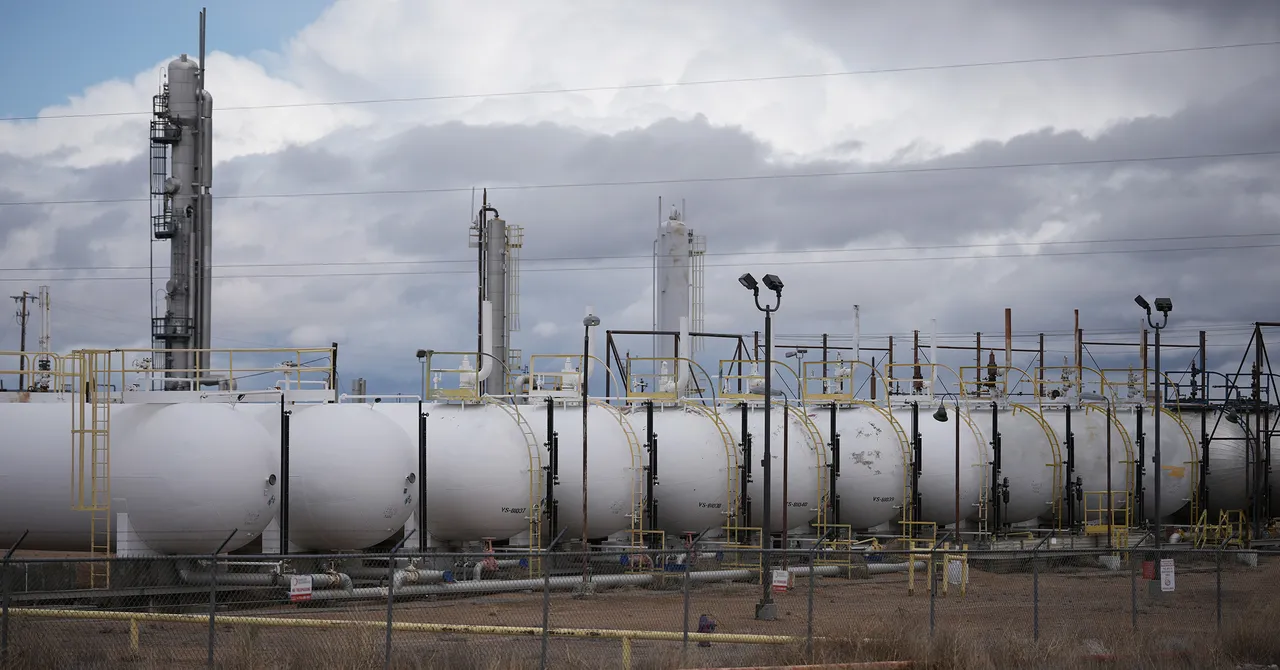
amount of natural gas-fired power generation being developed to support U.S. data centers has nearly doubled in less than a year, according to a new study released Tuesday. The findings highlight the technology industry’s growing reliance on private fossil fuel plants and the rapidly rising energy demand created by artificial intelligence.
Research firm Global Energy Monitor tracks natural gas power projects announced in the United States that are under development or construction for data center use. In January, the organization reported that 97 gigawatts of gas-fired power projects were in the pipeline as of the end of 2025, up from just 4 gigawatts in early 2024. In a research update released Tuesday, Global Energy Monitor said the pipeline had surged to more than 189 gigawatts by mid-2026. One gigawatt can generate enough electricity to power approximately 1 million homes.
“Increasing U.S. gas power generation is increasingly tied directly to data center expansion, and you can’t talk about one without the other,” said Jenny Martos, a research analyst at Global Energy Monitor who worked on the report.
Over the past two years, data center developers have increasingly turned to captive power facilities, also known as behind-the-meter power plants, to avoid lengthy grid-connection delays. The strategy could also help prevent utilities from passing major infrastructure costs on to ratepayers. The issue has become a flashpoint as opposition to data centers grows across the country. The Trump administration has urged technology companies to increase their efforts, including through voluntary pledges signed by Microsoft, Meta, Google, OpenAI and others, as well as several Republican governors and some of the nation’s largest power companies.
Building this much natural gas-fired generation could create significant climate costs, particularly because many proposed facilities would use inefficient turbines that produce higher emissions. As WIRED has reported, some of these gas plants could be permitted to emit more greenhouse gases each year than many small and medium-sized countries.
Global Energy Monitor also tracks energy projects worldwide, including in China, the world’s largest importer of natural gas. Much of that gas is used to manufacture products such as fertilizer and plastics.
China also has smaller-scale natural gas power plants, and the number of gas-fired facilities under development has grown rapidly in recent years. In the early 2020s, China surpassed the United States in new gas plant construction. However, the U.S. data center boom has now put the country ahead of China in the number of natural gas projects in the pipeline, according to Global Energy Monitor.
The shift underscores how China, which the Trump administration has repeatedly described as a U.S. rival in the artificial intelligence race, is reducing its reliance on natural gas to power data centers.
“Overall, China’s data center boom is centered around renewable energy, particularly solar and hydropower,” said Kyle Zhang, a research fellow at the Brookings Institution. Many data centers are being built in rural areas with excess renewable energy production. Zhang said China has seen some efforts to develop captive power for data centers, but they remain “small projects.”
Zhang added that China’s expansion of renewable energy across its power grid was a deliberate government strategy designed to strengthen the country’s energy independence.
He said building natural gas power plants for U.S. data centers “may make economic sense in the short term, especially if we want to power those data centers at high speeds and we don’t have access to the same kind of cheap renewable energy that might be available in China.” However, “in the long run you will pay a price for that, certainly not only in terms of emissions, but also in terms of not investing in your own clean energy sector.”
Martos noted that not every project tracked by Global Energy Monitor will ultimately be built. Many of the projects in the organization’s database have not yet entered construction. “There’s a lot of uncertainty: funding, local opposition, data, moratoriums, turbine constraints on equipment supply. There are a lot of factors,” she said.
Still, “if they’re all built, they’re going to lock up emissions for decades,” Martos said.
Source: www.wired.com