


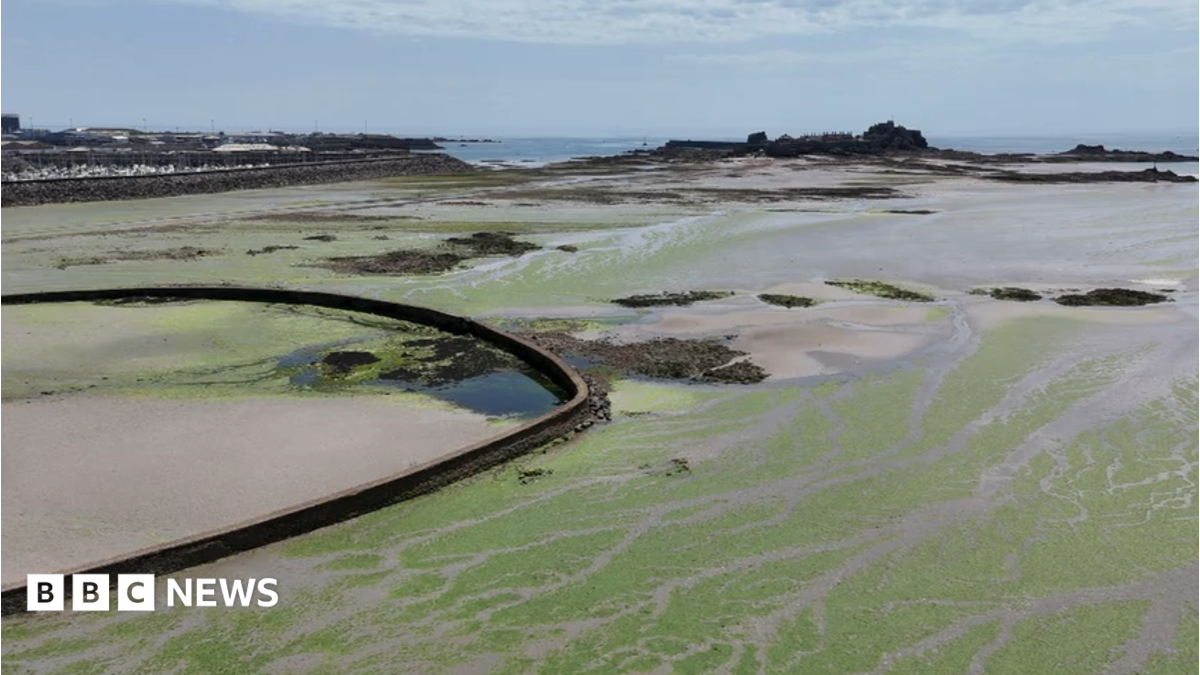
A spokesperson for Jersey’s Ministry of the Environment said sea lettuce, also known as Ulva, typically blooms in May.
“The unusually high temperatures recorded during this period may have disrupted its normal growth and reproduction,” they said.
Jersey recorded its hottest May day on record this year, with temperatures reaching 29.2 degrees Celsius (84.5 degrees Fahrenheit). Warm conditions continued throughout the summer.
The government said that, alongside warmer weather, efforts by the Action for Cleaner Water group and Jersey’s agricultural industry to reduce nitrate use could help limit sea lettuce growth.
Action for Cleaner Water is a joint initiative involving Jersey Water, the government, and representatives from Jersey’s agricultural and dairy industries. The group aims to improve water quality across the island.
The government previously identified, external several factors that contribute to sea lettuce growth, including nutrient sources from outside the bay, river runoff containing fertilisers, and treated wastewater from water treatment plants.
In recent years, sea lettuce has been removed from St Aubin’s Bay and used as a natural fertiliser on fields across the island.
In 2025, almost 3,000 square metres (32,300 square feet) of sea lettuce were harvested from the beach for agricultural use.
Follow BBC Jersey on X, external and Facebook, external. Send your story ideas to [email protected], external.
Source: www.bbc.co.uk