


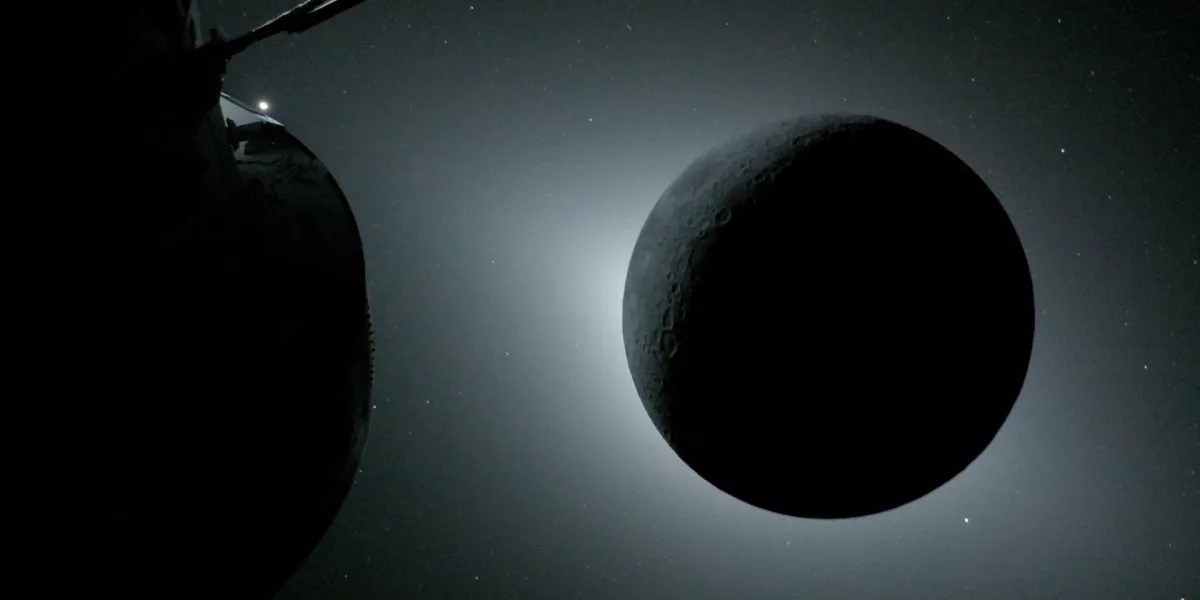
NASA’s Artemis II mission demonstrated a major advancement in space communications, transmitting high-definition video and scientific data from the Moon at speeds comparable to a home internet connection. Unlike the radio-frequency systems used during the first U.S. Moon missions in the 1960s and 1970s, the Orion spacecraft used infrared laser communications to send clear, high-quality images and video back to Earth.
The livestream from the Artemis II Orion mission was made possible by the Orion Artemis II Optical Communications system, known as O2O. Developed by MIT Lincoln Laboratory in partnership with NASA’s Goddard Space Flight Center, the system transmitted nearly half a terabyte of data at speeds of up to 260 megabits per second. Infrared laser communications can deliver 10 to 100 times more data per second than traditional radio waves.
The high-bandwidth connection delivered unprecedented views of space, including previously unseen basins and craters on the Moon’s far side, Earth setting behind the Moon, an almost hour-long total solar eclipse, and flashes produced by small meteorites striking the lunar surface.
“Our goal was to demonstrate the operational utility of O2O in human spaceflight and extend the high-bandwidth connectivity enjoyed by Internet users on Earth to astronauts in deep space,” said Farzana Khatri ’90, SM ’92, PhD ’96, senior staff member and principal systems engineer in Lincoln Laboratory’s Optical Quantum Communications Group.
“Being part of this historic mission and contributing to O2O was a tremendous career opportunity. It could not have been better,” she said.
Source: www.technologyreview.com