


Photoreceptor degeneration is a major cause of blindness, contributing to eye diseases such as age-related macular degeneration (AMD) and retinitis pigmentosa (RP). Together, these conditions affect approximately 200 million people worldwide and are among the leading causes of visual impairment. Vision loss can significantly reduce independence and quality of life while creating a global economic burden estimated at more than US$400 billion each year through healthcare costs and lost productivity.
Photoreceptors are specialized retinal cells that detect light and initiate the visual signals sent to the brain. In AMD, RP, and other degenerative retinal diseases, these cells gradually deteriorate and die. However, many of the deeper neural circuits in the retina remain structurally intact and potentially functional. Without photoreceptors, though, these surviving cells no longer receive the light signals required to process visual information.
Scientists are investigating the remaining retinal circuitry as a way to restore light sensitivity and visual function. Current strategies include gene therapy, which is suitable for only a limited number of patients with specific genetic mutations, and electronic retinal prostheses, which are invasive, costly, and require extensive training. Optogenetics and light-responsive drugs are also being evaluated in clinical research. Although light-activated drugs have shown encouraging safety results, restoring useful vision under everyday lighting conditions remains a significant challenge.
Photoactivated drugs offer a new approach to vision restoration
A research consortium led by the Institute of Biotechnology of Catalonia (IBEC) has developed a new class of photoswitchable small-molecule drugs designed to restore visual function in animal models of blindness. The findings were published in the Journal of the American Chemical Society (JACS).
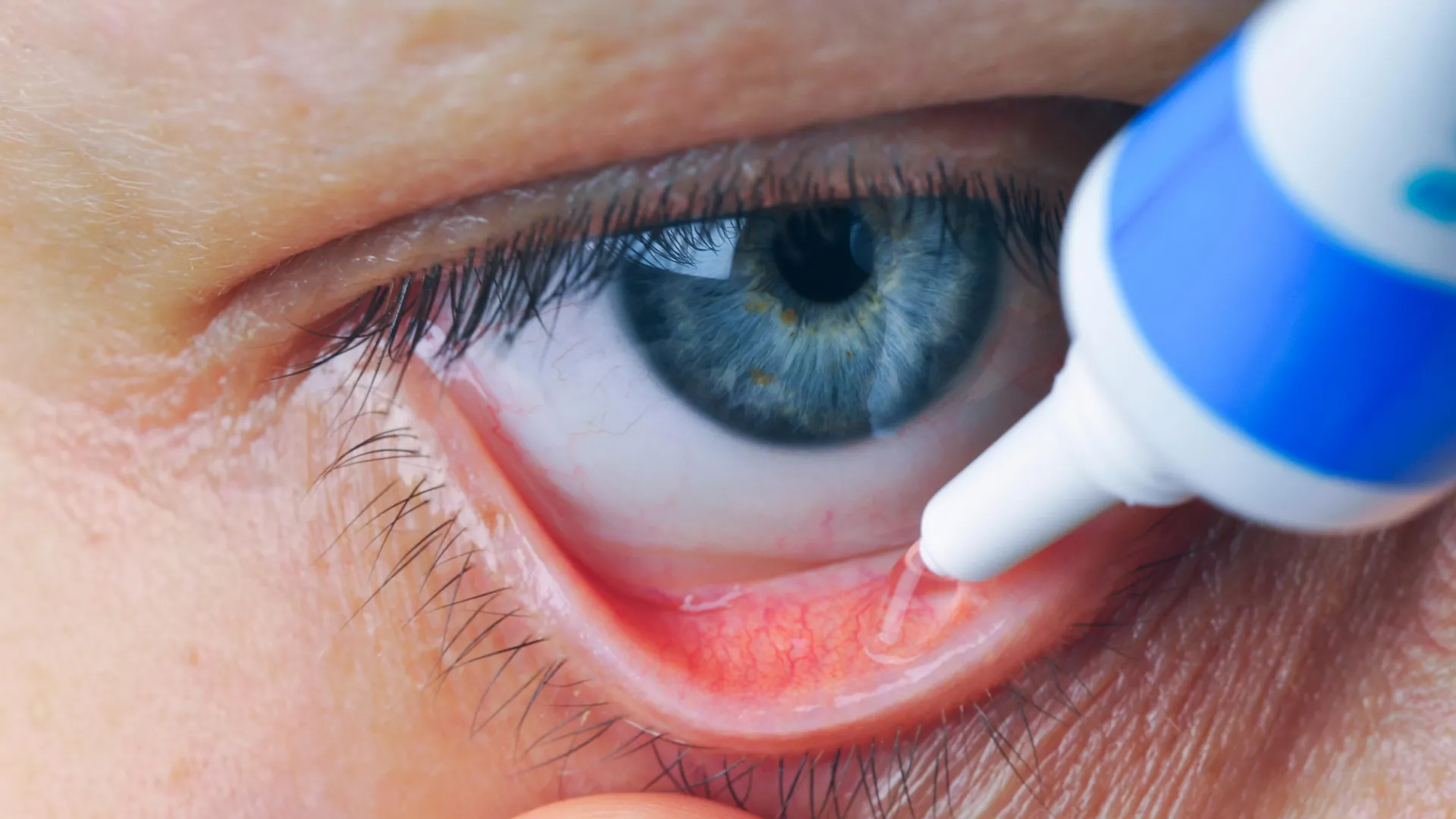
These compounds are designed to perform some of the functions normally carried out by photoreceptors. Like other ophthalmic medicines, they could potentially be administered through an injection into the eye or as eye drops. Both approaches avoid the need for genetic modification or an implanted device. The compounds have also demonstrated a promising safety profile, making them potential candidates for future treatments for retinal degeneration.
“These molecules cannot cure blindness because they do not address the underlying cause of photoreceptor degeneration. However, they are surprisingly effective at restoring vision and do so through a simple, potentially patient-friendly approach,” explains Pau Gorostiza, IBEC’s ICREA Research Professor, leader of the Nanoprobes and Nanoswitches Group, member of CIBER-BBN, and co-leader of the study.
“Our goal was to restore vision through a molecular mechanism that is as close as possible to the function of a healthy retina,” says Rosalba Sortino, a former doctoral student at the University of Barcelona and now a postdoctoral researcher in Gorostiza’s group at IBEC. She is also a co-lead author of the study. “Rather than bypassing retinal processing, we aimed to reactivate it at the same level of the retinal circuit as the photoreceptors that had been lost.”
The findings are the result of more than 10 years of research. The project included a team led by Pedro de la Villa from the University of Alcalá (UAH), along with researchers from the Institute of Advanced Chemistry of Catalonia (IQAC-CSIC), the University of Barcelona (UB), the Ramón y Cajal Institute for Health Research (IRYCIS), the Autonomous University of Barcelona (UAB), and the Eduardo Soler Foundation.
Photoswitchable drugs restore visual function in animal models
The technology is based on photopharmacology, an approach that uses light to reversibly control the activity of a drug. Researchers incorporate light-sensitive molecular switches into a drug’s chemical structure. When exposed to light, these switches change shape and alter the drug’s activity.
Using this strategy, the team developed a family of compounds called prosthe6. These molecules target ON bipolar cells, retinal neurons that normally receive signals from photoreceptors. In blind zebrafish larvae, prosthe6 restored saccadic eye movements, also known as optomotor responses, which are commonly used to assess visual function.
The researchers also found that the treatment restored innate light-avoidance behavior in mouse models of age-related macular degeneration and retinitis pigmentosa.
Healthy mice instinctively prefer dark environments and avoid brightly lit areas. This behavior depends on a functioning visual system. Because blind mice cannot distinguish between light and darkness, they lose this natural preference.
After receiving prosthe6, the blind mice once again spontaneously preferred dark areas. This response indicated that they could detect light and use visual information to guide their behavior without training.
The effect occurred at light levels similar to those found indoors or outdoors on cloudy days. This suggests that prosthe6 may be capable of restoring functional light perception and natural visually guided behavior under everyday illumination.
Two compounds, prosthe6-12 and prosthe6-15, produced particularly promising results. Visual behavior was restored both after injection into the eye and after topical administration as eye drops.
A molecular prosthesis for lost photoreceptor function
Prosthe6 works by targeting ON bipolar cells, retinal neurons that normally receive information from light-sensing photoreceptors.
“In healthy vision, ON bipolar cells play a critical role in transmitting information about the presence of light to the rest of the visual circuit. In degenerative eye diseases, photoreceptors are lost, but much of this essential circuit remains intact and inactive. This creates a significant therapeutic opportunity,” explains de la Villa, co-leader of the study.
The compound targets mGlu6, a protein located within this surviving retinal circuit. By activating this pathway, prosthe6 can substitute for some of the functions normally provided by photoreceptors.
When light enters the eye, the molecules change shape. This structural change triggers signal transmission through the retina in a process that resembles normal visual signaling. The researchers describe prosthe6 as a “molecular prosthesis” because it enables the retina to respond to light again without genetic modification or implanted hardware.
Another important advantage is that the compounds function under ordinary lighting conditions. Unlike some optogenetic technologies, they do not require light-amplification equipment or specialized delivery devices. The molecules are small, water-soluble, and responsive to common visible and white light, including typical indoor lighting and sunlight.
Moving toward potential human treatment
The discovery follows the publication of the first clinical trial of a photopharmacological drug designed to restore vision, although that treatment targeted a different protein. This milestone suggests that photopharmacology is beginning to move from laboratory research toward potential clinical applications.
The prosthe6 technology is protected by patents. Researchers are now studying its safety, formulation, and ability to extend the duration of restored visual function.
The team is also collaborating with Eyelumina, a spin-off company established to attract investment for translational development and future clinical trials.
“Turning this discovery into a treatment will be a long and demanding process,” Gorostiza says. “However, our results demonstrate a genuine possibility that this drug could restore high-quality vision for many patients through a non-invasive and reversible approach that does not depend on a specific retinal disease or genetic mutation.”
If the approach proves successful in human studies, it could offer a widely accessible and affordable alternative to existing vision-restoration technologies. This could be especially valuable for people with progressive retinal degeneration, for whom effective treatment options remain limited.
This project received initial funding from the Patient Foundation Fundaluce (2016), CaixaHealth (Drug4sight, 100010434), the Government of Catalonia through the Innovadors, Producte, and Peris programs, and CIBER-BBN through its Evaluation Program.
The study also formed part of Rosalba Sortino’s doctoral thesis. The University of Barcelona awarded her a special doctoral prize for the 2023–24 academic year in recognition of the paper, which she presented at the Faculty of Pharmacy and the Faculty of Food Sciences.
Source: www.sciencedaily.com