


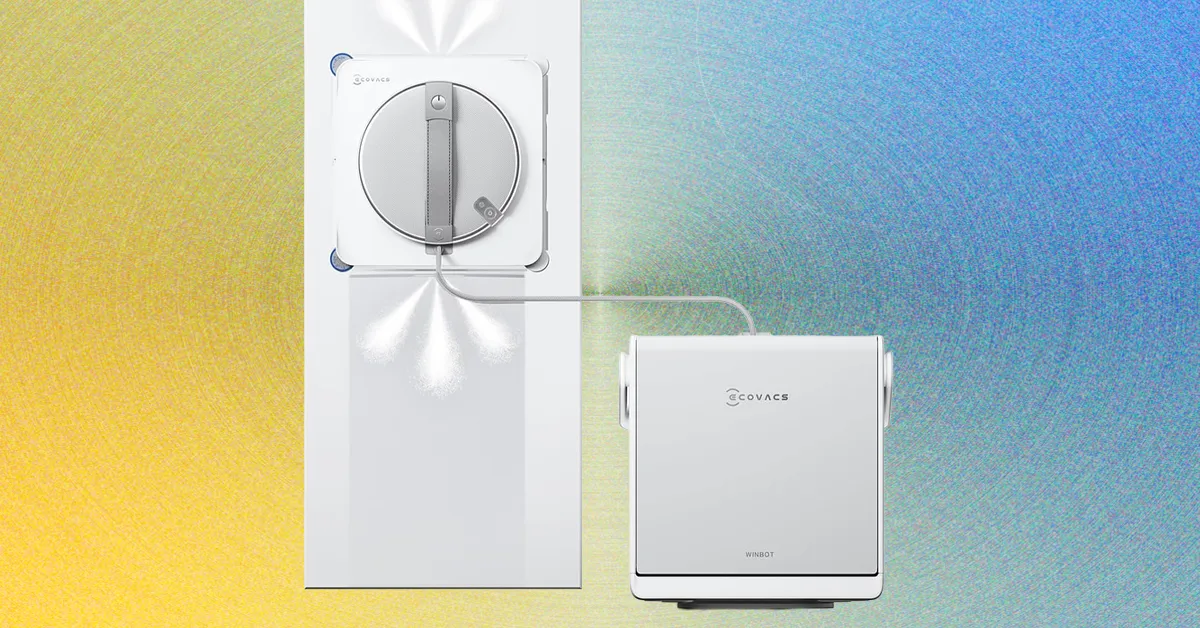
Window cleaning robots are not designed for traditional windows. Textured glass can prevent the robot from maintaining suction, while window handles, fixtures, and other hardware can interfere with movement. I also found that some astragals—the strips between or around window panels—are not thick or rigid enough to support safe operation. These robots should only be used on smooth glass with hard plastic or similarly durable finishes.
I decided to give the robot one final opportunity on a second-floor bay window. The window had replaced the original PVC unit before we moved in and featured thick astragals finished with hard plastic. Even so, using a window cleaning robot one floor above the ground made me extremely anxious. After approximately five minutes of loud mechanical noises and squealing glass, an alarm sounded. Red lights began flashing, and a firm voice announced, “It’s stuck. Check the app for a solution.” Unfortunately, the robot was stuck at the top of the window, where it was almost impossible to reach.
I panicked. If the robot had fallen, it could have struck the window below. The charging case is designed to act as a counterweight, while some competing window-cleaning robots include safety tethers that attach to nearby furniture. This model also has a button for retracting the cable and reducing slack, but that mechanism could be damaged if the robot were dropped. With the alarm blaring, I leaned out of the window and tried to reach the release button, but I could not get to it.
By then, several passersby had stopped to watch. I pulled on the safety cable, but the robot would not move. Eventually, I realized I could lower the upper windowpane as far as possible. Hanging out of the window while holding the strap and pressing the button to release the suction felt extremely dangerous. When the robot finally detached, my heart was pounding. I put it back in its charging case and decided it would stay there until it was time to return it.
Why Window Cleaning Robots May Not Be Worth It
Looking back on the experience, I cannot help but conclude that window cleaning robots are often more trouble than they are worth. My accident may have been partly caused by user error and bad luck, but the overall experience highlighted serious limitations with these automated window cleaners.
A window cleaning robot requires too much setup and supervision. I can now clean my windows faster, with less stress, and achieve better results by doing the job myself. By the time you attach the robot to the glass and configure it, you could probably clean the window manually. You must also monitor the device, remove it, and reposition it for every window. Even when the robot works reliably, you still need to check on it every five to ten minutes. It may not work with window handles, mounting hardware, textured glass, or certain astragals. Windows also need to be at least 12 by 16 inches—and realistically larger—to make the robot worthwhile. Dirt often remains in the corners, and stubborn marks such as bird droppings may not be removed at all.
Source: www.wired.com