


Nikon Microscopy Contest Winner Re-Evaluated After AI Allegations
A winning entry in Nikon’s prestigious Small World In Motion scientific photography contest is being re-evaluated after scientists questioned whether artificial intelligence was used to create parts of the video.
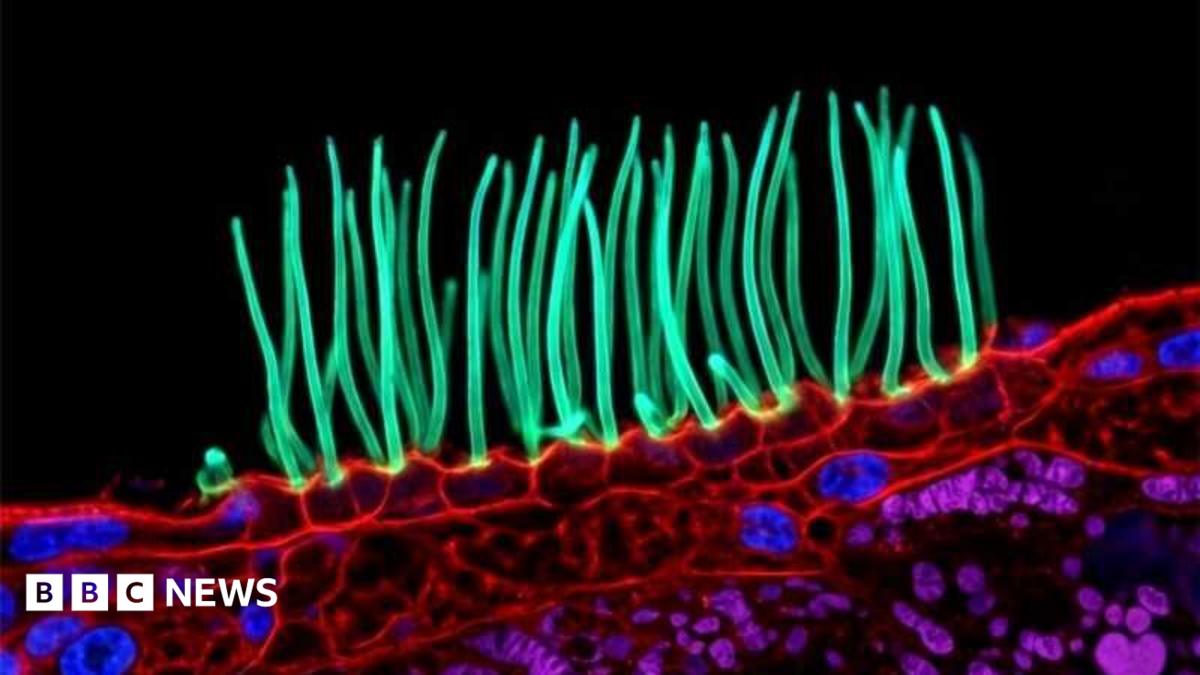
Video Shows Cilia in a Child’s Airways
Nikon’s annual Small World In Motion contest accepts photographs and videos captured using powerful microscopes. It has been held every year for the past 15 years.
The winning entry was a short video submitted by Dr Ning Xu, a researcher at China’s Tsinghua University. It claims to show tiny, hair-like structures called cilia moving in the airways of a child with a rare disease.
Dr Xu did not respond to the BBC’s request for comment, but he posted a statement online denying that he had broken any competition rules.
Reply to Nikon’s post on LinkedIn, external He did not object to using AI for image processing, but said its use remained within the contest’s rules.
“AI was not used to generate experimental films or cilia or their movements,” he said.
How AI Was Used in the Microscopy Video
The video was artificially coloured with bright colours, a common practice in microscopy that is allowed in competitions. This is usually done by hand, using stains or dyes on the sample itself.
Dr Xu acknowledged that AI was used “to distinguish and visualize features in reconstructed grayscale images.”
Scientists Question the Video’s Authenticity
Other scientists have objected, claiming that the video contains shapes and movements inconsistent with normal cell structure and behaviour. They said the cilia appear too large.
Edward Phelps, an associate professor at the University of Florida, commented on Nikon’s social media post that some structures “suddenly appear and disappear” and that cilia “appear out of nowhere.”
Ian Donovan, a doctoral student at UT Southwestern Medical Center, said the source image appeared to contain a distinctive watermark indicating it was generated by AI.
Two former contest judges also said they had concerns about whether the images were authentic.
Source: www.bbc.co.uk