


How Did the Romans Move Water Uphill? Aqueducts, Siphons and Pumps Explained
Roman aqueducts are among the most prominent surviving archaeological sites of ancient Rome. Most aqueducts used gravity to carry water gradually into cities, but some sections had to cross valleys or climb uphill. So how did Roman engineers move water upward?
Experts told Live Science that the Romans used several methods, including inverted siphons and water-lifting devices.
How Roman aqueducts used inverted siphons
One strategy was an inverted siphon, sometimes simply called a siphon. The system used water pressure to carry water down into a valley and then back up the other side.
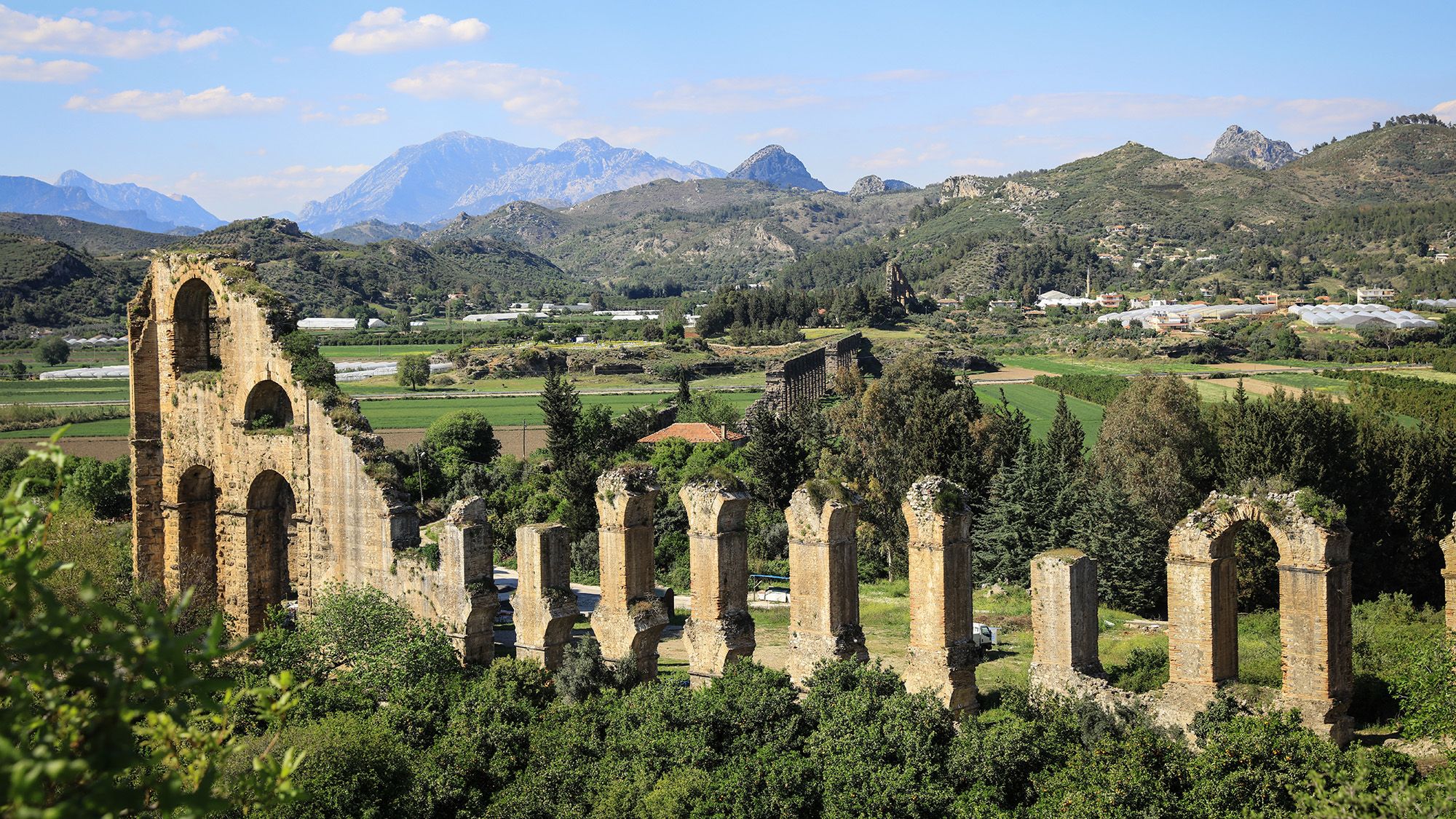
Aspendos in southern Türkiye is home to a Roman aqueduct dating to the second century A.D. Scholars reconstructed part of its design using virtual modeling simulations. According to research published in the Journal of Roman Archaeology, the system used a “header tank” at one end of the valley and a slightly lower receiving, or outlet, tank at the other.
The Romans built two towers in the ravine between the tanks. As water flowed down a steep slope, its pressure forced it up the first tower. It then descended toward the other side, where the remaining pressure allowed it to climb the second tower. The water eventually reached a cistern and continued toward the city of Aspendos.
Keeping air out of the system was essential. The header and receiving tanks were relatively large, allowing air bubbles to escape before they could form dangerous air pockets inside the siphon.
“Once the flow entered the relatively large chamber, its velocity decreased, allowing the air bubbles to naturally rise to the surface and escape through the open top of the structure,” Giovanni De Feo, a professor of industrial engineering at Italy’s University of Salerno, explained in an email. This reduced the risk of air pockets forming.
Why Roman engineers often built bridges instead
The Romans tried to avoid using inverted siphons when possible, according to Charles Ortloff, a research associate in the Department of Anthropology at the University of Chicago with a background in engineering and history.
“When Roman engineers encountered a valley, instead of building a siphon, [they preferred to] build a bridge with an upper channel to cross the valley,” Ortloff said in an email.
The Segovia Aqueduct in Spain is a well-known example of this approach. Its impressive bridge carried the water channel across the valley and still stands today.
Roman water-lifting devices
Inverted siphons helped Roman aqueducts move water uphill, but Roman engineers also used mechanical devices to lift water from lower points to higher ones.
The Archimedes screw
One of the best-known devices was the Archimedes screw. It was sometimes used to lift water from rivers to fields. The device is traditionally associated with the Greek inventor Archimedes, who lived in the third century B.C., although it may have been invented much earlier, according to historians Stephanie Daly and John Peter Olson in a 2003 paper.
When turned by animal power, the screw could lift water from low points in a river to higher ground, Ortloff said.
According to the Kotsanas Ancient Greek Technical Museum, an Archimedes screw consisted of a wooden shaft surrounded by thin, flexible branches of willow or wicker arranged to create an endless screw. The screw was placed inside a wooden pipe at an angle of about 30 degrees. Turning it lifted the water upward.
Water wheels and Ctesibius’ pump
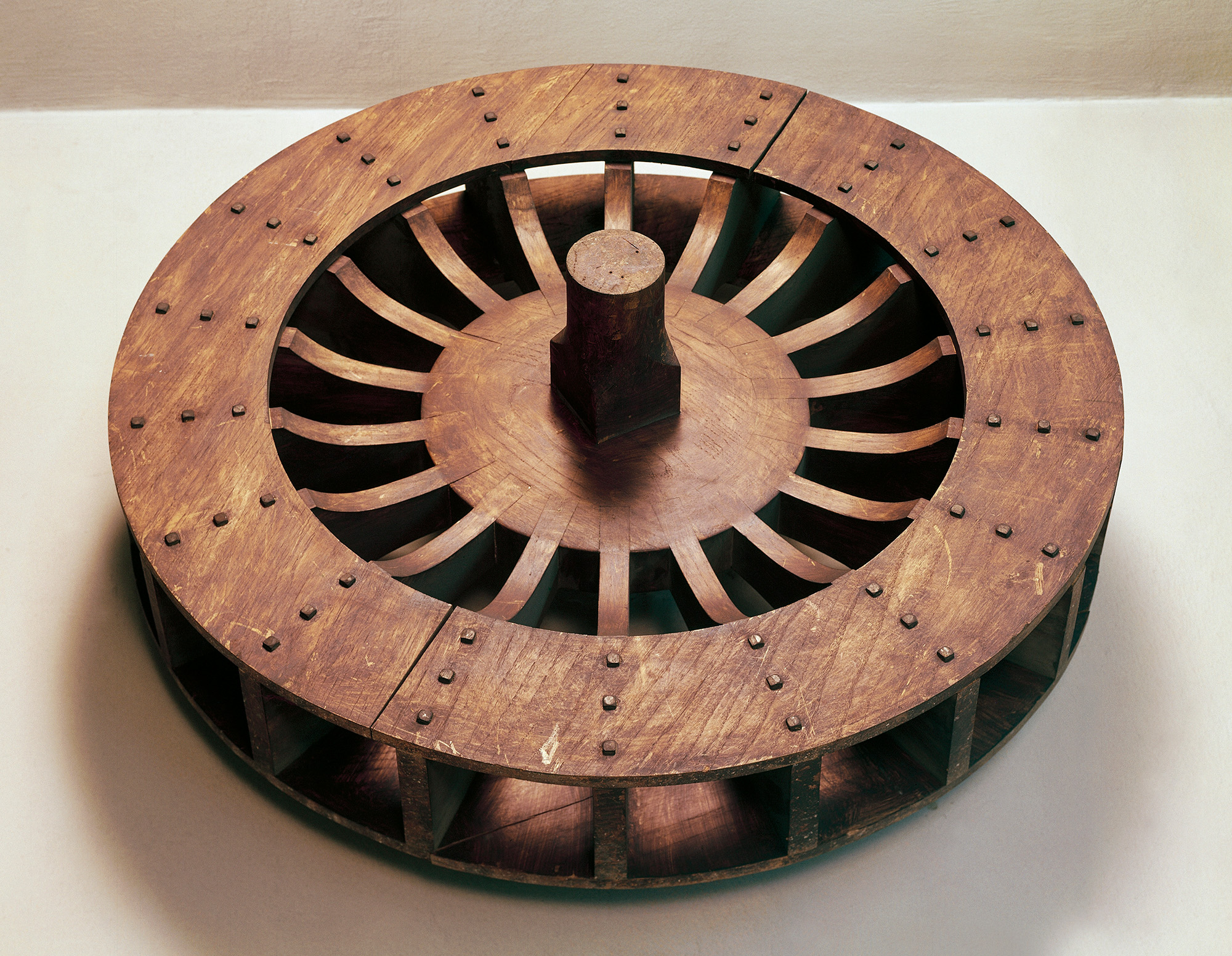
Water wheels were also used to pump water in Roman mines. A water wheel consisted of several buckets attached to a large wheel. As the wheel turned, the buckets collected and lifted water.
The Romans also used a device known as Ctesibius’ pump. It was manually operated by moving a wooden lever. Two cylinders were connected to a central chamber through pistons, and the pressurized water exited through a nozzle connected to the chamber.
Whether they used gravity-fed channels, inverted siphons, bridges, screws, water wheels or pumps, Roman engineers did not allow an uphill slope to prevent them from delivering water where it was needed.
From Augustus to Nero, find out how much you know about ancient Rome’s famous leaders with this Roman emperor quiz.
Topics
Source: www.livescience.com