


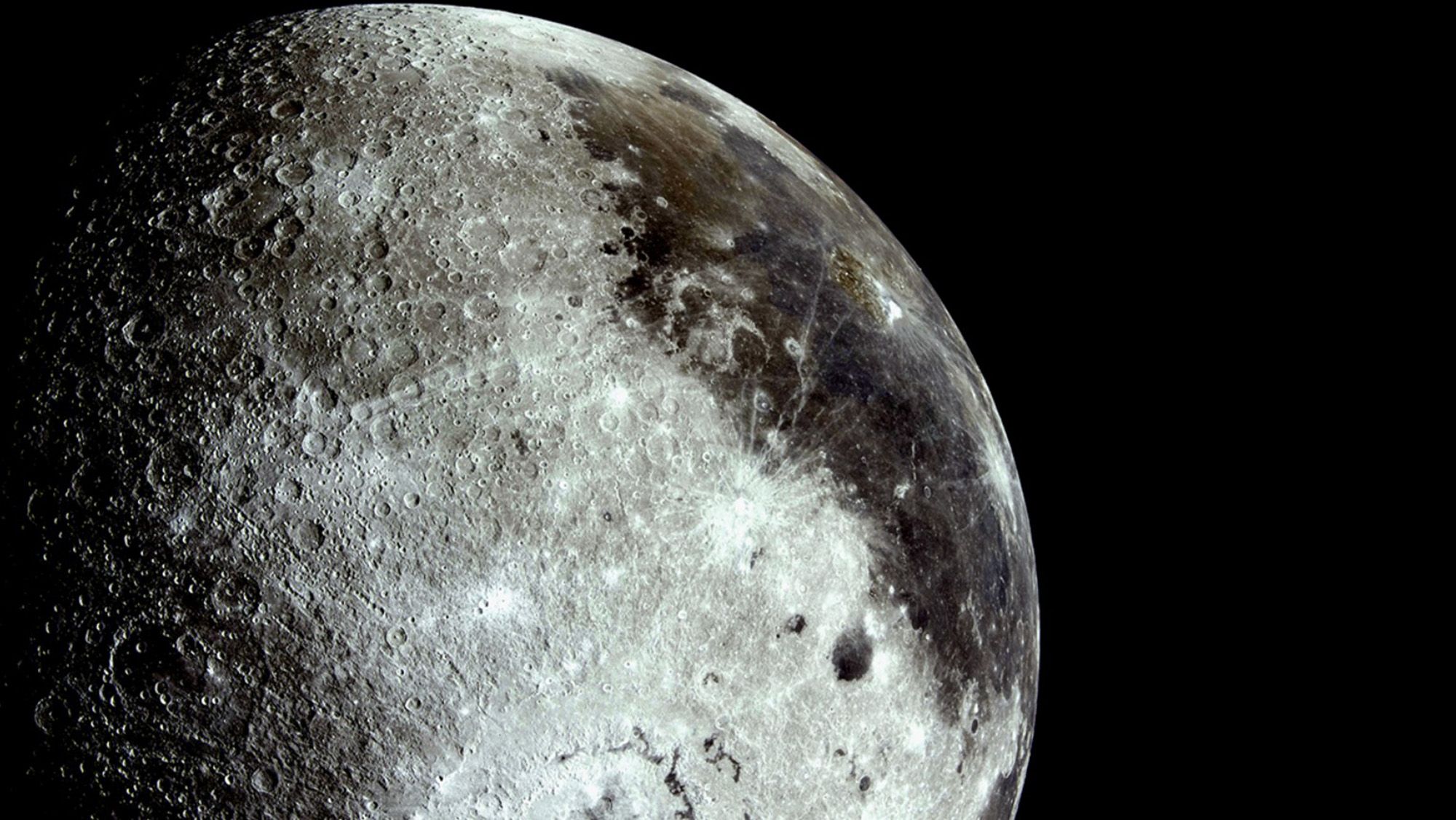
Artemis II Astronauts Saw Unexpected Colors on the Moon
Simple facts
What is it: A view of the Moon recorded by the Artemis II crew
Where is it: The Aristarchus Plateau and other lunar geological features
When shared: October 8, 2026
What color is the Moon? Ask most people on Earth and you will probably hear the same answer: white or gray.
But the four-person crew of NASA’s Artemis II mission saw something far more colorful. During their trip around the Moon, the astronauts observed yellow, brown, green, blue and tan landscapes across the lunar surface.
The image was taken in April 2026 from about 4,000 miles (6,400 kilometers) above the Moon’s surface. The crew spent about seven hours traveling around the Moon, offering a perspective that cannot be seen from Earth.
According to the Artemis II Lunar Science Preliminary Report, the colors appeared across volcanic plains and around ancient craters. The 130-page report catalogs what astronauts Reed Wiseman, Victor Glover, Christina Koch and Jeremy Hansen saw during the historic lunar flyby, using 814 gigabytes of photographs, video and audio recorded from the Orion crew capsule.
Latest videos fromLive Science
Why does the Moon look colorful?
The different hues reflect the Moon’s complex geological history. The Aristarchus Plateau, a large high region on the northwestern edge of the Moon’s near side, contains one of the highest concentrations of ancient volcanic features on the lunar surface. It includes dark lava deposits and colorful volcanic glass.
The region particularly fascinated the astronauts. In the NASA image archive, the Aristarchus Plateau is visible among the Moon’s striking volcanic features.
Christina Koch, the Artemis II mission specialist, was surprised by the region’s yellow hue. She compared the plateau to a “yellow snow-capped mountain,” with craters that reflect sunlight and create bright, snow-like patches. She also described it as “the cheeks of the jaundiced moon.”
“There’s so much color now,” Victor Glover, the Artemis II pilot, said while photographing the region. “There’s green, too. Brown, especially north toward Aristarchus and the North Pole. … It’s like a streak of brown coming down from the north.”
Researchers said the colors are reminiscent of orange, titanium-rich glass beads and green, magnesium-rich glass beads created by volcanic activity. Similar glass beads were collected during the Apollo 15 and Apollo 17 missions in different parts of the Moon.
Artemis II crew saw a “chaotic” lunar landscape
Another colorful feature that caught the crew’s attention was the Orientale Basin, a huge, relatively young, multi-ringed impact crater. NASA says the basin is about three times the width of Massachusetts.
Spanning the Moon’s near and far sides, the enormous bull’s-eye-shaped feature is rarely visible from Earth. However, it dominated the view for the Artemis II crew as they flew over the Moon’s far side.
“It just caused chaos throughout the area,” mission commander Reed Wiseman said.
This photo taken by the Orion capsule’s external camera shows the terminator on the Moon, where the daytime landscape blends into the night side. The Oriental Basin is the large bull’s-eye-shaped feature near the lower right.
Image credit: NASA
As the spacecraft passed over the basin, the astronauts observed grays, browns, tans and greens. Koch said the basin’s largest outer ring had an “almost swamp-like color.” Glover described “dusty peaks” and “a white patch at its edge.” Koch compared the chain of craters extending away from the impact site to “bubbles rising from a team of scuba divers below.”
Why human observations matter for lunar exploration
The Artemis II astronauts spent more than two years training to study and describe the Moon’s geology. Their preparation included private and classroom lessons, mock flybys and bringing “self-selected reference materials” aboard the Orion capsule.
That training enabled the crew to record scientific observations that autonomous cameras and orbiters might not capture, according to the report.
“The Artemis II mission demonstrated the extraordinary value of human observation and perception as a scientific asset in planetary exploration,” the report’s authors concluded. “Unlike cameras that capture isolated moments or narrow subsets of a scene, human observers continuously interpret their surroundings, integrating real-time visual perception and situational understanding.”
Or, as Glover put it while looking at the lunar landscape: “That’s a pretty sinister view.”
How much do you know about the Moon? Test your lunar knowledge with our monthly quiz.
Topics
Source: www.livescience.com