


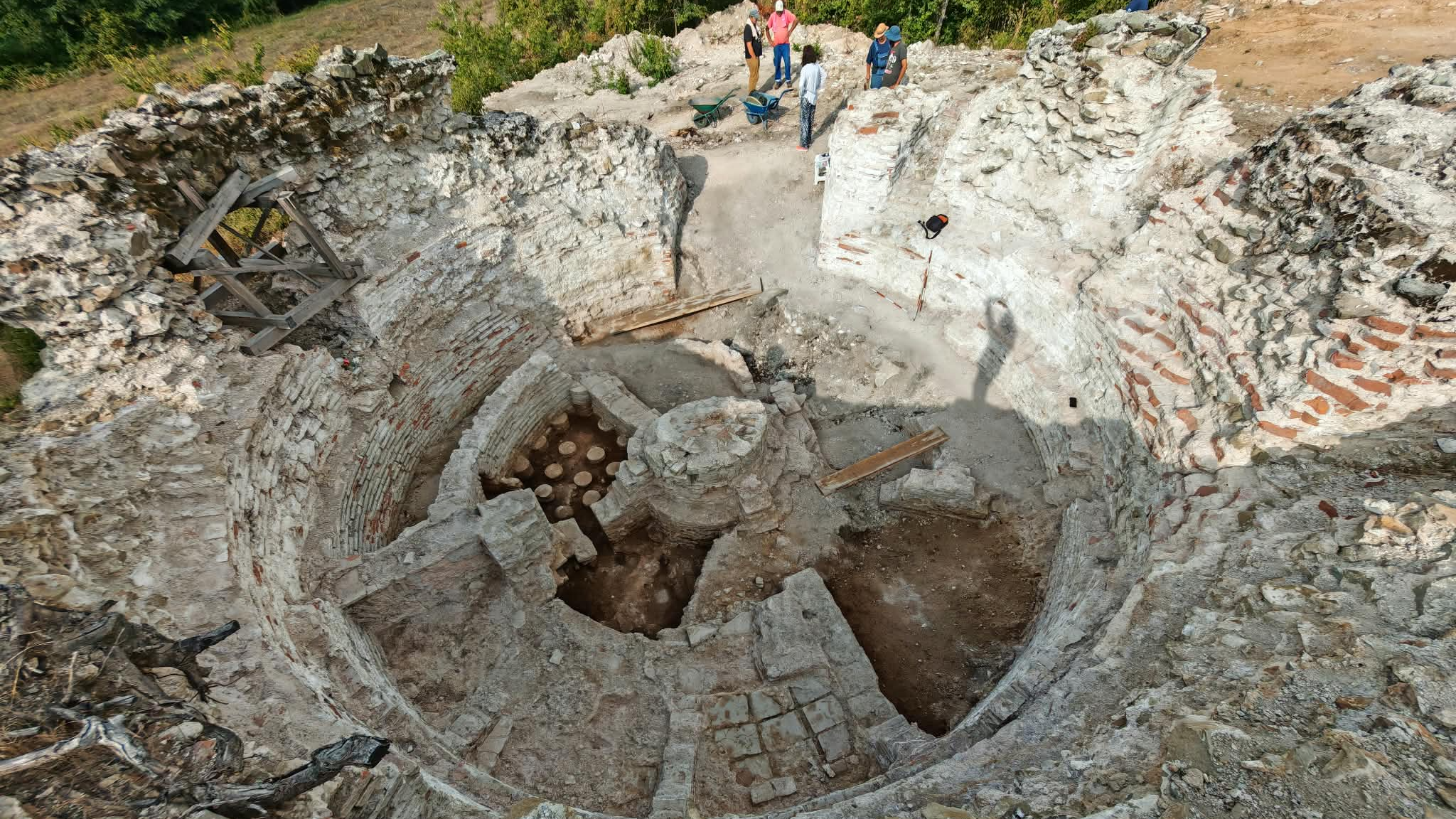
Archaeologists Discover Luxurious Roman Bathhouse in Emperor Maximinus Daza’s Palace
Archaeologists excavating at Vrelo Šarkamen in eastern Serbia have uncovered the remains of a luxurious ancient Roman bathhouse that once served Emperor Maximinus Daza. The complex features underfloor heating, three heated bathing pools and a sauna—an unusual design that offers new insight into life inside an imperial Roman palace.
The bathhouse was discovered within the ruins of the monumental fortified palace complex at Vrelo Šarkamen. Built in the early fourth century, the palace is associated with Galerius Valerius Maximinus, better known as Maximinus Daza, who ruled as Roman emperor from 310 to 313.
Archaeologists have investigated the site intermittently for decades. The latest excavations were conducted by researchers from Serbia’s National Science Museum and the Institute of Archaeology, an independent research institution. The discovery was announced in a statement issued September 3.
A private Roman bathhouse inside an imperial palace
Maximinus Daza was born in the region that is now Serbia and was one of the rulers of the Roman Tetrarchy, the system established by Emperor Diocletian to govern the Roman Empire through multiple emperors. The political arrangement divided authority between senior and junior rulers in the eastern and western parts of the empire before gradually breaking down during a series of civil wars.
From the latest videos Live Science
Researchers say the new excavations show that Maximinus Daza’s palace was more elaborate and luxurious than previously understood. A monumental tower stood at the southwestern corner of the complex, and the newly identified bathhouse was located at the base of the tower.
Archaeologists identified part of the bathhouse as a sudatorium, or steam room.
Image provided by: Vrelo Šarkamen Research Team/Archaeological Institute
The bathhouse’s layout surprised researchers. Unlike many Roman bath complexes, in which rooms were arranged in a linear sequence, this structure had a circular plan beneath the palace tower. The space also had a domed ceiling with six windows, demonstrating the builders’ advanced architectural and engineering skills.
Underfloor heating, pools and a Roman sauna
The balneum, the Latin term for a bathhouse, was divided into two main areas. One section contained the equipment needed to operate the complex, while the other was dedicated to bathing and relaxation.
In the service area, archaeologists found a furnace that heated the floor through an underfloor heating system. They also uncovered the base of a copper boiler that would have been used to heat the bathwater. The boiler itself is no longer present.
The bathing rooms contained three pools or tubs, as well as a sudatorium—a steam bath or sauna. Together, these features indicate that the complex was designed as a private luxury bathhouse for the emperor and other high-status residents of the palace.
“The complex was not simply a space for personal hygiene, but a carefully designed private bathhouse for the high-status residents of the palace,” researchers said. “Its architecture, technical infrastructure and amenities formed a single functional whole.”
Further research at Vrelo Šarkamen
Archaeologists plan to continue studying the Roman bath complex to determine how its rooms were arranged and how Emperor Maximinus Daza and his family accessed the facility.
The discovery adds to the growing archaeological evidence that the imperial palace at Vrelo Šarkamen was a sophisticated Roman residence, combining monumental architecture with advanced heating technology and luxurious amenities.
How much do you know about the famous rulers of ancient Rome? Take the Roman emperor quiz.
Source: www.livescience.com