


Close Menu
HitechubHitechub
    What's Hot
    Science

    The Shocking Truth: Why Giant Insects Might Be Here to Stay

    Science

    Why do bumblebees fly?

    Science

    Hubble Discovers Active Spiral Galaxy Messier 88: A Breathtaking Cosmic Insight

    Important Pages:
    • About Us
    • Privacy Policy
    • Terms & Conditions
    Facebook X (Twitter) Instagram Pinterest
    Facebook X (Twitter) Instagram
    HitechubHitechub
    Sunday, June 14
    • Technology
      1. AI
      2. Gadgets
      3. View All

      This is the most popular CEO in the world

      Sectors in which “Chat-GPT” is most often used

      AI Pioneer Expresses Concern About Potential for AI to Surpass Humanity

      Artificial intelligence has begun to “swallow” professions

      What’s new in Android 14

      Europeans have about 700 million old mobile phones in their drawers

      Here’s how you can tell if your phone is being tapped

      “Sneaker X” – computer case in the shape of a sneaker

      Russian Gamers Unite to Prevent Nuclear War: Join the Fight Online

      Challenges of Space Travel: Why Journeying to Space is So Difficult

      NASA Astronaut Casts Historic Vote from Space

      Discover the Future of Comfort: What If You Could Wear a Chair?

    • Science
      1. Space
      2. Wheels
      3. View All

      Galaxies in the universe are growing more slowly than they should

      “Espace” presented the new lander “Apex 1.0”

      The largest asteroid sample ever collected has arrived on Earth

      (VIDEO) Incredible flight of the Parker Solar Probe

      Toyota wants to make a new generation battery with a range of up to 1,200 km

      Meet Toyota’s lunar “baby” that could make exploring the Moon easier

      Microlino – Is this the perfect city car?

      Alfa Romeo 4C gets an electric successor

      Reversing Aging: Experts Share New Findings That Changed Their Perspective

      Harvard Study Challenges the Five-Meal-A-Day Diet: Time to Rethink Your Eating Habits

      20-Year-Old Director Achieves Success with Sci-Fi Horror Film ‘Backrooms’

      Can Lab-Grown Sperm Help Infertile Men Conceive Their Own Children?

    HitechubHitechub
    Home » How many cars there are on Earth right now?
    Technology

    How many cars there are on Earth right now?

    Share Facebook Twitter Pinterest WhatsApp
    number of cars
    Share
    Facebook Twitter LinkedIn Pinterest WhatsApp

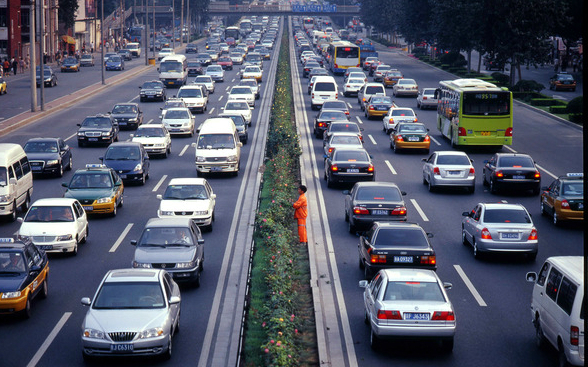
    Despite the pandemic and two major recessions, the number of cars on our planet is growing unstoppably. Can you guess how many cars are currently driving on Earth’s roads?

    Even 14 years ago there was talk of millions, and today that number has increased drastically, writes “Index”. Part of the credit goes to ever-increasing reliability, but perhaps the biggest boost to the car’s growth came from the Chinese market. If we add up all the cars currently driving the Earth, old and new, we come up with a staggering 1.47 billion.

    This is an estimate based on data from Hedges & Company, and it also reveals how these cars are distributed across continents and even within countries themselves, The Drive writes.

    If you thought North America was still the leader with the most cars, you’d be wrong. The biggest title goes to China with 415 million registered cars in 2022 and precisely thanks to China, the winner among the continents is Asia with a total of 543 million cars.

    After Asia comes Europe with 413 million cars and North America with 358 million cars, of which even 78% are in the USA.

    Number of cars by region:

    • Asia: 543 million
    • Europe: 413 million
    • North America: 358 million
    • South America: 84 million
    • Middle East: 50 million
    • Africa: 26 million
    • Antarctica: about 50

    Concentration of cars in relation to the number of inhabitants

    The next logical question that many ask themselves is the number of cars in relation to the number of inhabitants. If we take into account that 8.1 billion people currently live on Earth, it turns out that there is one car for every 5.75 inhabitants, that is, that today there are cars for 17% of the population.

    Of course, this is only a rough figure as it does not take into account those with multiple cars, children and all those who are not allowed to own a car.

    The situation in China is such that there is one car for every 3.5 inhabitants of China. The rest of the continent drives significantly less, just 140 cars per 1,000 inhabitants. North America has the highest concentration with 710 cars per 1000 inhabitants, and the US has three times the concentration of cars among the population than China.

    Концентрација на автомобил по регион:

    • North America: 710 cars per 1,000 inhabitants
    • Europe: 520 cars per 1,000 inhabitants
    • South America: 210 cars per 1,000 inhabitants
    • Middle East: 190 cars per 1,000 inhabitants
    • Asia: 140 cars per 1,000 inhabitants
    • Africa: 58 cars per 1,000 inhabitants
    • Antarctica: 50 cars per 1,000 inhabitants
    Share. Facebook Twitter Pinterest LinkedIn WhatsApp
    Previous ArticleStructural changes in the women’s brain during the menstrual cycle?
    Next Article Deep neural networks do not see the world as we see it

    Related Posts

    Science

    Near Miss with Waymo: Why I’m Still Optimistic About Self-Driving Cars

    Technology

    Russian Gamers Unite to Prevent Nuclear War: Join the Fight Online

    Technology

    Challenges of Space Travel: Why Journeying to Space is So Difficult

    Technology

    NASA Astronaut Casts Historic Vote from Space

    Technology

    Discover the Future of Comfort: What If You Could Wear a Chair?

    Technology

    How Cell Phones and Screens Disrupt Your Child’s Sleep: Tips for Better Rest

    Technology

    Empowering Girls: Launching Africa’s First Private Space Satellite

    Technology

    Essential Guide for Parents: What to Know About Kids’ VR Gear Choices

    Add A Comment
    Leave A Reply Cancel Reply

    Stay In Touch
    • Facebook
    • Twitter
    • Instagram
    • Pinterest
    Top Picks
    Technology

    How fast commercial airplanes really are?

    A video shows how fast commercial airplanes actually go while flying, that is, when we are not looking at them from a great distance.

    Matt Freeze: Harvard Graduate from a Renowned Scientific Family Poised to Lead the U.S. to FIFA World Cup Glory

    What would happen if you were without a suit in space?

    Top New Science Fiction Novels to Read in June 2026: Featuring Adrian Tchaikovsky and M. John Harrison

    Space Exploration: Unveiling the Wonders of the Universe

    Most Popular
    Science

    Alice Roberts: Embracing Our Animalistic Nature – Insights on Human Behavior

    Technology

    The end of passwords

    Categories
    • AI (13)
    • Gadgets (10)
    • Science (228)
    • Space (9)
    • Technology (37)
    • Wheels (9)
    Our Picks
    Technology

    A bricklayer robot has set a new record

    Science

    El Niño is Here: Prepare for Unpredictable Weather Ahead!

    © 2026 Hitechub.
    • Home
    • About Us
    • Privacy Policy
    • Terms & Conditions

    Type above and press Enter to search. Press Esc to cancel.

    We are using cookies to give you the best experience on our website.

    You can find out more about which cookies we are using or switch them off in .

    Ad Blocker Enabled!
    Ad Blocker Enabled!
    Our website is made possible by displaying online advertisements to our visitors. Please support us by disabling your Ad Blocker.
    Go to mobile version
    Hitechub
    Powered by  GDPR Cookie Compliance
    Privacy Overview

    This website uses cookies so that we can provide you with the best user experience possible. Cookie information is stored in your browser and performs functions such as recognising you when you return to our website and helping our team to understand which sections of the website you find most interesting and useful.

    Strictly Necessary Cookies

    Strictly Necessary Cookie should be enabled at all times so that we can save your preferences for cookie settings.