


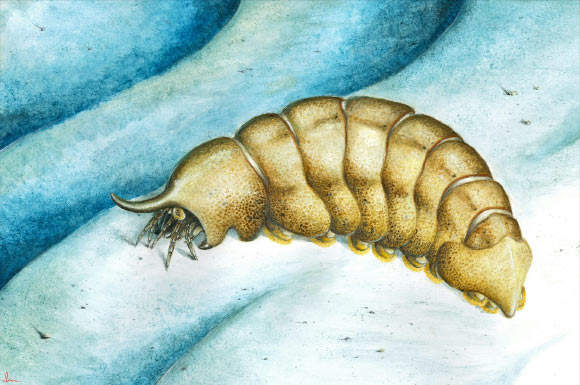
A newly identified species of Corcoranidae arthropod, Magnicornaspis garwoodi, lived during the Furonian period, approximately 497 to 487 million years ago. This well-preserved specimen was found near Quebec, Canada, providing critical insights into the evolutionary history of marine life. This discovery lends support to the theory that the “Frondian gap,” which refers to the perceived decline in biodiversity between the Cambrian explosion and the subsequent Ordovician period, may largely be attributed to sampling bias rather than a genuine loss of biodiversity.
Dr. Russell Bicknell from Flinders University stated, “Paleontologists theorize that this period marked by a significant dip in biodiversity might be linked to factors such as ocean chemistry changes, cooling climates, or general environmental instability.”
He added, “It’s possible we haven’t thoroughly examined the right sedimentary rocks or fossil-bearing deposits to fully understand the diverse molluscs and early marine organisms that existed during that time.”
The species Magnicornaspis garwoodi is notable for its broad head shield, segmented body, and unique defensive spines, all characteristics that place it within the Corcoraceae group. This specimen, found in the Rivière du Loup Formation, represents one of the few known arthropod species from the Cambrian and Ordovician periods.
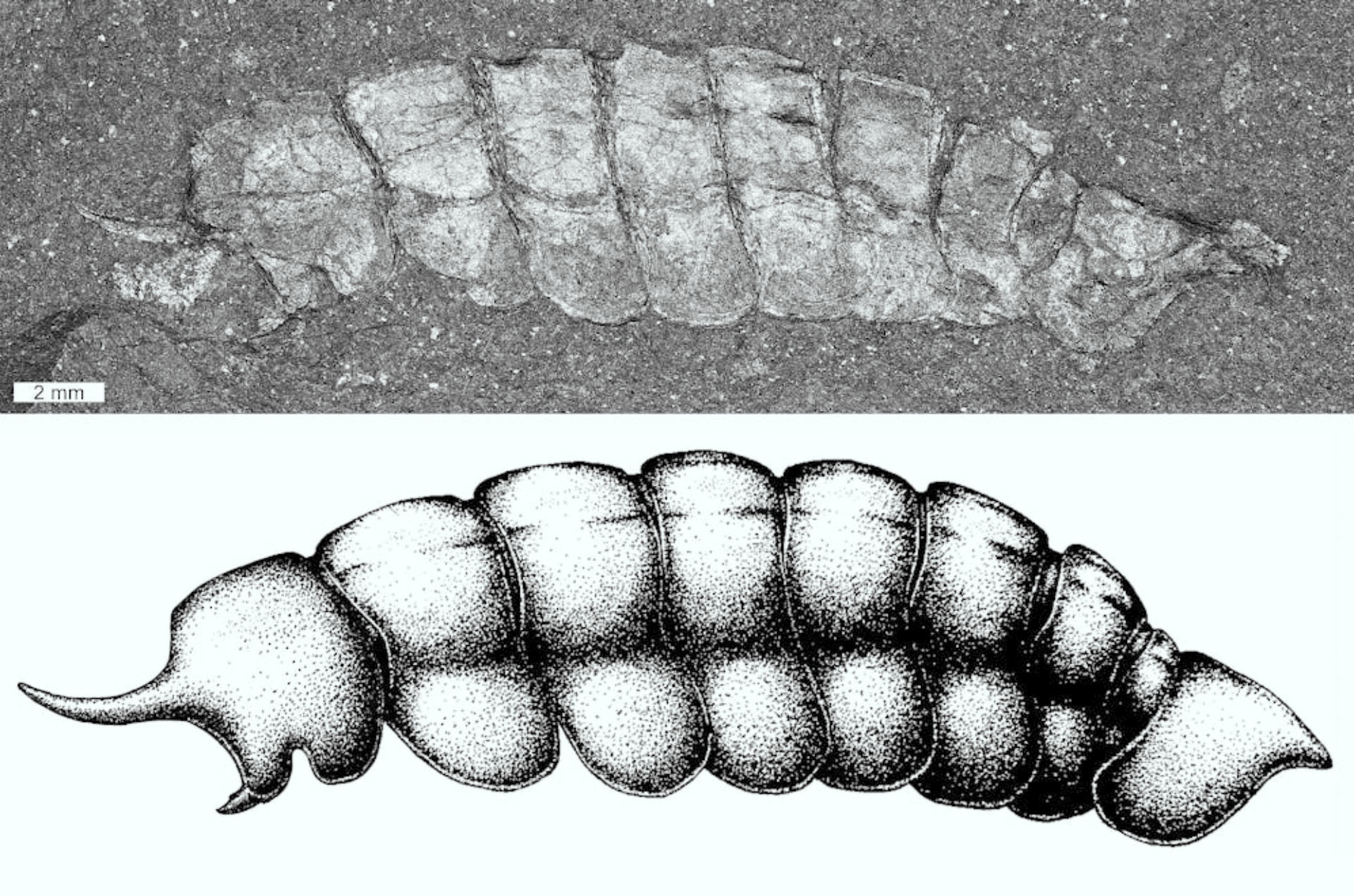
Magnicornaspis garwoodi. Image credit: Bicknell et al., doi: 10.1186/s12915-026-02617-4.
According to Bicknell and his team, “Fossils play a crucial role in bridging gaps in our understanding of ancient ecosystems.”
“The increasing documentation of Furonian sites challenges the notion of a barren Late Cambrian environment,” they noted.
“As each new Furonian fossil is uncovered, the supposed gap narrows, unveiling a more complex and diverse ecosystem that thrived during the Late Cambrian period.”
“These cumulative findings suggest that Furonian ecosystems were not only diverse but also ecologically intricate.”
Crucially, this specimen comes from a geological formation previously unrecognized for its remarkable preservation state.
The discovery of Magnicornaspis garwoodi fits within a broader trend observed over the last two decades.
Dr. Julian Kimmig, a researcher at Karlsruhe University of Technology and the Karlsruhe National Museum of Nature, remarked, “The Frondian may not signify a true collapse in biodiversity but rather a lack of focus on the right types of rocks and sedimentary deposits.”
The groundbreaking discovery of Magnicornaspis garwoodi is detailed in this research paper published in BMC Biology.
_____
Bicknell, R. et al. 2026. A new, well-preserved arthropod discovered in the Fronidian strata of Canada. BMC Biology 24, 119; doi: 10.1186/s12915-026-02617-4
This rewritten content is optimized for SEO with clear keyword usage while retaining the original HTML structure and tags.
Source: www.sci.news