


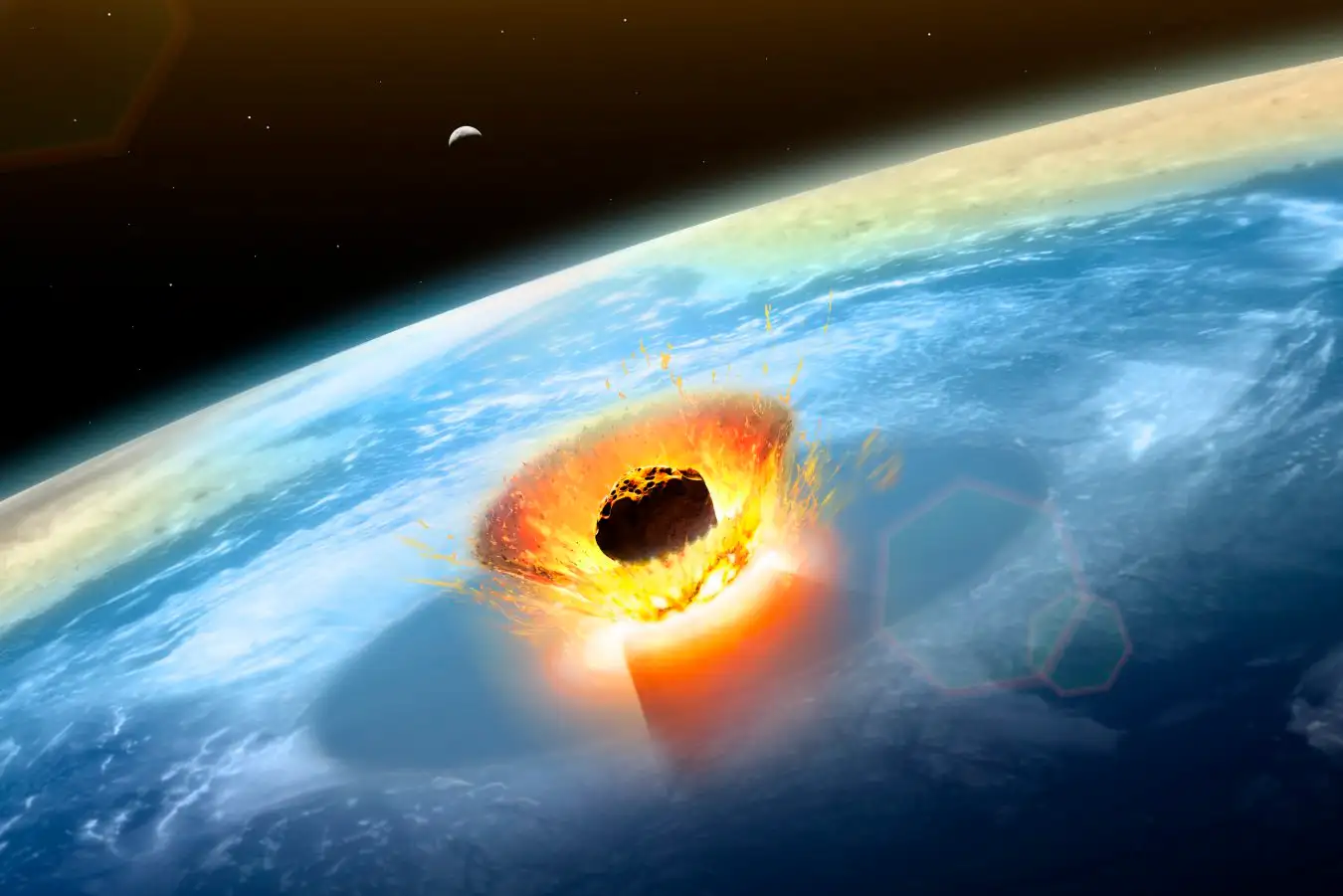
Diagram of the Chicxulub Asteroid Impact, 66 Million Years Ago
Mark Garlick/Science Photo Library/Getty Images
The catastrophic Chicxulub asteroid impact, which occurred 66 million years ago, created a geological upheaval that took at least 8 million years to stabilize. This prolonged cooling period led to a flourishing underground ecosystem where microorganisms thrived.
Striking what is now Mexico, the Chicxulub asteroid, estimated to be 15 kilometers in diameter, caused drastic climate changes, resulting in the extinction of around 75% of Earth’s species. Notably, all non-avian dinosaurs vanished, while a nuclear winter affected the planet for approximately 15 years.
Even the depths of the Earth weren’t spared from the impact’s effects. “The Chicxulub impact was powerful enough to induce geological deformation up to 35 kilometers beneath the surface, detectable through geophysical surveys,” explains Annemarie Pickersgill from the University of Glasgow, UK.
The impact melted around 10,000 cubic kilometers of rock, resulting in a combination of molten rock and seawater, which created hydrothermal systems characterized by porous materials filled with hot water pockets.
Research indicates that these hydrothermal environments extended several kilometers into the Earth and contained minerals indicative of liquid water and heat. However, the duration and extent of heating within these hydrothermal systems appears to have been significantly underestimated.
Initial beliefs suggested the cooling of the impact site would require just 2 million years. Yet, Pickersgill and her team propose that it may have taken at least four times longer, allowing hydrothermal life more time to prosper.
“One of the greatest uncertainties regarding impact-generated hydrothermal systems, especially at Chicxulub, is the duration for which heat continues to circulate water through the geological structure,” notes Pickersgill.
To investigate, the research team drilled one kilometer into the crater to collect rock cores. By analyzing potassium’s decay into argon gas over time, they could accurately estimate the age of the samples.
“Our findings reveal a range of ages from the time of the impact—66 million years ago—to approximately 58 million years ago,” said Pickersgill. “This indicates that hydrothermal activity persisted in part of the Chicxulub structure for up to 8 million years following the impact.”
Sulfur isotopes identified within the rock cores provide further evidence of microorganisms present in the hydrothermal system, which rapidly recovered post-impact.
These findings imply that habitable hydrothermal systems might have existed in early impact craters on young Earth and potentially on other celestial bodies for longer durations than previously thought.
“This opens new possibilities for the development and spread of life,” says Pickersgill. “Our study supports the hypothesis that early life on Earth may have thrived in long-lasting habitats within impact craters, and possibly in similar environments on other planets where large impact craters exist.”
Chris Kirkland from Curtin University in Perth, Australia, states that although there is “no unequivocal record of sustained hydrothermal activity” at Chicxulub, compelling evidence suggests the impact site remained thermal for millions of years.
“The significant impact doesn’t merely destroy the environment; it also creates enduring underground systems where heated fluids flow through fractured rocks. These chemically rich settings could serve as safe havens for microorganisms and may even foster early chemical processes vital to the emergence of life.”
Topics:
Source: www.newscientist.com