


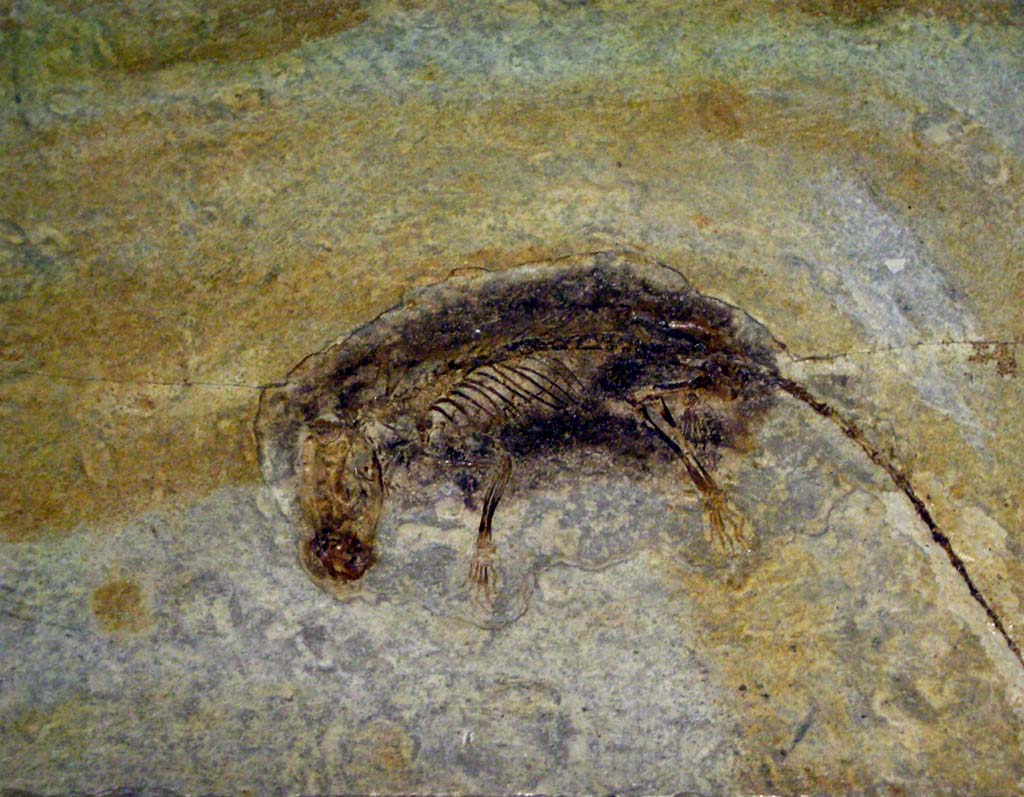
Leopard spots, zebra stripes, and raccoon masks are examples of mammalian fur coloration, collectively known as pelage. For decades, scientists have worked to understand how these patterns evolved. Now, researchers have developed a method for reconstructing the fur colors of extinct mammals by studying melanosomes—specialized cell structures that contain the pigment melanin. This discovery could reveal how ancient mammals lived and provide clues about the environments they inhabited.
To determine the color of prehistoric mammal fur, the researchers created a statistical computer model that predicts fur color from the shape of melanosomes. First, they analyzed how melanosome shape influences fur color in living mammals. Using scanning electron microscopy, a technique that uses a focused beam of electrons to produce highly detailed images, they measured the length and width of individual melanosomes.
The team examined 2,615 melanosomes from the fur of 116 living mammal species, including the red panda and German Shepherd, as well as representatives from most major mammalian groups. They then measured the wavelengths of light reflected by each melanosome with a microspectrophotometer. These wavelengths provided precise measurements of hair color, allowing the scientists to compare each color with the corresponding melanosome dimensions.
The results showed that spherical melanosomes were associated with brighter colors, including reddish and orange tones. More elongated melanosomes, in contrast, were linked to darker shades such as brown and gray. The researchers displayed the amount of light absorbed at different wavelengths in graphs called reflectance curves. Using these data, they developed a statistical model capable of predicting a mammal’s reflectance curve—and therefore its likely fur color—from melanosome shape alone.
After developing the model, the researchers searched for fossilized mammalian melanosomes. Mammal fossils are uncommon, and microscopic cell structures are preserved only in exceptionally well-preserved deposits. The team identified six fossils containing melanosomes from Mesozoic rocks dating to roughly 250 million years ago, shortly after mammals first evolved.
The fossils came from two internationally recognized deposits in northeastern China: the Yanliao and Jehol biotas. The researchers analyzed five previously studied specimens, including one Megaconus mammaliaformis, one Vilevolodon diplomylos, two members of the group Docodonta, and one member of Eutheria. These animals were all small, rodent-like mammals. The study also included a newly discovered tree-dwelling species, Arboroharamiya fuscus.
Using scanning electron microscopy, the scientists measured 2,159 fossilized melanosomes. These ancient structures were slightly elongated spheres and showed much less variation in shape than melanosomes from modern mammals. When the researchers applied their statistical model, they found that all of the extinct mammals studied probably had dark brown fur without complex color patterns.
These findings suggest that many, and possibly most, early mammals were nocturnal, similar to numerous dark-colored mammals living today. A nighttime lifestyle may have helped these small mammals survive the mass extinction caused by the asteroid impact that ended the age of non-avian dinosaurs about 66 million years ago. While many dinosaur species disappeared, small mammals survived and later expanded into ecological roles left vacant by the extinction.
As mammals diversified, they evolved a wider range of fur colors and patterns. Some patterns likely provided camouflage, while others may have developed through sexual selection or visual communication. The researchers’ findings indicate that mammals may have remained small and primarily nocturnal throughout much of the Mesozoic Era, before diversifying after the dinosaurs disappeared.
The study demonstrates that melanosomes can help scientists reconstruct the fur colors of fossil mammals and better understand their behavior and habitats. Future research on fossils from periods closer to the dinosaur extinction could reveal when complex fur patterns first appeared. These discoveries may also help scientists determine whether the extinction of the dinosaurs was essential to the evolutionary rise and diversification of mammals.
Post Views: 354
Source: sciworthy.com