


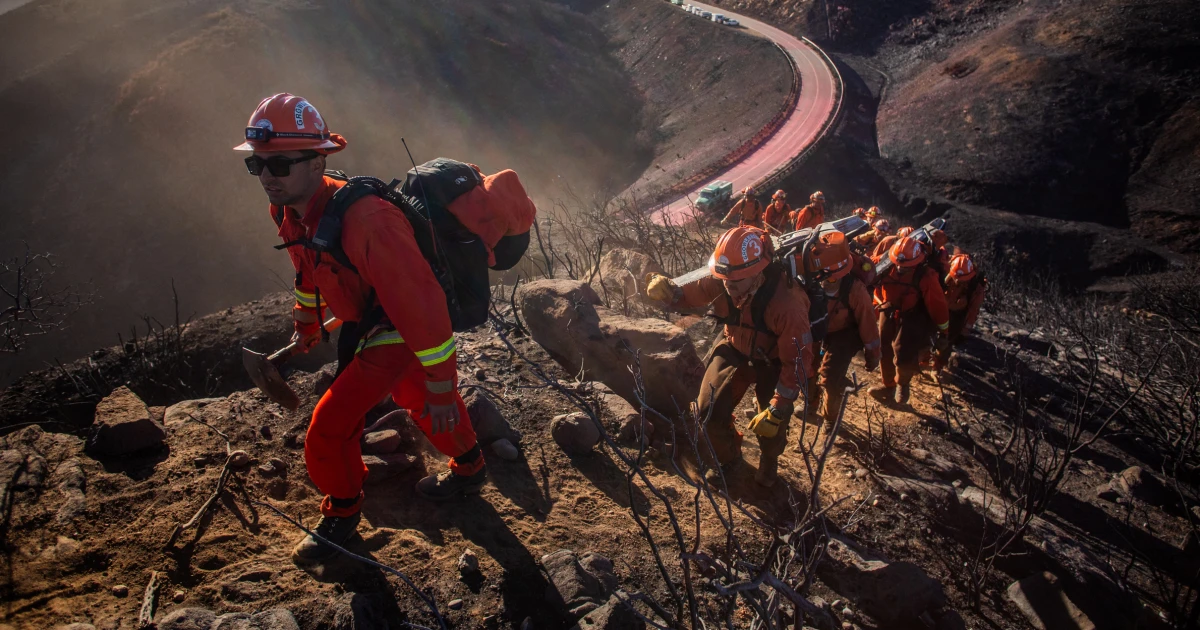
New Report Details 911, Communication and Leadership Failures During 2025 Los Angeles Fires
During last year’s fires in the Los Angeles area, police dispatchers temporarily had to route 911 calls through a captain’s personal cellphone. The volume of calls was so high that some fire departments went into “blackout,” making it impossible for dispatchers to track calls.
With communications disrupted, some firefighters received instructions from trusted captains rather than top fire department leaders. These are among the emergency communications failures described in a new comprehensive review of the deadly Palisades and Eaton fires.
The findings portray a response hindered by insufficient preparation, communication problems and disorganized leadership that struggled to coordinate across jurisdictions.
Report finds Los Angeles authorities were overwhelmed
The 724-page report, released Friday by UL Research Institute, assesses the conditions, decisions, actions and systems that influenced the fires. Gov. Gavin Newsom ordered researchers to conduct the assessment. It is the second of two ULRI reports examining the disaster.
Overall, researchers found that Los Angeles authorities were unprepared and untrained for such an extreme situation and struggled to work together as conditions worsened.
On the night of the Eaton Fire, “the speed and scale of the incident overwhelmed the 911 system,” Derek Alconis, ULRI’s senior research program manager and principal investigator, said at a press conference. “Calls were coming in faster than dispatch could manage or assign them.”
As the situation deteriorated, communication between agencies became difficult. Personnel were often unsure where crews were or what they were doing.
“There was not an effective unified command,” Alconis said, adding that the confusion hampered evacuation efforts.
Etienne Laurent/AFP via Getty
Report examines how the Palisades Fire started
The report confirms previous assessments of how the Palisades Fire began. The Los Angeles Fire Department did not fully extinguish the initial fire in the area, and the department had no standards for that type of work, the report said.
The first fire, known as the Lachman Fire, was caused by suspected arson. The trial of the man accused of starting it ended in a mistrial this summer after the jury deadlocked. A second trial is scheduled for this fall.
The Los Angeles Fire Department said in a statement that it is carefully reviewing the analysis.
“While FSRI finds that no single decision explains the tragedy of last January, that does not alleviate LAFD’s responsibility for our decisions,” the department said. “This report identifies a number of areas for improvement at the Los Angeles Fire Department, including how we ensure fires are truly contained before dangerous weather returns, how we track and direct our entire force in the event of a large fire, and how we work with partners to plan and execute evacuations. We accept those findings.”
Following its own review, LAFD said it had implemented a series of changes, including improved staffing procedures during fire-hazardous weather and new procedures to ensure fires are fully extinguished.
“This report holds LAFD to a deservedly high standard,” the department said. “We carefully evaluate all recommendations that apply to us and continue to track our progress as we strengthen our ability to protect the communities we serve.”
Agustín Pourier/AFP via Getty
The Los Angeles Police Department did not respond to requests for comment, and the Los Angeles County Sheriff’s Department had not responded by the time of publication. A Los Angeles County Fire Department spokeswoman said she could not comment because of pending litigation.
31 people died and more than 16,250 buildings were destroyed
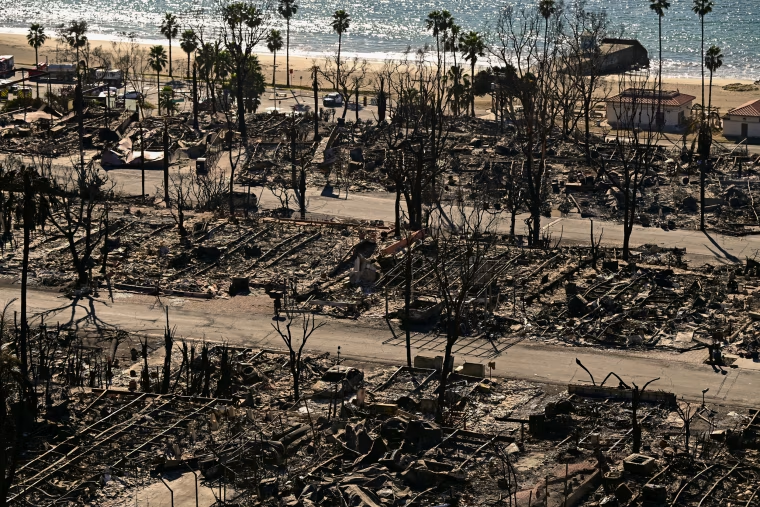
The fires began during a storm in January 2025 and killed 31 people in the Pacific Palisades and Altadena communities. The flames destroyed more than 16,250 residential and commercial buildings. Many residents have not returned home and are struggling to clean up smoke and debris pollution.
Dissatisfaction with the fire response and rebuilding efforts has become a hotly contested issue in the election for Los Angeles mayor.
However, the new report says the failures it identified did not cause the tragedy. Emergency responders faced extreme fire behavior in high winds, causing homes to catch fire.
“Conditions in January 2025 were perfect for fires,” said Steve Carver, vice president and head of ULRI’s Fire Safety Institute. “The speed, scale and complexity of the Palisades and Eaton fires exceeded the capabilities of many of the systems designed to assist in suppression.”
Report includes 175 findings and 266 recommendations
Many of the report’s 175 findings will come as no surprise to people who have followed lawsuits, investigative reporting and city and county reviews. But the report provides a comprehensive account of what went wrong and offers a roadmap for responding to wind-driven urban firestorms, which are becoming increasingly common in the West.
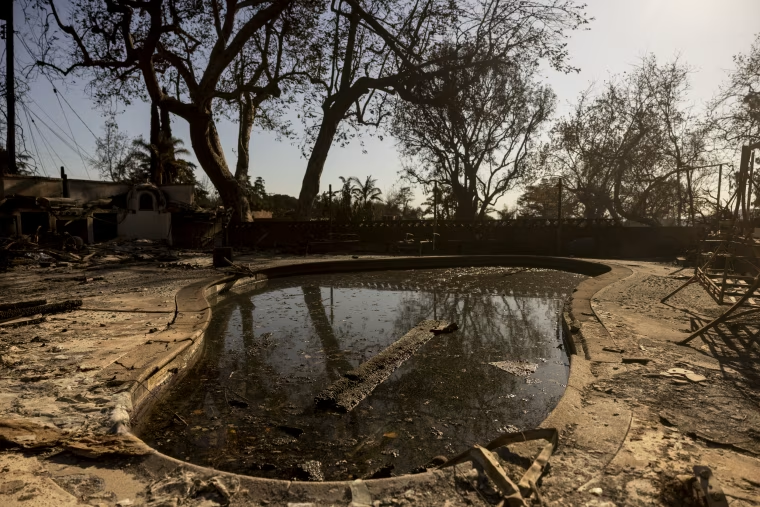
Among its 266 recommendations, the report calls for more training on wildfires and incident management in California, portable satellite internet kits for commanders during communication failures, and training for firefighters on using water from residential swimming pools.
Etienne Laurent/AFP via Getty
Some community and private firefighting efforts helped
The report also describes several successes. Its authors credited a volunteer program called Community Brigades with helping the National Weather Service communicate the threat of extreme fire weather and helping residents evacuate.
Private firefighting companies also helped save some structures and prevent the fire from spreading, the report said, while acknowledging that private firefighting efforts were controversial.
ULRI also produced an after-action report on the 2023 Lahaina Fire on Maui. The authors said that report was being completed when the Palisades and Eaton fires occurred, and they soon noticed similarities: In both cases, a fast-spreading, wind-driven fire overwhelmed the fire department.
Researchers reviewed 911 calls, radio traffic and evacuation plans
To understand what went wrong in Los Angeles, researchers directly assessed more than 900 structures where fires occurred. They interviewed 200 residents and 295 people working at 22 agencies involved in the fire response.
The team also reviewed 911 calls, radio communications, dispatch data, evacuation maps and staffing plans.
However, many agencies, including LAFD and LAPD, have not provided records requested by the report’s authors more than a year ago, leaving important gaps in the assessment. For example, researchers said they did not receive copies of emergency evacuation plans or records related to the response to the Lachman Fire.
LAPD also did not provide dispatch records, radio communications or reports from officers or supervisors, the report said.
Carver said the Los Angeles-area fires showed that fire safety no longer depends solely on the actions of one homeowner or government agency.
“Risks are increasingly at the neighborhood and regional level, and future resilience will depend on coordinated action across the system, rather than improvements made by one property owner or agent at a time,” he said.
Source: www.nbcnews.com