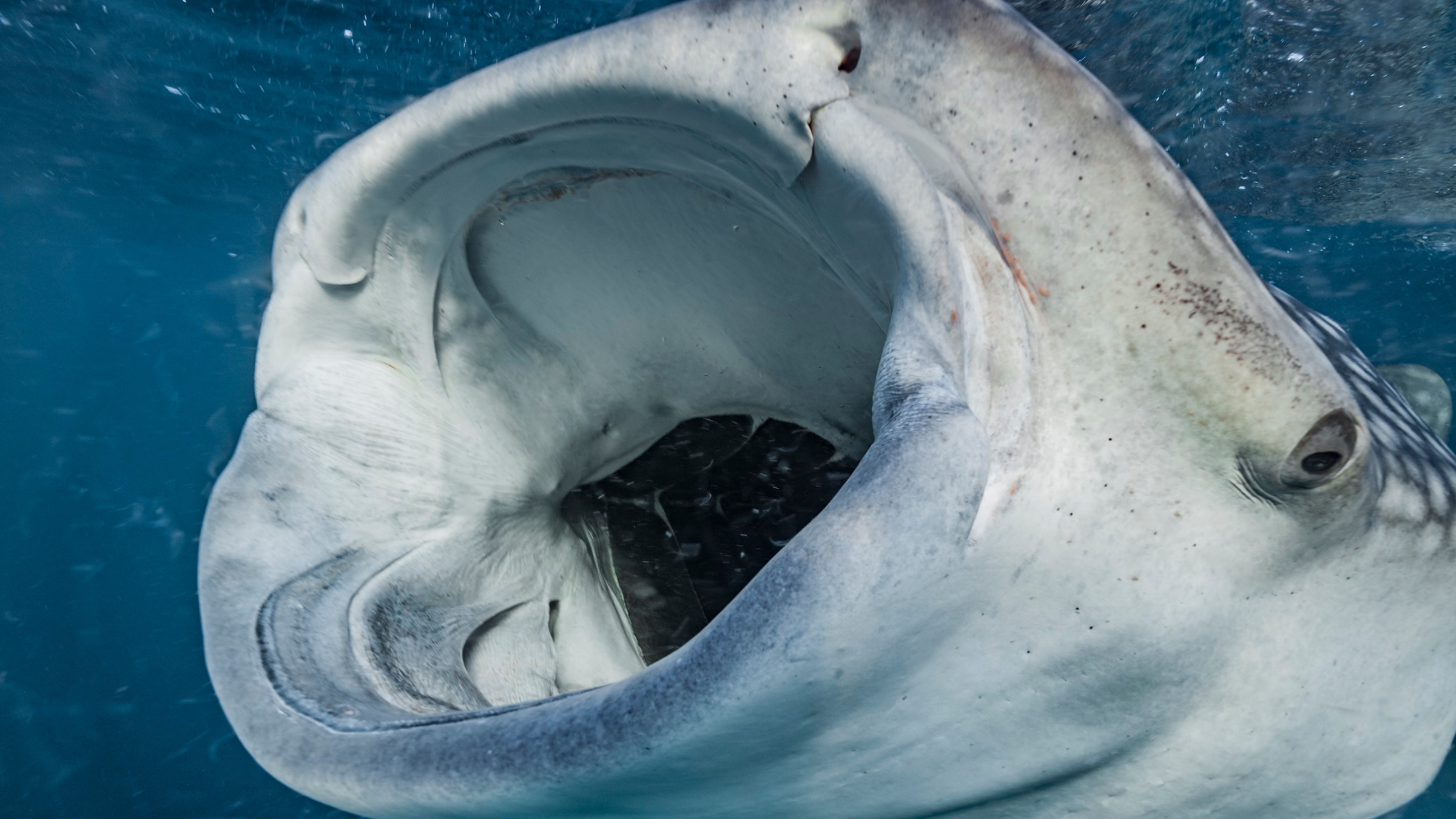
Camera Footage Reveals Whale Sharks Hunt and Feed Deep Underwater
Whale sharks are the largest fish in the ocean, but scientists have long known surprisingly little about their feeding behavior beneath the surface. New camera footage recorded from the backs of these gentle giants has now captured rare scenes of whale sharks searching for food and filter-feeding at depth.
The footage shows that whale sharks (Rhincodon typus) spend much more time feeding underwater than previously documented. It also reveals a diverse range of whale shark feeding techniques, including behaviors that have never been recorded before.
The videos show whale sharks filtering plankton and other tiny prey while cruising through open water. The sharks also feed as they glide downward during dives, swim upward toward the surface with their mouths open and travel just above the seafloor while foraging. Researchers found that slow, continuous underwater feeding was one of the animals’ most common activities.
Latest Videos FromLive Science
Philip Motta, professor emeritus of biology at the University of South Florida, was not involved in the study. He said the footage provides “very valuable” information about the wide range of whale shark feeding behaviors, which have been poorly documented until now.
Underwater cameras reveal how whale sharks feed
Before this research, scientists primarily studied whale sharks from boats, aircraft and by swimming alongside them. These approaches provided useful information but shared a major limitation: They could observe the sharks only when the animals were close to the ocean surface.
Previous research suggested that whale sharks spend substantial amounts of time feeding at different depths, away from human observers. A 2020 study estimated that whale sharks could forage at depth for as much as 20% of the day, while surface feeding accounted for less than 1% of their time.
To investigate this hidden behavior, researchers attached camera tags directly to whale sharks. The technology delivered a rare “shark’s-eye view” of feeding activity beneath the waves.
The scientists deployed camera tags on 10 whale sharks at Ningaloo Reef in Western Australia and collected more than 22 hours of first-person footage. They combined the recordings with a review of 106 previously published studies to create the most detailed catalog of whale shark behavior yet assembled.
Overall, the researchers identified 36 distinct behaviors. Twelve were associated with feeding, including six behaviors that had never been documented. The findings were published July 21 in the journal Marine Biology.
Whale sharks can reach lengths of 60 feet (18 meters), yet these enormous fish survive by consuming tiny prey such as krill, fish eggs and plankton. They live in tropical waters that are notoriously low in nutrients. The ability to switch between multiple feeding strategies could help explain how whale sharks meet their enormous energy needs in these challenging environments.
Even with cameras attached, however, researchers captured only part of the whale shark’s underwater life. The species is known to dive hundreds of feet below the surface, into dark waters where conventional cameras cannot record clearly.
“The most important new discoveries could involve what these gentle giants do during their deepest dives,” Motta said.
Shark quiz: How much do you know about these iconic ocean superstars?