


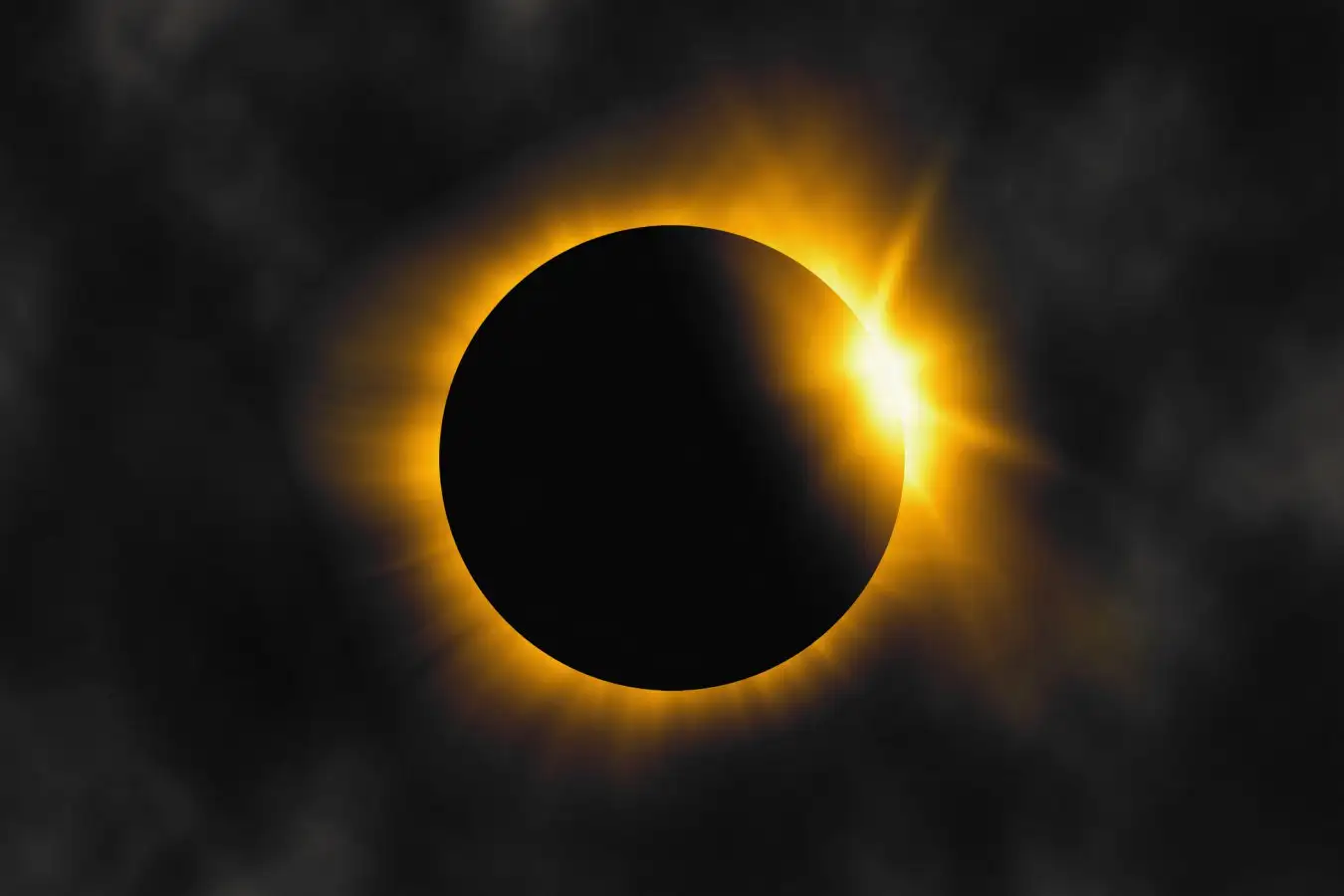

Total Solar Eclipse of 2024
Alexander/Alamy
On August 12, 2024, a remarkable total solar eclipse will traverse parts of Europe and the Atlantic Ocean as the moon aligns perfectly between the Earth and the sun, obscuring sunlight. Meanwhile, a partial solar eclipse will grace the skies over parts of the United States, Africa, the United Kingdom, and much of Europe and Canada.
Where to Witness the Solar Eclipse?
This total eclipse will initiate in Russia at around noon before moving eastward across the Arctic Ocean, passing just south of the North Pole, eventually landing in northeastern Greenland by 4 PM local time. The moon’s shadow will race along Greenland’s eastern coast at speeds exceeding 3,400 kilometers per hour, creating a maximum shadow duration of approximately 2 minutes and 18 seconds. Once across into Iceland, the eclipse will become visible in more populated areas, with Reykjavik experiencing totality for just over a minute at 5:48 PM local time. This marks Iceland’s first total solar eclipse since 1954, and it won’t witness another until 2196.
After sweeping past Iceland’s western shore, the total solar eclipse will cross the ocean once more, arriving in northern Spain just before 8:30 PM local time, while also brushing against northern Portugal and passing over the Balearic Islands before sunset.

European Space Agency (ESA)
What Occurs During a Total Solar Eclipse?
During totality, the moon completely obscures the sun’s disk, causing a sudden drop in temperature and transforming daylight into twilight. Stars become visible alongside the sun’s outer atmosphere, the corona. Typically hidden by the sun’s brightness, the corona’s breathtaking plasma can only be observed during totality. While necessitated eye protection is crucial at all other stages of a solar eclipse, viewing the corona is safe during totality.
This unique opportunity to observe the corona will be embraced by numerous solar scientists, who aim to delve into its mysteries, including understanding why it is significantly hotter than the sun’s surface.
Total solar eclipses are brief and localized, whereas partial solar eclipses—where the moon partially obscures the sun—last considerably longer. Many locations in the northern United States, Canada, extensive regions of Europe, and northwestern Africa will witness the partial solar eclipse lasting over an hour. Though less dramatic than total solar eclipses—where the corona isn’t visible and lighting and temperatures do not fluctuate markedly—it will be accessible to a larger audience. It’s essential to wear protective eyewear at all times during partial eclipses, and alternative viewing methods like pinhole cameras or natural shadow projections can safely reveal the moon’s passage in front of the sun.

Eclipse Discovery Tour
Join tours and cruises designed to maximize your solar eclipse viewing experience at prime locations globally.
Topics:
- Solar Eclipse/
- Solar Eclipse 2024
Source: www.newscientist.com