


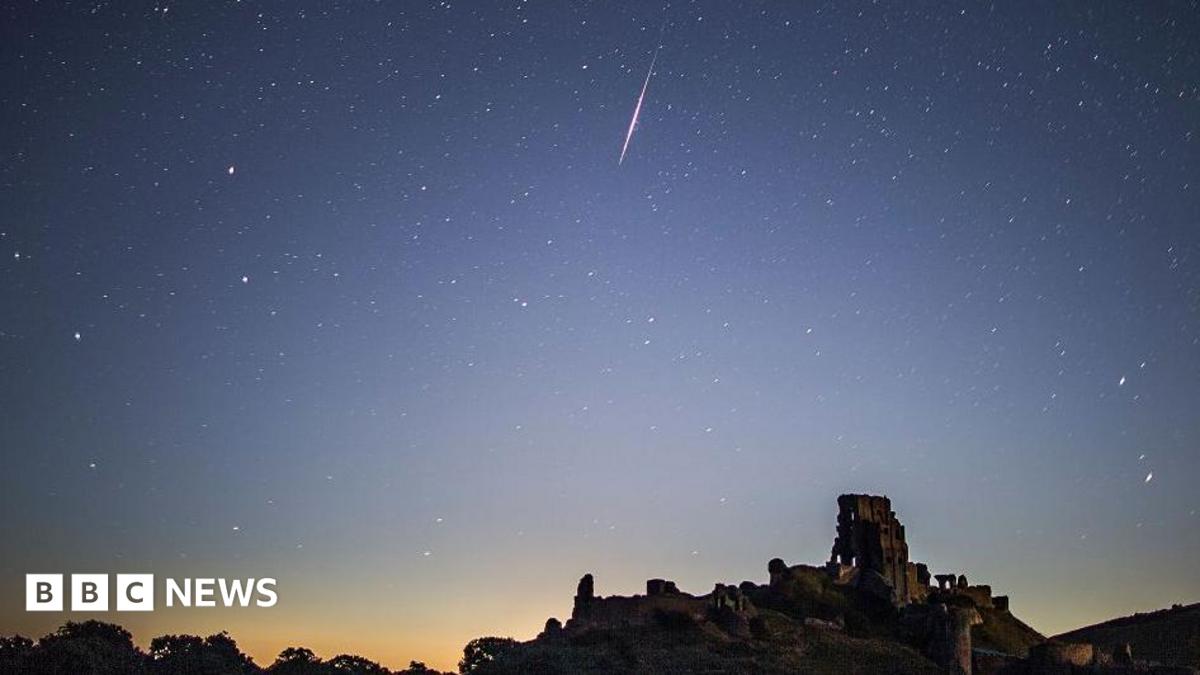
Meteor showers occur when Earth passes through trails of dust and debris left behind by asteroids or comets—icy objects made of rock, dust and frozen gases that orbit the Sun.
When this debris enters Earth’s atmosphere at high speed, it burns up and produces bright streaks of light known as meteors, creating a spectacular night-sky display.
Royal Astronomical Society research fellow Dr Becky Smethurst described the Perseid meteor shower as “one of the best nights for astronomy all year”.
The Perseids, pronounced “Per-see-ids”, are caused by dust and rock fragments left behind by Comet Swift-Tuttle.
Comet Swift-Tuttle is a particularly large comet, with a solid nucleus measuring about 16 miles (26km) across.
Because the comet takes 133 years to complete one orbit around the Sun—far longer than Earth’s orbit—some of the debris that creates the Perseid meteor shower may have been released more than a century ago.
“It’s sort of like the Universe’s own cosmic clock in a way,” Smethurst said.
The Perseid meteors can be seen from locations around the world. They are named after the constellation Perseus, the point in the sky from which the meteors appear to originate.
Source: www.bbc.co.uk