


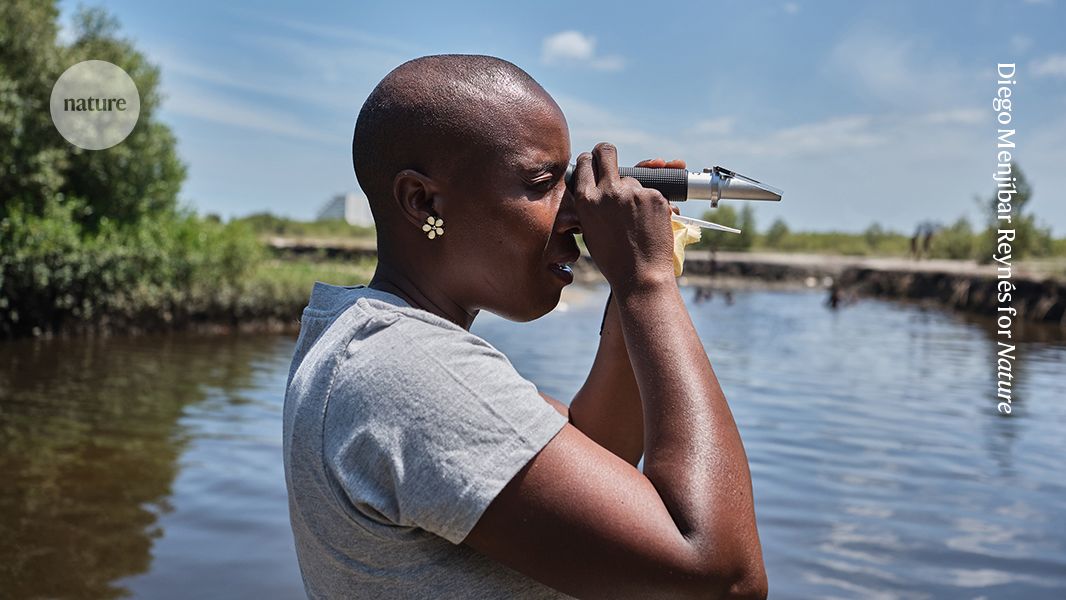
Macamo brings the soil samples back to the laboratory for analysis. There, each sample is dried, weighed, burned and weighed again. Burning removes the carbon dioxide (CO2) stored in the organic matter, allowing Macamo to estimate the soil’s carbon content by comparing the sample’s dry weight before and after burning.
With a master’s degree in aquatic biology and limnology from Eduardo Mondlane University, Macamo initially hoped to build a career studying marine animals. In 2008, one of her lecturers offered her a research position at the university, and they agreed that she could specialize in marine botany. Soon afterwards, she visited Gazi Bay in Kenya as part of a mangrove restoration programme organized by the Earthwatch Institute, an international environmental charity. “I fell in love with the mangroves, and that was it,” says Macamo.
From 2014 to 2018, Macamo completed a research PhD in marine botany at Nelson Mandela University in Gqeberha, South Africa, conducting her research in Mozambique. She once spent about half of her working time in the field, but today her role involves far more office-based work. Administration, reporting, programme development, management, teaching and mentoring leave less time for field research and mangrove monitoring. Even so, she misses visiting the wetlands. “I feel renewed every time I go to the mangroves,” she says.
Source: www.nature.com