


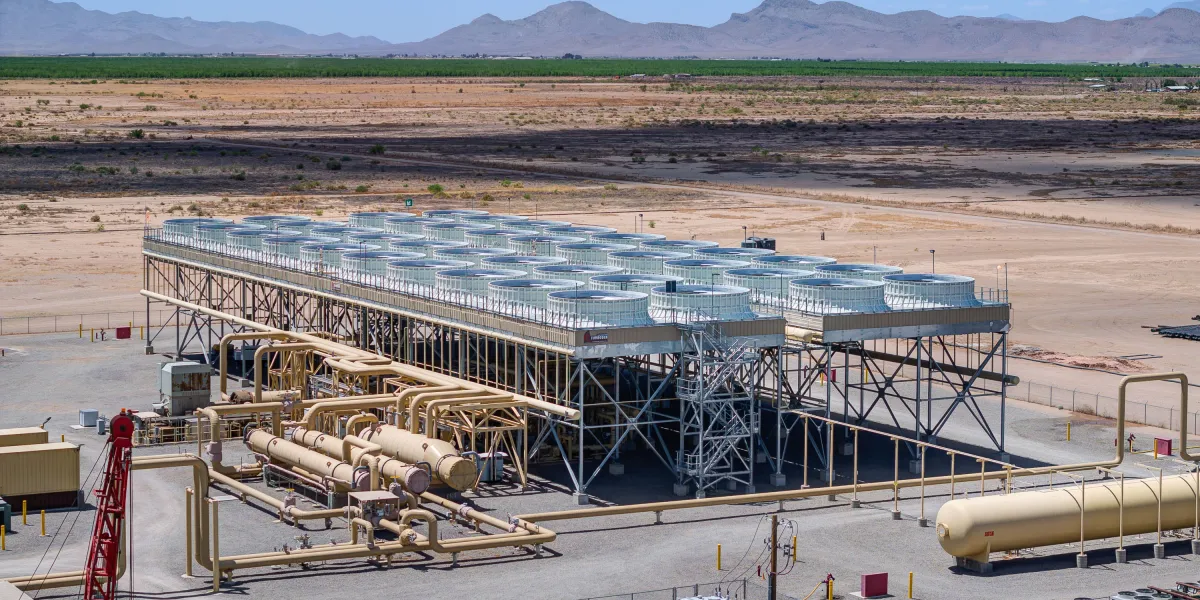
Researchers found that geothermal fluid flow actually increased in the area where they drilled a new well at the Lightning Dock geothermal project. The discovery could change how developers evaluate not only Lightning Dock, but also hydrothermal resources across the United States. “That fundamentally changes how you think about not just Lightning Dock but all hydrothermal assets in America and what the potential can be for all of them,” says Ben Brenner, director of federal affairs at Zanskar.
During its first year of operation, Lightning Dock generated more than twice as much electricity as it would have using the existing wells. The relatively small geothermal power plant has a capacity of 15 megawatts, enough to supply electricity to approximately 11,000 homes in the United States.
Oil and gas companies have been drilling progressively deeper for underground resources over the past several decades. While early operations were located closer to the surface, modern oil and gas production can extend 20,000 feet underground or more. “I think that arc is going to play out in geothermal,” says Joel Edwards, Zanskar’s chief technology officer. Typical geothermal well fields are between 3,000 and 5,000 feet deep, but drilling deeper could become more common as geothermal energy development expands.
Zanskar plans to continue developing the Lightning Dock site. With several more years of development and an upgrade to the power plant, the company could generate even more electricity from the area, Edwards says.
Enhanced geothermal systems have attracted significant attention and investment in recent years. These projects aim to expand the locations where geothermal energy can be produced. Fervo Energy, for example, uses hydraulic fracturing techniques to open pathways in hot rock that would otherwise be too impermeable for conventional geothermal power generation.
However, there is still plenty of “low-hanging fruit” in the geothermal industry, Edwards says. Many conventional geothermal resources may have substantial untapped potential—they simply need to be reassessed using new technologies and a closer look.
Source: www.technologyreview.com