


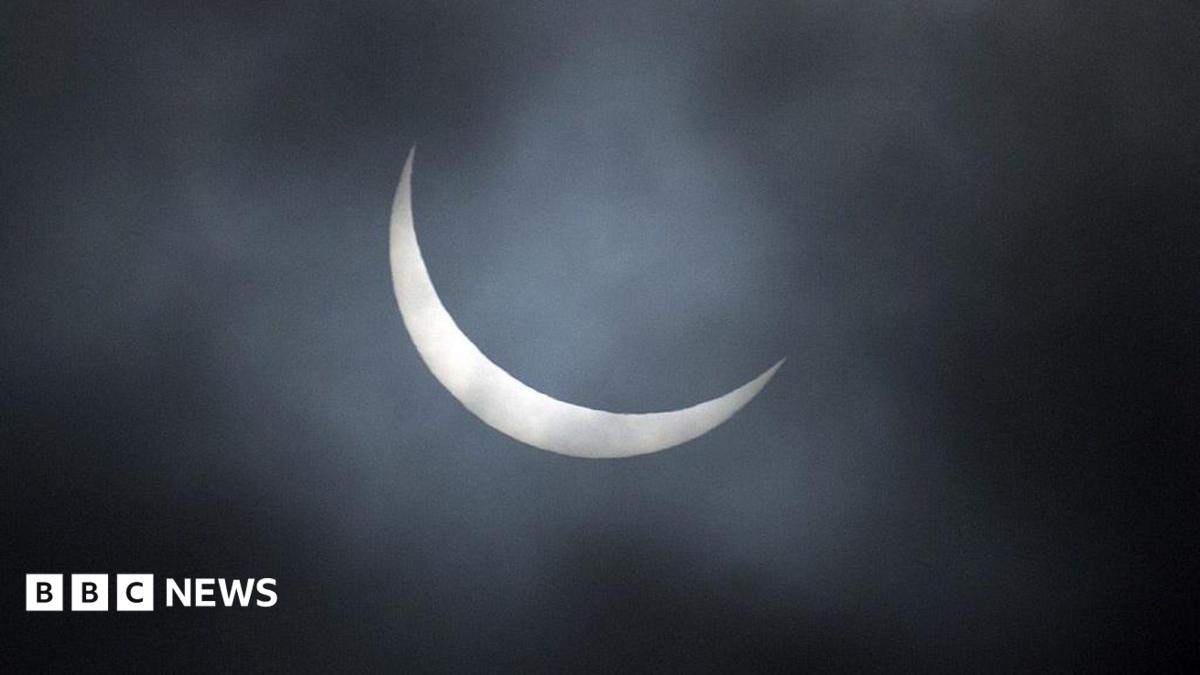
Looking directly at a solar eclipse can cause serious retinal damage, according to The Royal College of Ophthalmologists. Solar retinopathy may develop without causing immediate pain or other warning symptoms.
To watch a solar eclipse safely, use certified eclipse glasses or approved handheld solar viewers. Never use ordinary sunglasses, camera filters or other makeshift eye protection.
Genuine eclipse glasses should display the ISO 12312-2 or ISO 12312-2:2015 safety certification, according to The Royal Observatory Greenwich.
The government advises against using eclipse glasses if their lenses are scratched, torn or damaged. Check your solar viewing equipment carefully before use.
You can also watch the solar eclipse indirectly, external without specialist equipment.
Safe indirect viewing methods include making a simple pinhole projector at home, watching the eclipse through a colander or observing the crescent-shaped sunlight created by gaps between tree leaves. You can also project the Sun’s image onto a sheet of paper using a pinhole viewer.
BBC Sky at Night Magazine, external also explains how to enjoy a solar eclipse safely without using eclipse glasses.
Source: www.bbc.co.uk