


Dogs are remarkably skilled at reading human emotions, responding to smiles, laughter, grimaces, and tears. While scientists and dog owners have long recognized this ability, the biological processes behind dogs’ understanding of human facial expressions have remained unclear.
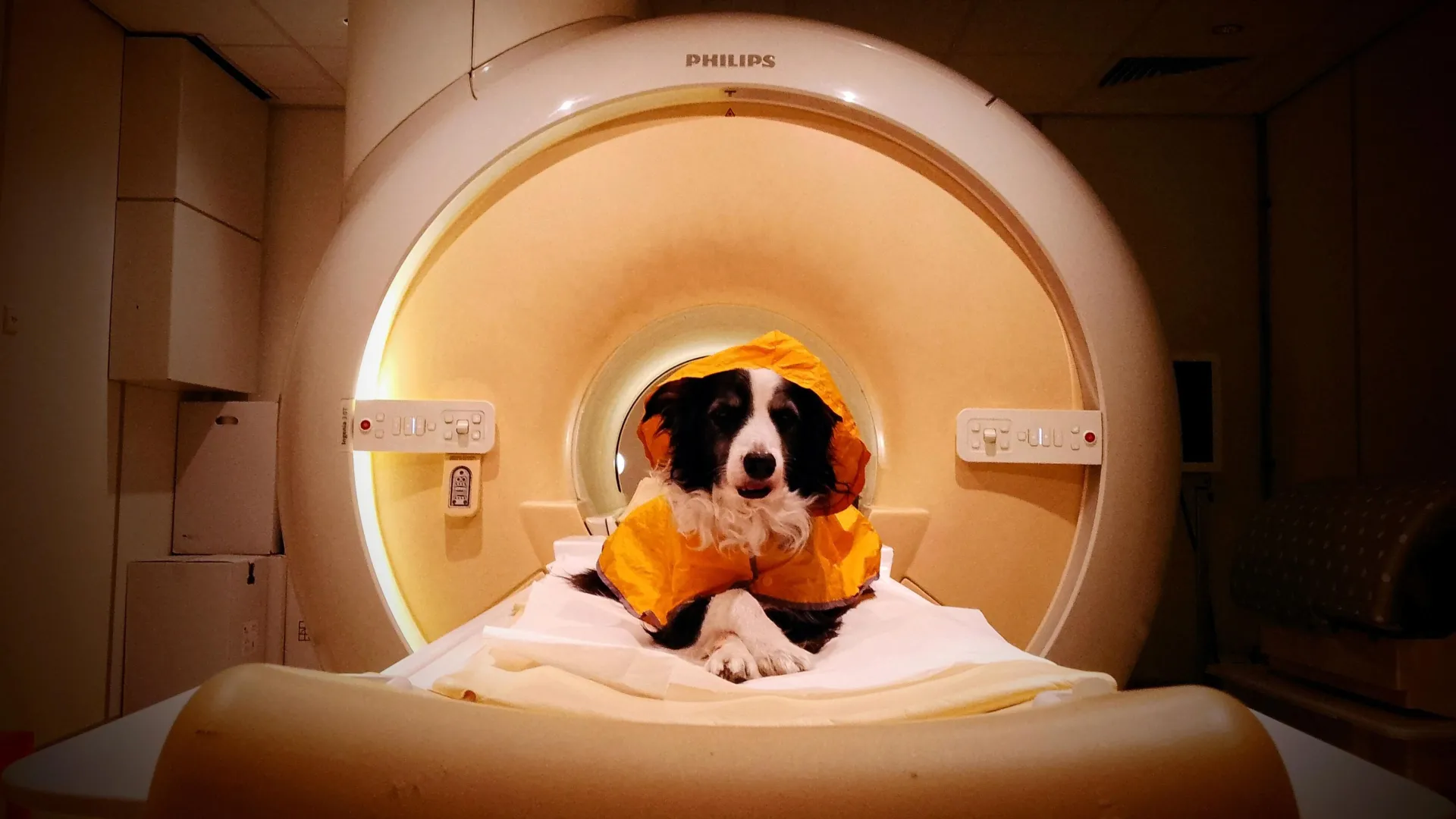
Research published Aug. 7 in the Cell Press journal iScience offers a detailed look at how dogs’ brains respond to different human facial expressions. The study found that smiling triggers unique activity in specific brain regions linked to emotion and reward. Researchers also found the first evidence that dogs can distinguish between certain negative human expressions, including anger, sadness, and fear.
“Humans are very good at recognizing subtle details in faces, and dogs are no different,” said lead author Raul Hernández Pérez of the University of Vienna. “This makes dogs especially interesting. By studying their brains, we can better understand the adaptations that support dogs’ remarkable ability to interpret human emotions.”
How dogs’ brains respond to human smiles
Researchers first examined happiness because earlier studies suggested that positive human facial expressions may have special meaning for dogs.
They scanned the brains of eight dogs as the animals viewed photographs of unfamiliar people showing either happy or neutral expressions. When the dogs saw smiling faces, activity increased in the temporal cortex and caudate nucleus—brain regions associated with higher-level cognitive processing and reward.
“The activity in the caudate nucleus is particularly interesting,” said Laura Kuaya of the University of Vienna. Kuaya began her research at the National Autonomous University of Mexico and later continued it through collaborations at Eötvös Loránd University in Hungary. “This suggests that a happy human face may have emotional meaning for dogs.”
The researchers then investigated whether the same brain regions responded differently to other human emotions. In a second experiment, 12 dogs viewed photographs of people expressing happiness, anger, fear, and sadness. The team used machine learning to analyze the patterns of brain activity produced by each facial expression.
Dogs did not respond to every negative expression in the same way. Activity in the temporal cortex and caudate network was especially distinctive when the dogs viewed happy faces, allowing researchers to separate the brain responses to smiles from those associated with anger, fear, and sadness.
Dogs can distinguish between negative human emotions
The findings indicate that dogs do more than simply classify human facial expressions as positive or negative.
Whole-brain analysis revealed different patterns of neural activity when dogs viewed fearful faces compared with angry or sad faces. According to the researchers, this is the first evidence that dogs can distinguish between certain negative facial expressions in humans.
However, the results do not mean that dogs experience emotions exactly as humans do. The researchers also noted that static photographs represent only a small part of real-world communication. Dogs typically combine multiple signals when interpreting people, including facial expressions, body language, voice tone, and scent.
“When we compare humans and primates, we are studying abilities that may have evolved from a common ancestor,” said Kuaya. “Dogs followed a very different evolutionary path. Through domestication, however, they developed the social skills needed to understand and cooperate with humans.”
Domestication may have shaped dogs’ social skills
All of the dogs involved in the study were pets living with families. The researchers noted that free-ranging dogs, including stray and street-living dogs, experience different social environments and may interpret human signals in different ways.
Future studies will take a more dog-focused approach to examine how canines combine different types of brain signals when interpreting the people around them. Researchers also plan to compare how dogs and humans process the same emotional information.
“I want people to see dogs as emotional beings,” Kuaya said. “They have evolved alongside us to understand and respond to our expressions. Recognizing this can change the way we communicate with dogs and care for them.”
Source: www.sciencedaily.com