


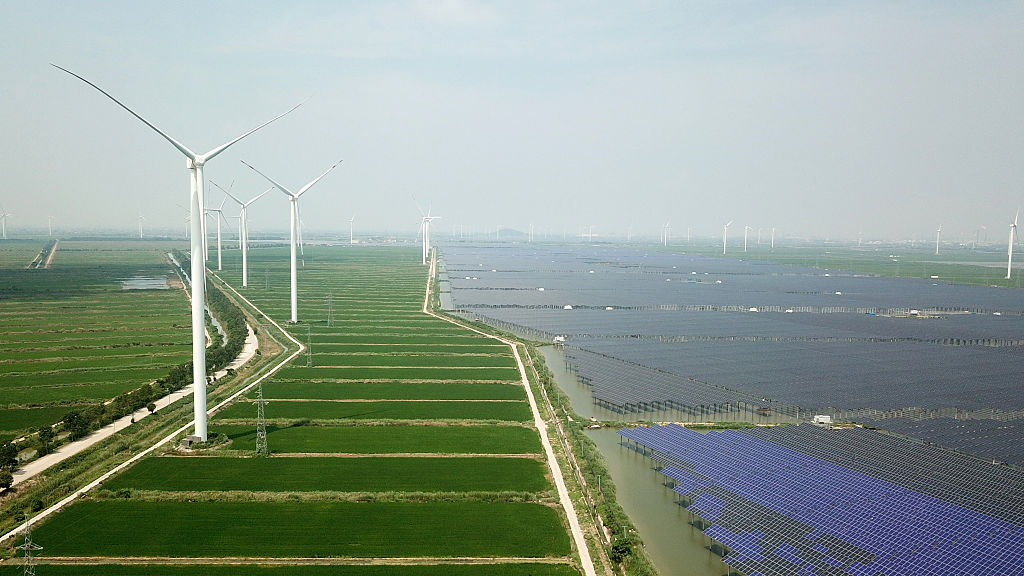
Rising electricity demand is accelerating the deployment of renewable energy across the United States.
U.S. electricity consumption is projected to increase by 39% by 2035, driven by the rapid electrification of data centers, household appliances and transportation, according to consultancy ICF. The forecast marks a significant shift after electricity demand remained largely stable for more than a decade.
Solar and wind power are among the fastest and most cost-effective energy sources to add to the electric grid. According to the think tank RMI, natural gas projects typically take at least three years to develop, while new solar and wind facilities can often be completed in less than two years.
Investment bank Lazard estimates that power producers can reach the break-even point by selling solar and wind electricity for as little as $38 and $37 per megawatt-hour, respectively. Natural gas generation, by comparison, requires prices of at least $48 per megawatt-hour. However, these estimates do not fully include the cost of grid upgrades and battery storage needed to manage the intermittent nature of renewable power.
Renewable energy developers could also benefit from higher electricity prices. Prices are expected to rise by 40% to 120% after subsidies included in President Biden’s Inflation Reduction Act expire.
“Frankly, this is a good time to be a developer,” said Ethan Zindler, head of country and policy research at BloombergNEF. “Data centers need power, and they’ve basically needed power since yesterday.”
Extreme weather and President Trump’s conflict with Iran have also contributed to growing demand for renewable energy, battery storage and other clean power technologies.
Consumer investment in residential solar panels, home battery storage and zero-emission vehicles helped drive clean energy spending in the second quarter of 2026. Spending rose 45% from the previous quarter and 21% compared with the same period in 2025, according to the Rhodium Group.
“Floridians are installing a lot of home battery storage to help power their homes during hurricanes,” said Hannah Hess, Rhodium’s director of energy and climate protection. “At the same time, fuel prices are rising because of the conflict with Iran, while electric vehicles and hybrid vehicles are becoming increasingly popular among consumers.”
U.S. courts have also delayed several efforts by the Trump administration to restrict renewable energy development. A district court judge in Oregon recently ordered the Department of Defense to stop blocking onshore wind projects. Courts have also halted all five of the administration’s attempts to stop the construction of offshore wind projects along the U.S. East Coast.
Developers have achieved some progress by lobbying government officials directly and working with individuals who have connections to the administration to support specific projects, sources told the Financial Times. One argument used by developers is that certain projects will not directly replace fossil fuels, which remain President Trump’s preferred energy source.
“What we’re finding from the permitting side is that the administration is being pretty pragmatic,” said Cliff Graham, CEO of clean energy company Avantus. “There’s a lot of land between Reno, Tucson and Barstow, but there’s no other way to put it to good use than with solar power and storage.”
© 2025 Financial Times Company. Unauthorized reproduction prohibited. May not be redistributed, copied or modified in any way.
Source: arstechnica.com