


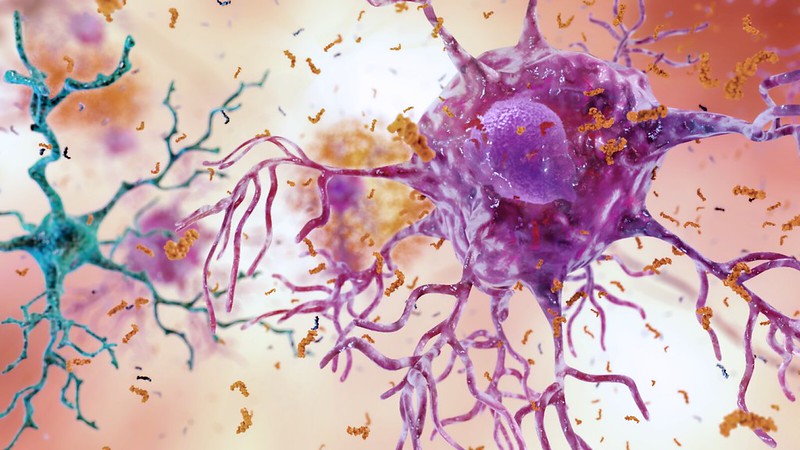
Neurodegenerative diseases are conditions in which nerve cells, or neurons, gradually become damaged and die over time. Neurons are highly active cells that require significant amounts of energy, making them particularly vulnerable to DNA damage. Although neuronal DNA damage is a natural part of aging, changes in DNA sequences—known as mutations—can accumulate throughout a person’s lifetime.
Previous research has shown that neurons in people with Alzheimer’s disease (AD), frontotemporal dementia (FTD), and amyotrophic lateral sclerosis (ALS) can accumulate unusually large numbers of DNA changes called somatic mutations. However, researchers have not known what causes this excess of mutations or whether the same biological process contributes to DNA damage across all three diseases.
To investigate these questions, researchers at Boston Children’s Hospital and Harvard Medical School analyzed post-mortem brain tissue from people who had Alzheimer’s disease, FTD, ALS, or none of these conditions. They compared the processes responsible for DNA mutations by examining DNA from individual neurons in healthy and diseased brain tissue.
The researchers first dissected the brain tissue and added fluorescent markers to identify the nucleus, the central part of each nerve cell where DNA is stored. They then used a cell sorter to separate the nucleus from the rest of the cell. Finally, they accessed the neuronal DNA using a sequencing technique called single-cell whole-genome sequencing. This allowed the team to sequence the DNA of individual neurons and identify mutations.
The analysis included 159 neurons from people with Alzheimer’s disease, 61 neurons from people with FTD, 77 neurons from people with ALS, and 232 neurons from healthy individuals. This comparison enabled the researchers to evaluate both the number and types of DNA mutations in diseased and control neurons. They found that neurons from all three neurodegenerative diseases contained unusually high numbers of two-base-pair deletions, with some cells showing more than 1,000 mutations. In comparison, healthy neurons typically accumulate approximately 200 to 300 mutations over an 80-year lifespan.
DNA damage caused by biological processes can leave behind a recognizable pattern, often called a mutational signature. By identifying these patterns, scientists can determine which biological mechanisms may have caused the damage. Because two-base-pair deletions were especially common in diseased neurons, the researchers used machine-learning algorithms to search DNA sequences for recurring mutation patterns. Their analysis identified a pattern known as ID-4.
The researchers compared the ID-4 signature with a database of previously characterized mutational signatures. They found that ID-4 is associated with problems involving a DNA repair protein called TOP1. TOP1 temporarily breaks and reseals DNA to relieve tension created during normal cellular activity. Once this process is complete, TOP1 normally separates from the DNA. If TOP1 becomes trapped, however, it can leave one of the DNA strands broken.
To determine whether abnormal TOP1 activity contributed to DNA damage, the researchers isolated DNA from healthy and diseased neurons and analyzed it using gel electrophoresis. Intact DNA forms defined bands, while fragmented DNA spreads into a smear. The more extensively the DNA is broken, the stronger the smear appears. Using a machine to measure smear intensity, the researchers found that DNA from diseased neurons produced smears up to 3.2 times stronger than DNA from control neurons. They also observed that neurons with greater DNA fragmentation contained more ID-4 signatures.
Based on these results, the researchers concluded that abnormal TOP1 activity may cause frequent single-strand DNA breaks in neurons. They proposed that some of these breaks may be repaired incorrectly, eventually leading to widespread DNA damage in Alzheimer’s disease, FTD, and ALS.
Overall, the study found that neurons affected by these three neurodegenerative diseases accumulate excessive DNA mutations despite differences in symptoms and underlying causes. The findings also provide evidence that abnormal TOP1 activity may contribute to this mutation buildup. Preventing TOP1 from becoming trapped on DNA—or improving the repair mechanisms that remove trapped TOP1—could therefore represent a potential treatment strategy for multiple neurodegenerative diseases. Further research is needed to determine whether targeting this pathway can slow or prevent neuronal damage.
Post views: 106
Source: sciworthy.com