


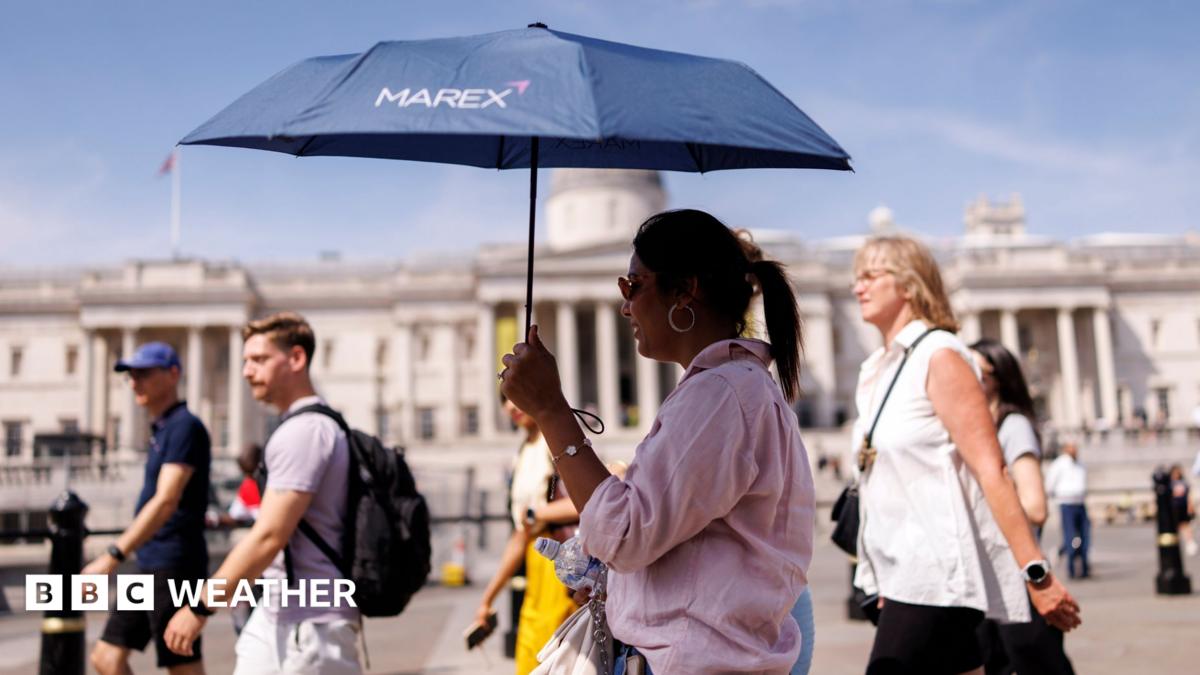
Britain’s summer temperature records are being broken with remarkable frequency, offering a clear sign of how quickly the UK climate is changing.
In a stable climate, new temperature records should become increasingly rare. Every record raises the benchmark, making the next one more difficult to surpass.
Instead, all five of Britain’s hottest summers on record have occurred since 2000, external. Until last year, the differences between the top four were extremely small, with just 0.05°C separating them.
Then came 2025, when the UK summer temperature record rose by 0.34°C. Now, only a year later, that record appears to have been broken again.
The phrase “breaking records” may sound like journalistic shorthand, but climate scientists use it to describe records surpassed by unusually large margins. Research shows, external that these dramatic increases are more likely when the climate is warming rapidly.
Why is the UK warming so quickly? Britain lies on the western edge of Europe, the fastest-warming continent on Earth, where temperatures are rising at roughly twice the global average.
Several factors are contributing to this trend. Land warms faster than the ocean, parts of Europe reach into the rapidly warming Arctic region, and shifting weather patterns are causing more frequent and intense summer heatwaves.
Scientists are still determining exactly how much each factor contributes, but the overall picture is clear: the climate influencing the UK’s weather is becoming warmer.
This does not mean Britain will set a new summer temperature record every year. Natural weather patterns will continue to bring both hot and cool summers. However, the long-term trend is unmistakable, as records once considered extreme are being surpassed at an increasingly alarming rate.
The question is no longer whether Britain will experience hotter summers. It is how frequently they will occur—and how high UK temperatures will rise.
Source: www.bbc.co.uk