


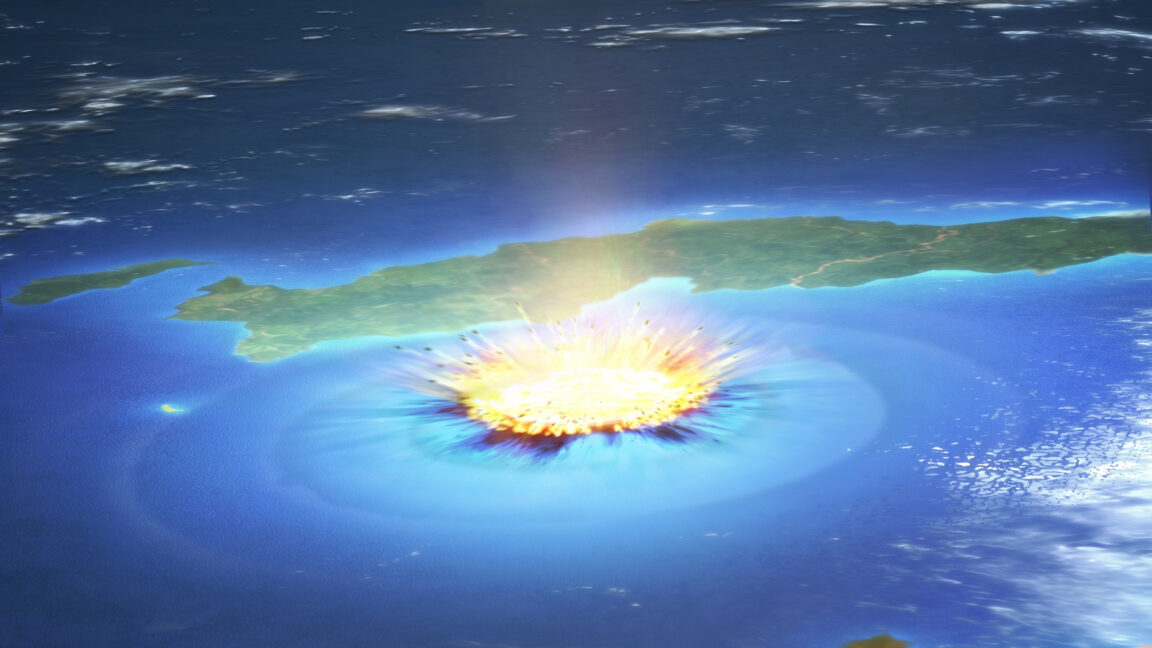
Chicxulub Impact May Have Created Long-Lasting Conditions for Early Life
Long-lasting hydrothermal activity can give prebiotic chemistry time to occur, allow life to develop, and help microorganisms thrive and spread beyond their original habitat, according to Pickersgill and a study published in Communications Earth & Environment.
How Impact Craters Can Support Life
Hydrothermal systems created by impacts are found throughout Earth. Although these systems are considered potentially habitable because they provide heat and nutrients, evidence of life is difficult to find. It is even harder to connect the timing of an impact with the processes that may have helped life flourish.
Of the 70 underwater impact craters known to have hydrothermal activity, only eight have been confirmed to be colonized by microorganisms.
Pickersgill and her team investigated whether the Chicxulub impact could have produced habitable conditions. They analyzed rock samples to determine when the crater’s potential for supporting life was greatest. The study does not establish whether microorganisms actually inhabited the hydrothermal system inside the crater.
Hydrothermal Activity May Have Lasted Long Enough for Colonization
The researchers examined how long impact craters maintained temperatures and other conditions suitable for life. Longer periods of habitability could give organisms more time to colonize hydrothermal vents and surrounding environments.
“Longer periods of hydrothermal activity allow prebiotic chemistry to occur, life to develop, and microorganisms to thrive and reproduce beyond their place of origin,” Pickersgill said.
Dating the Chicxulub Hydrothermal System
To determine how long the Chicxulub hydrothermal system remained active, Pickersgill drilled 1 kilometer underground and collected rock samples. She then conducted radioisotope measurements on feldspar recovered from the site.
Feldspar contains potassium. As that potassium decays into argon, scientists can use the ratio of the elements to determine the age of the rock. The same method is used to date rocks and volcanic layers on the Moon.
The findings help clarify how long an impact-generated hydrothermal environment may remain suitable for life, while leaving open the question of whether the Chicxulub system was actually inhabited.
Source: arstechnica.com