


Why Solar Roofs and Solar Shingles Can Cost More to Install and Repair
Solar roof systems offer an integrated alternative to conventional rooftop solar panels, but their installation and repair can be more complex and expensive. Small-batch manufacturing, custom roof designs, complex building regulations and limited access to components all add to the challenge.
Small-Batch Manufacturing Limits Solar Roof Cost Savings
Swiss small company Freesands is considering expanding into the United States. Deborah Learoyd, the company’s CEO and managing director, estimates that its revenue has increased by 20–30% since it was founded in 2019.
However, solar roof components are generally still manufactured in small batches. This limits economies of scale and standardization, although flexible manufacturing may help reduce some of the impact.
Learoyd said that the unit price of Freesands products has fallen over time, but much of the cost comes from the fact that every roof is different. Each project may require a customized design and a different installation method.
“Much of the cost actually comes from the fact that every roof is a little different. So each one requires a slightly different design, and each requires a slightly different installation method.”
Solar Roof Installation Requires Multiple Trades
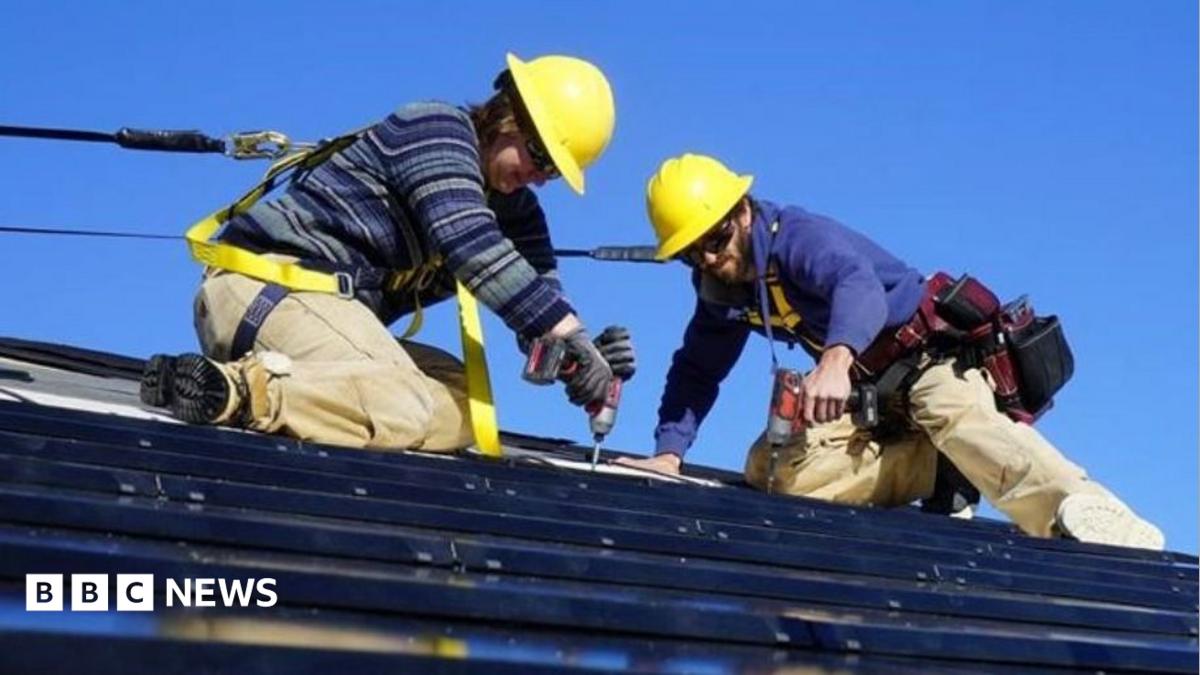
Solar roofs typically require cooperation among a roofing contractor, a solar installer and an electrician. Building regulations can also be more complex than those for standard solar panels.
The additional time and paperwork can discourage roofing contractors. Collardson said some roofers worry that solar roof projects take too long and reduce their profitability compared with conventional roofing work.
“When you try to bring roofers into the equation, they say, ‘This is going to take forever. You’re going to lose money. You could have sold 10 roofing jobs in the time it took to sell this.’”
Why Solar Shingle Repairs Can Be More Expensive
Corradoson must charge more to repair solar shingles than standard photovoltaic (PV) installations.
Traditional solar panels typically include electronics that provide a map showing how much power each panel produces. If a problem occurs, technicians can use that information to identify the affected panel.
“With traditional solar, there’s usually electronics on the panels that show you a map that shows you exactly how much power each panel is producing.”
Solar shingles generally do not offer the same mapping capability because there is no space beneath each shingle for the electronics. Thermal cameras can help technicians pinpoint problem areas, but accessing those areas remains difficult.
“With solar shingles, you don’t really get the benefit of that mapping. There’s no space under the shingle for electronics.”
Removing a shingle from the middle of an array may require technicians to walk over other shingles. That can create microscopic cracks and potentially cause problems later.
“You can remove something in the middle of the array, but you have to walk over other things. You really shouldn’t walk over it because it creates microscopic cracks and can cause problems down the road.”
Solar Roof Cost Compared With Conventional Solar Panels
Before repair costs are taken into account, a solar roof can cost twice as much as a roof-mounted solar panel system. The higher price reflects the customized design, specialized installation process and added difficulty of repairing integrated solar shingles.
Source: www.bbc.co.uk