


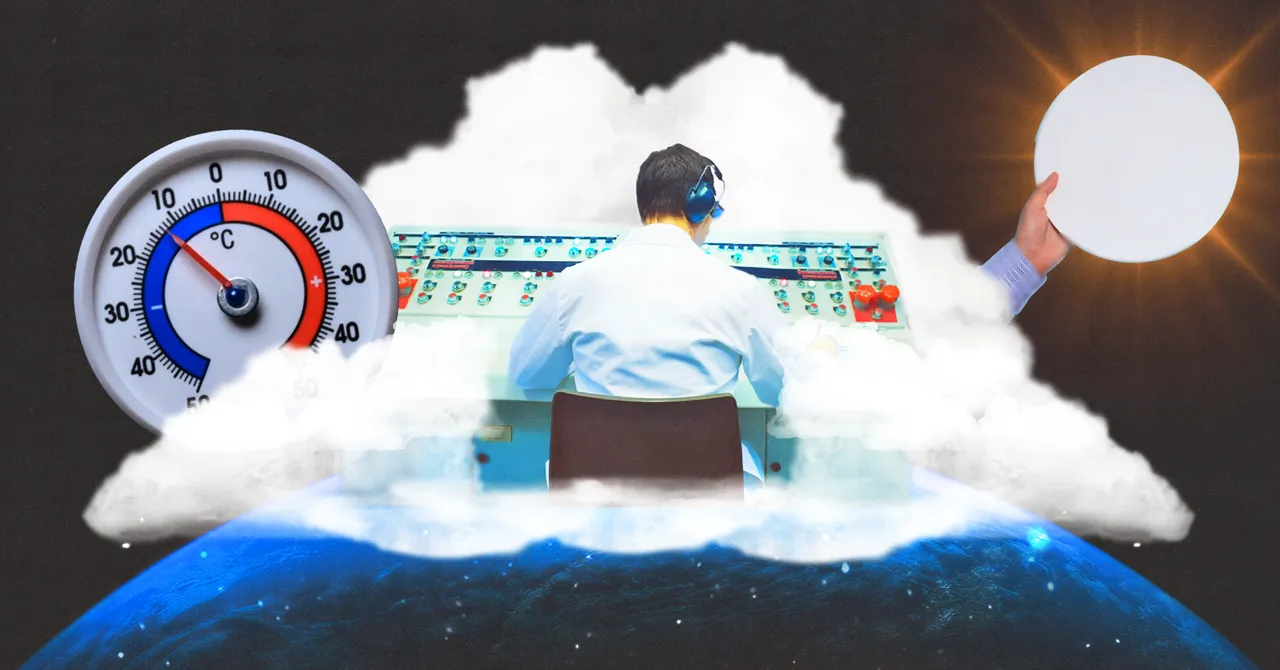
Solar Geoengineering War Game Tests the Risks of Cooling Earth
When it came to deciding the fate of the planet, Dr. Colleen Gorja always believed science and reason would have a seat at the table. That belief was tested one morning last September in London, when climate researchers joined the first in a series of war games designed to prevent an uncontrolled global race to develop technologies that could cool Earth—technologies that carry enormous unknown risks and could reshape life on the planet.
“I thought it would be very simple. For example, we could all agree to do ethical research and make sure it’s for the betterment of all humanity,” she told WIRED. “And hey, was I wrong?”
A Climate Geoengineering Simulation in London
The simulation, titled “Exploring Geopolitical Tipping Points and Climate Cooling Strategies,” brought together dozens of foreign affairs experts, scientists, military personnel and former government officials from around the world. The exercise took place in a conference room at Queen Mary University of London.
After introducing themselves over coffee and small yoghurts, participants sat at tables arranged in a square. Each table represented a country or organization, including governments, climate change NGOs and nonprofits, Indigenous groups and technology companies. Gorja provided technical advice to help participants make scientifically informed decisions.
What Is Solar Radiation Modification?
The purpose of the exercise was to stress-test the world’s response to a group of future technologies collectively known as solar radiation modification, or solar geoengineering. These technologies aim to reverse global warming by reflecting some of the sunlight that reaches Earth—for example, by spraying sulfur dioxide and other manufactured substances into the atmosphere.
The cooling effect of this type of solar geoengineering is widely accepted. It would mimic the well-known impact of large volcanic eruptions, which can temporarily cool Earth by more than half a degree. However, the effects would be uncertain and uneven. Models predict that some regions could experience drier conditions, including sub-Saharan Africa, while the Atlantic could see more intense tropical storms.
The cooling would also continue only as long as geoengineering operations continued. If they stopped, global temperatures could rise rapidly, creating consequences that would be difficult to predict.
Solar Geoengineering Moves Toward the Real World
Until recently, solar radiation modification was a speculative niche within climate science. That has changed rapidly as private companies explore solar geoengineering as a commercial opportunity.
Last year, the US-Israeli startup Stardust Solutions raised $60 million. In May, details were released about a series of new inventions intended to lower Earth’s temperature. In August, Elon Musk spoke in favor of solar geoengineering, suggesting that SpaceX could be a candidate for geoengineering intervention. He wrote on X: “We’re going to need space satellites and massive geoengineering to control the temperature, or it’s game over.”
Could Climate Cooling Begin Within a Decade?
Former UN adviser Cynthia Schaaf told WIRED: “That could easily happen within the next 10 years, not 15 years from now.”
Source: www.wired.com