


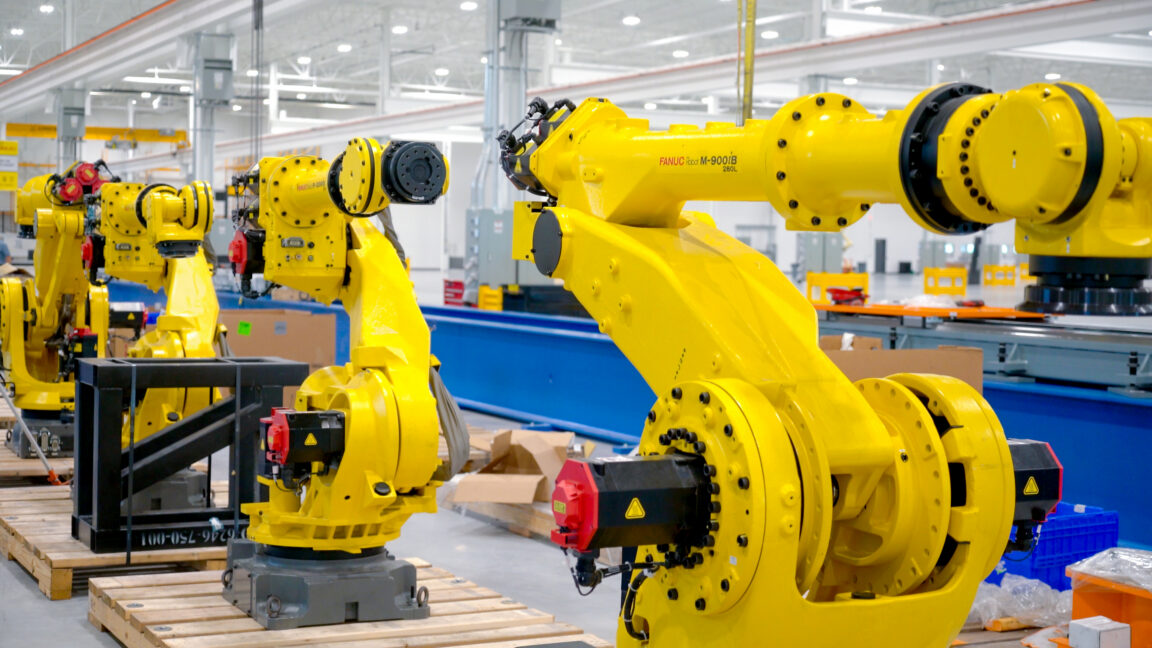
President Donald Trump has classified imports of foreign-made industrial robots as a potential national security threat and ordered negotiations with US trading partners. The directive could eventually lead to tariffs, quotas, or other charges on imported robots and related machinery, affecting major manufacturers that depend on automated systems.
Industrial robots placed under national security review
Trump issued the presidential declaration on October 28. It represents increased government oversight of foreign-made industrial robots and could complicate manufacturing operations for major US companies, including Detroit automakers General Motors and Ford, electric-car company Tesla, and aerospace and defense companies such as Boeing and Lockheed Martin.
The declaration describes industrial robots and machinery as the “powerhouse” behind every critical infrastructure sector in the US economy. It also says these systems are essential to producing US military weapons.
An investigation conducted under US Secretary of Commerce Howard Lutnick reportedly found that importing the robots poses a risk to the country’s industrial base and could threaten its long-term competitiveness in fields that are increasingly important to national security.
Cybersecurity concerns cited
The Commerce Department’s investigation also identified “unique security and safety risks.” According to the declaration, imported robots could create “significant cybersecurity vulnerabilities that could have serious consequences for the United States.”
The language resembles the justification used by the Federal Communications Commission in July 2026 when it banned new models of foreign-made robots, including robot vacuum cleaners, quadrupedal robot dogs, and humanoid robots. The FCC’s action specifically exempted industrial robot arms and other stationary robots commonly used in auto factories and distribution warehouses.
Negotiations could precede tariffs
For now, the directive calls on the United States and its trading partners to negotiate adjustments to imports of robots, industrial machinery, and their parts. The countries have 180 days from the date of the declaration to reach new agreements.
If no agreement is reached, the declaration warns that the president could take further action, including imposing “duties, duties, quotas, or charges” on the imports.
Source: arstechnica.com