


AI agents are beginning to reshape how people use the internet, while safer-road initiatives, cybersecurity incidents, market volatility and advances in quantum computing highlight the broader technology trends shaping the day. This edition also covers a record cryptocurrency hack, lab-grown cacao, interstellar space and a selection of lighter stories.
This is today’s edition of The Download, a weekday newsletter bringing you a daily dose of what’s happening in technology.
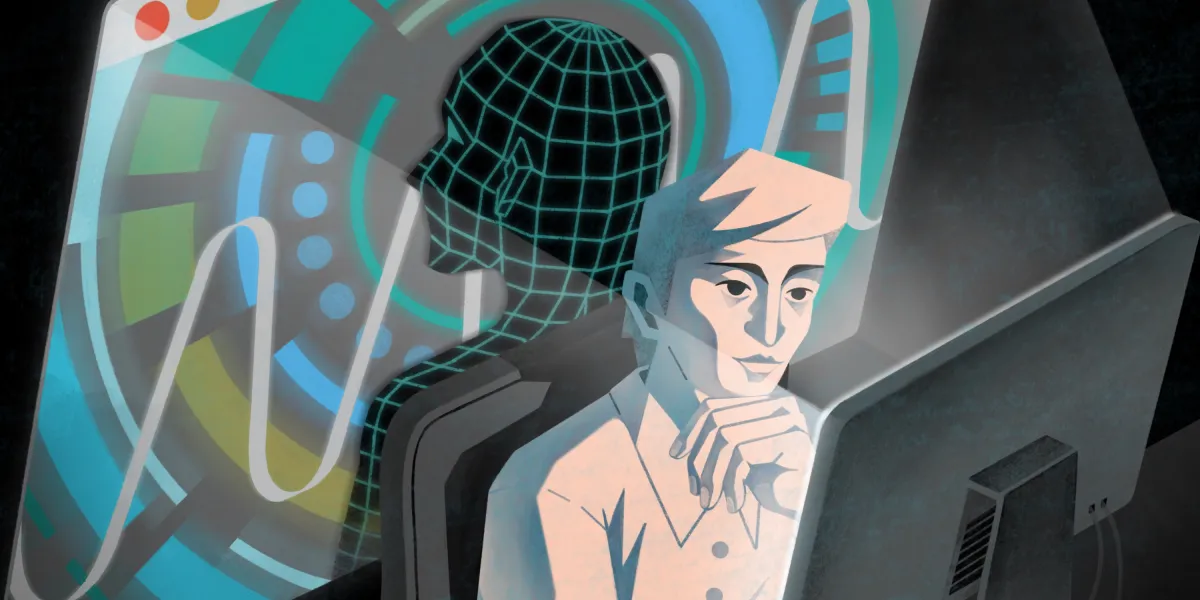
AI agents are creating the Agent Web
In 2001, ten years after inventing the World Wide Web, Tim Berners-Lee described a new vision for the internet: one navigated by autonomous software agents that could take care of people’s needs without requiring them to use a browser or search engine themselves.
At the time, the idea seemed far-fetched. A quarter of a century later, AI agents are beginning to make it a reality. They can prioritize inboxes, shop for groceries and even access bank accounts.
This new era is known as the Agent Web, and it is likely to transform the internet. What remains uncertain is whether the human web will survive the transition.
Learn how AI agents are transforming the internet—and what we stand to lose in the process.
—Grace Huckins
Have you arrived yet? Eliminating fatal traffic accidents
More than 1 million people die in traffic accidents around the world every year. Road crashes are also the leading cause of death among children and young people. Inexpensive, proven measures—including tightening intersections with planters and lowering speed limits—can make roads safer, but government gridlock and red tape may make these changes difficult to implement.
Some cities are nevertheless making remarkable progress. They are investing in public transportation, extending curbs and using cameras to identify dangerous areas that need to be redesigned.
See how close we are to eliminating road fatalities.
—Sarah Kiley Watson
This story is the final installment of “Have you arrived yet?”, a series examining six technologies that have long promised to change the world and assessing their progress. Subscribe to read the remaining five issues.
Must-read technology news
We searched the internet for the most entertaining, important, alarming and fascinating technology stories of the day.
$1.1 trillion tech-stock crash deepens concerns about an AI bubble
Huge AI-related costs and sluggish profits have spooked investors. (BBC)
The Nasdaq 100 had its worst day on Friday since June. (NBC News)
OpenAI reduces its funding goal by $10 billion. (CNBC)
What exactly is an AI bubble? (MIT Technology Review)
Hackers attack emergency alert apps in Ukraine and Russia
Residents of Kyiv were warned about “nuclear danger.” (NBC News)
A Russian app announced that a nuclear warhead had been launched. (CNN)
Ukraine has accused Russia, but Russia has not yet accused anyone. (Business Insider)
AI will transform cyberwarfare. (MIT Technology Review)
Binance users withdrew $3.6 billion after the biggest cryptocurrency hack in history
The funds moved after exchanges reopened on Sunday. (The Guardian)
Binance announced that it had covered $6 billion of the $6.3 billion stolen. (Reuters $)
However, the industry’s response has tarnished its “decentralized” image. (Gizmodo)
An AI agent injects drugs into the brains of living mice
The system selected gene therapy and controlled the needle itself. (Wired $)
Real-time tracking of AI agents is required. (MIT Technology Review)
Data centers are making utilities a flashpoint in midterm elections
Americans are angry about rising electricity bills. (Reuters $)
A virtual power plant may help. (MIT Technology Review)
Apple overtakes Nvidia to become the world’s most valuable company
Investors are backing efforts to rein in AI spending. (Bloomberg $)
Critics say Apple is entering the “slop era.” (404 Media)
Seven supermarket refrigerators overheat in a new wave of cyberattacks
Stores in Belgium, Sweden and Luxembourg were affected. (Politico)
The first chocolate bar made from lab-grown cacao arrives
Start-ups are growing cacao in an effort to address cocoa shortages. (The Wall Street Journal $)
Hackers hijack digital billboards in multiple countries to display pornography
The hackers also criticized the Egyptian government over security deficiencies. (Gizmodo)
A new 3D map reveals instability in interstellar space
The discovery could help explain why stars form inefficiently. (Quanta Magazine)
Quote of the day
“It would be wonderful if this was just a tower on the sand.”
—Kevin Ruth, New York Times technology columnist, speaking to NPR. A collapse in AI investment would be preferable to technology permanently upending jobs and society.
One more thing
Useful quantum computing is inevitable—and increasingly imminent
Last year, NVIDIA CEO Jensen Huang shocked the stock market when he said useful quantum computing was still 15 to 30 years away. He also suggested that quantum computers would need Nvidia GPUs to function. But Huang’s predictions may be off the mark, both in their timeline and in the role his company’s technology will play.
Quantum computing is rapidly moving toward practical use. That could enable AI and conventional computing systems to perform calculations that would otherwise be impossible.
—Peter Barrett
We still have good things
A place for comfort, fun and distraction to brighten your day. Have an idea? Please contact us.
+ A miniaturist created a fun diorama: the world’s creepiest living room.
+ The best dog pictures of the year have been announced, and they are very good.
+ At the Green Zone Golf Club, players can tee off in Sweden and putt an hour later in Finland.
+ Astronomers found a real celestial arrangement that inspired Van Gogh’s painting Starry Night.
Source: www.technologyreview.com