


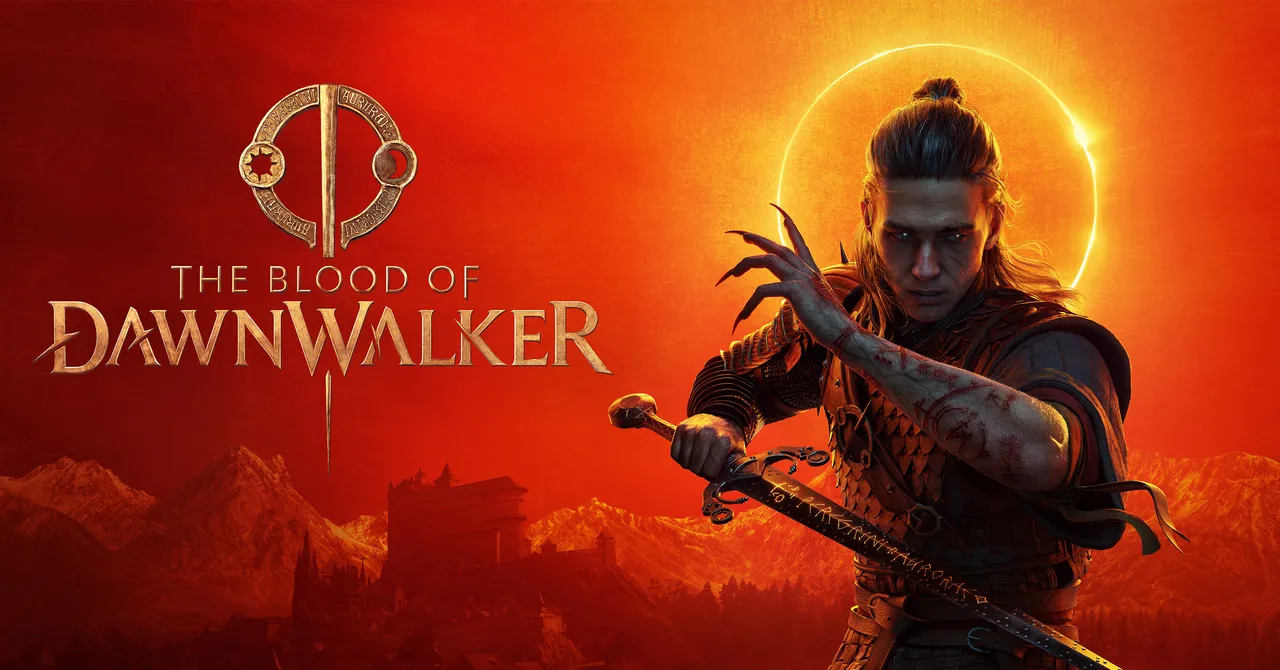
At first glance, The Blood of Dawnwalker may seem like another The Witcher 3-inspired fantasy RPG. However, once you complete the prologue, the game opens into a beautifully brutal medieval world that rewards exploration. It does not attempt to match The Witcher 3 in size, depth, or sheer content. Instead, The Blood of Dawnwalker offers a focused open-world adventure built around one clear objective and a strict deadline. Although that limitation sounds restrictive, it ultimately makes the experience feel more purposeful and freeing.
The Blood of Dawnwalker takes place in a fictional medieval world during the plague era. You play as Coen—a struggling farmer living with his family in a settlement controlled by powerful vampires. After a series of devastating events, the vampire lord Dracul kidnaps Coen’s family and transforms him into a Dawnwalker: a hybrid who appears human during the day but becomes a bloodthirsty vampire at night. You have just 30 in-game days to rescue your family, making every decision matter.
Gameplay is structured around day-and-night cycles, with each period divided into eight time segments. Completing quests and other major activities consumes one or more segments, while simply exploring the world does not advance the clock. Before beginning a time-consuming task, the game warns you how much time it will require, allowing you to continue or pursue another objective instead. This system gives you control while ensuring that every important action carries consequences.
I initially worried that the time limit would make The Blood of Dawnwalker feel restrictive, as though it were forcing players down a predetermined path in an open-world RPG. Instead, the deadline became one of the game’s greatest strengths. It gave me a reason to stay focused, make meaningful choices, and keep exploring without becoming overwhelmed by endless distractions.
That was one of my biggest frustrations with The Witcher 3 and similar open-world games. You may be given a time-sensitive main quest—such as rescuing a loved one before the world collapses—only to spend dozens of hours completing side quests. Rushing the central storyline can mean missing important characters, choices, and content, while trying to complete everything can make the experience feel repetitive. Eventually, it becomes tempting to finish every minor task before progressing the story.
The Blood of Dawnwalker takes a different approach by filling its world with varied activities, from major story missions to treasure hunts and smaller encounters. Because you know it is impossible to see everything in a single playthrough, prioritizing objectives feels natural rather than stressful. The countdown could have felt like a punishment, but it instead encourages you to use your limited time wisely. In a game built around vampires, survival, and difficult decisions, accepting that you will miss some content makes each choice—and every playthrough—feel more meaningful.
Source: www.wired.com