


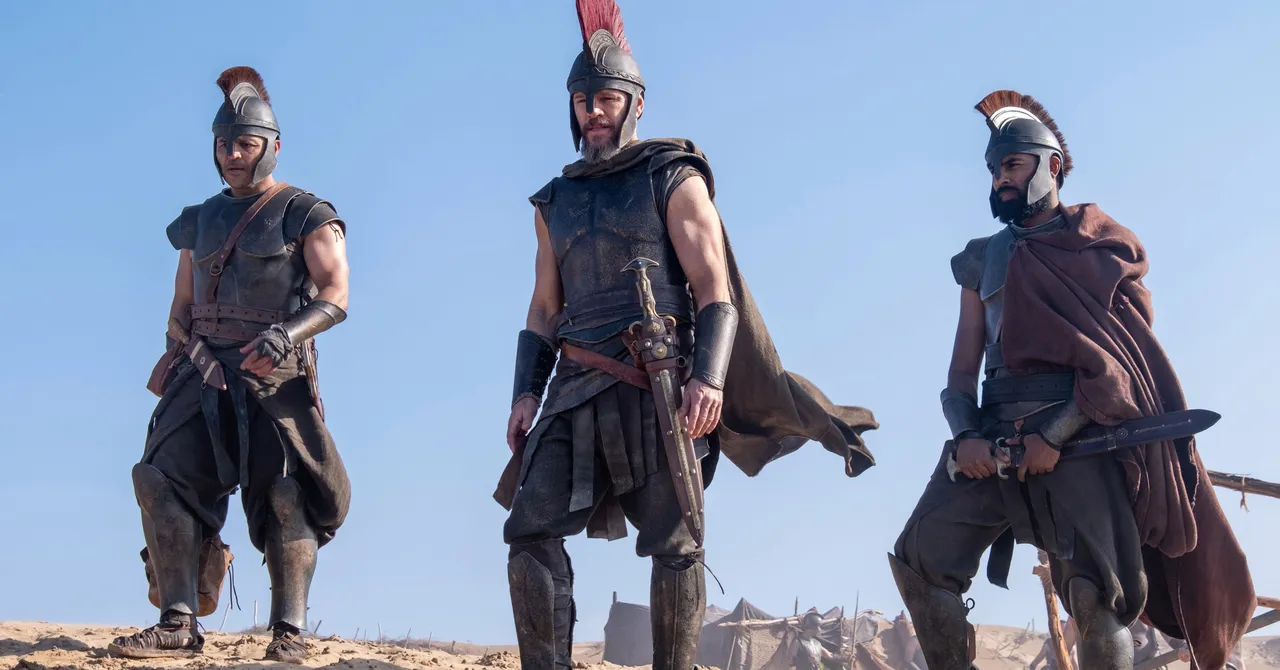
Elon Musk’s promised “historically accurate” alternative to Christopher Nolan’s adaptation of Homer’s Odyssey has arrived as a seven-minute AI-generated episode—and its reception has been sharply negative. Created with xAI’s Grok Imagine and produced with AI entertainment company Wonder Studio X, the clip has been criticized for awkward dialogue, poor pacing and visual inconsistencies that undermine Musk’s claims about fidelity to the ancient Greek epic.
Defenders of so-called Western civilization have spent considerable time discussing Odyssey in recent months. Much of their criticism of Nolan’s film adaptation was eclipsed after the July blockbuster earned nearly $1.8 billion worldwide, contradicting predictions from some on the political right that the movie would fail because of its diverse cast and departures from the original story.
Among the most vocal pre-release critics was Elon Musk. Four days after the film’s release, Musk wrote on X that he would “create a better version” before the end of the year. He added that “Grok Imagine is Odyssey. It is historically accurate and true to Homer’s art.”
Grok’s AI-generated Odyssey
A little more than three months later, the public received its first look at what might be called Grodyssey, a project rendered through prompts submitted to xAI’s video and image-generation model. Rather than a feature film, the release is a seven-minute episode in a proposed ongoing series. It depicts Odysseus, king of Ithaca, resisting the call to fight against Troy before ultimately being compelled to sail there with his army under the Oath of Allegiance.
“Odyssey with Grok Imagine,” Musk announced on X on Friday while sharing the clip produced by Wonder Studio X. The post received about 18,000 likes, substantially less engagement than several of Musk’s other recent posts, including posts in which he raised doubts about Brazil’s election results, complained about pronouns and criticized “Legacy News.”
Criticism of the episode
The introductory episode displays several characteristics commonly associated with low-quality AI-generated video. Facial movements do not consistently match the dialogue, while the formal, unnatural delivery makes the conversations feel stilted. None of the principal characters other than Odysseus is introduced by name, and the pacing creates unintentionally comic moments. For example, the Ithacans appear to reach the shores of Troy shortly after departing their homeland.
The response was harsh even on X, where the account promoting the clip carried a blue check. One user wrote: “Has anyone actually seen this and still decided to post it? Please fire that person.”
Musk’s stated objective was not simply to make a better-looking or more coherent version of Odyssey. He and his culture-war allies had argued that Nolan’s casting of Black and transgender actors, the Americanized English spoken by the characters and the film’s ship and armor designs were “historically inaccurate.” Musk therefore presented his project as a historically accurate correction.
What “historically accurate” means here
Grok’s own response complicates that claim. When asked whether the episode was historically accurate, the chatbot answered no, explaining: “Episode 1 of Grok Imagine (and the broader promised series) is an adaptation of the works of Homer. It is not a historically accurate reconstruction of actual events.”
Source: www.wired.com