


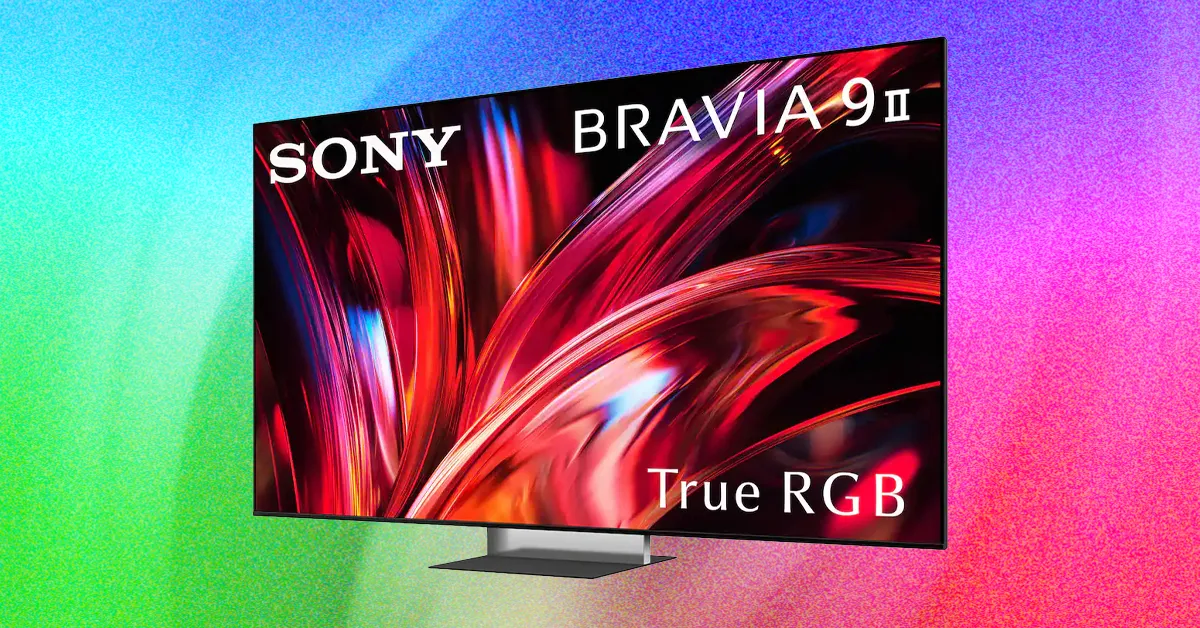
The Sony Bravia 9 II delivers exceptionally bright, vivid images, strong gaming performance, and impressive contrast for an LED television. Its RGB backlight produces vibrant colors in sports, news, and animated content, while careful black-level adjustments can improve dark scenes in films and games. However, its blacks still fall short of OLED quality, and the $3,600 price requires buyers to value its flagship brightness and processing.
Black levels require careful adjustment
Compared with OLED televisions such as the Samsung S95H, the Bravia 9 II’s deepest blacks did not look as realistic. OLED TVs can turn their pixels off completely, producing the kind of inky black tones associated with high-end projectors. The Bravia 9 II performed well during Toy Story 5, but in the darker scenes later in the film, the Samsung delivered deeper-looking blacks.
The Bravia 9 II’s super-bright RGB panel gives viewers considerable control over the picture. However, getting the best results requires patience. While watching Awake and Creator, adjusting the black level to 61 out of 100 made faces, pre-dawn mountain landscapes, and beach landings appear sharper. It is encouraging that the television can produce those results, but reaching them takes time.
Gaming and everyday viewing
While playing Resident Evil: Requiem, we tested brightness, picture quality, and latency. Adjusting the black level made dark scenes look more vivid, and input lag was almost nonexistent when using one of the HDMI 2.1 ports at a 120-Hz refresh rate. That eliminated the slight stuttering I noticed when a seven-headed monster from the game’s dark underworld attacked.
In similar games, including Senua’s Saga: Hellblade II, the mid-range Bravia 7 II and several other LED models I tested made dark areas appear gray and washed out. I also played End of the Abyss, which takes place almost entirely in dark hallways. The Bravia 9 II rendered those scenes in near-pitch black. Its blacks were not as deep as OLED’s, but they were better than those of many LED televisions.
Photo: John Brandon
The Bravia 9 II also delivered the promised flagship performance for sports broadcasts. The purple jerseys of the Minnesota Vikings looked vibrant and clear, while the grass appeared bright green without glare. News broadcasts were bright and color-accurate without becoming overly saturated, offering a good balance. The image was so sharp that I felt I could reach out and clip an MS Now analyst’s nose hair.
Should you buy it?
The Bravia 9 II is near the top of the list of the best televisions available right now. Its RGB technology uses red, green, and blue LEDs to create realistic colors and potentially improve color accuracy and vibrancy. Unlike OLED televisions, RGB models shine colored LED light through an LCD panel, so buyers must weigh the advantages and trade-offs of each display technology.
The Bravia 9 II looked especially bright and vibrant during NFL games. Its colors and vividness were slightly lower than those of the LG Micro RGB Evo, but the Sony still produced an impressive picture. The television can be adjusted to suit your preferences, and its wide viewing angle is a major advantage when watching programs such as America’s Got Talent with family members around the room.
Still, with many televisions costing about $2,000, the Sony Bravia 9 II’s $3,600 price is difficult to justify for every buyer. The answer depends on what you watch. If you want to see dragons at night and monsters in dark hallways, the Bravia 9 II offers a strong LED experience. For animated shows, sports, and network television, however, some viewers may care less about cinematic quality and simply want a television that performs well out of the box. Flagship models can do more, but they also cost considerably more.
Power up with unlimited access to WIRED. Get best-in-class reporting and subscriber-only content that’s too important to ignore. Subscribe now.
Source: www.wired.com