


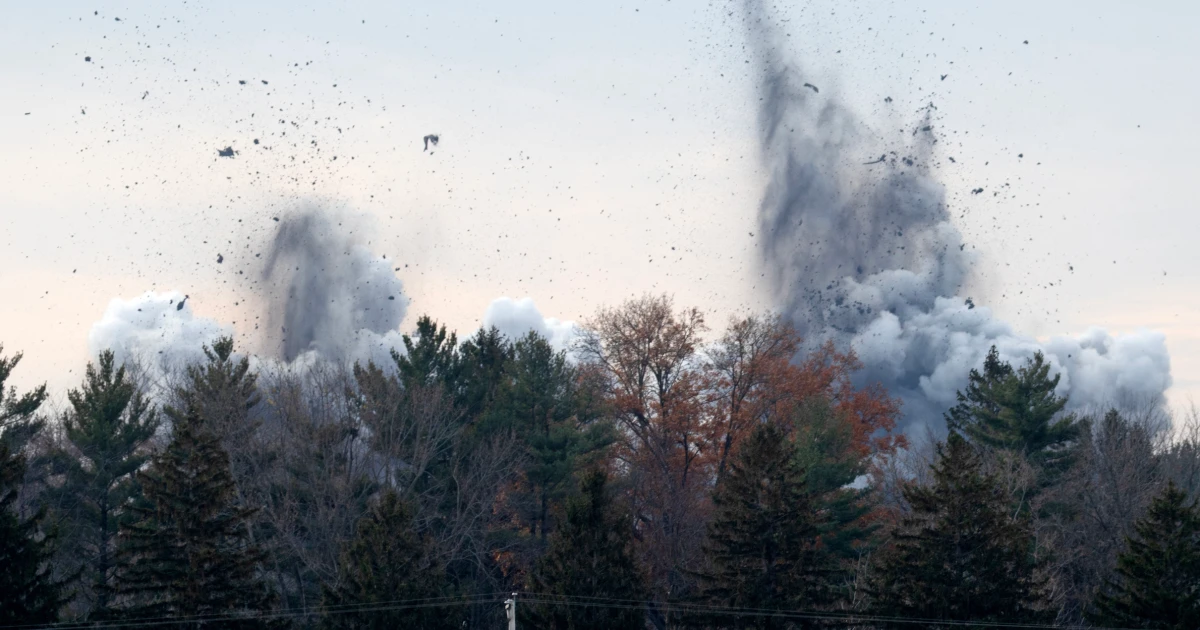
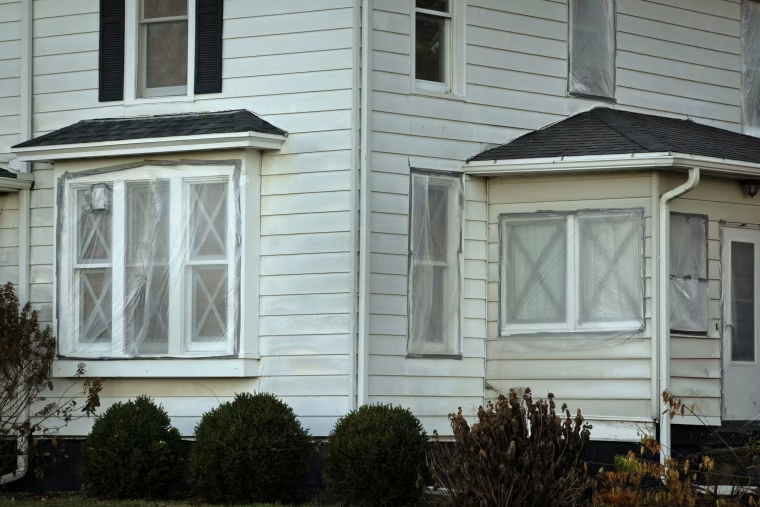
Residents near the Iowa Army Ammunition Plant said they received insufficient warning before an explosion of unstable explosives, prompting some to change Thanksgiving plans, seal windows, cover yards, buy cleaning supplies or leave town. Military officials said a controlled detonation with multiple mitigation measures was safer than risking an accidental explosion, while experts and local officials said more testing and clearer plans are needed to determine whether lead contamination occurred and how it would be addressed.
Jill Holler, whose family farms about 20 miles west of Middletown, spent Sunday night collecting soil samples for future comparisons of lead levels.
“I’ve been taking soil samples in the dark and it’s just frustrating,” she said.
Lead is a powerful neurotoxin, and no amount of exposure is considered safe. It poses the greatest health threat to children. Exposure is associated with an increased risk of learning disabilities, reproductive health problems, mental health problems and hearing loss, among other effects.
Once lead particles are deposited on a surface or in soil, they can remain there indefinitely unless they are physically removed.
Mitigation measures before the explosion
Military officials argued that detonating the chemicals in a controlled manner, with mitigation measures in place, was safer than risking an accidental detonation. Before the explosion, they described a series of strategies intended to keep as much lead dust as possible within the ammunition factory.
The measures included building a two-story “HESCO” barrier around the explosion site. The modular, collapsible structure was to be filled with sand. Officials also planned to spray water to trap small particles during the explosion.
They said two “water walls,” made from aqueous foam blocks, gel blocks and four 16,000-gallon water tanks each, would help absorb the explosion.
In a statement after Wednesday’s explosion, Iowa Gov.-elect Rob Sund said more testing was needed, although federal officials had told him that everything was going well.
Still, he added: “The process leading up to the explosion should not have been so confusing and opaque.”
Questions about testing and cleanup
The Army expected the explosion to leave a crater about 38 feet wide and 5 feet deep, according to emergency permit documents submitted to the EPA.
In an Army statement, officials said that after the explosion, an environmental monitoring team was scheduled to retrace the plume’s path on Tuesday and “collect soil, surface water, and surface swab samples to confirm lead levels.”
If testing found lead contamination above a threshold of 200 parts per million in a residential property, the military said, “remediation teams will remove the affected soil, clean the surfaces and repair the home at all government costs.”
However, few details were available about when or how inspections would be conducted, or about the process and timeline for government-led remediation. Welton said those plans were not detailed in the Army’s emergency authorization.
“Based on the documents I have reviewed, there are no plans to apply an evidence-based approach to determining whether people’s homes, schools, and businesses are safe after an explosion,” he said Tuesday.
Peter Thorne, a pulmonary toxicologist and environmental health expert at the University of Iowa School of Public Health, said scientists planned to conduct independent monitoring of the plume.
“We have monitoring equipment that tells us how much lead is airborne and carried by the wind,” he said Tuesday. “Our model can tell us how much lead is deposited in things like soil and playground equipment, and from there we can make some estimates of the degree of risk associated with this exposure.”
A long-standing stockpile
Domestic stockpiles of lead azide were once used to make bomb triggers. Officials said the chemical was mostly phased out of the manufacturing process about 15 years ago and moved to ammunition factories in 2009. Secada said Tuesday that it was known at the time that the chemicals caused problems.
Thorne questioned why the explosives had become so dangerous over the years.
“It should have been addressed in the past, but now it’s a crisis,” he said.
Source: www.nbcnews.com