


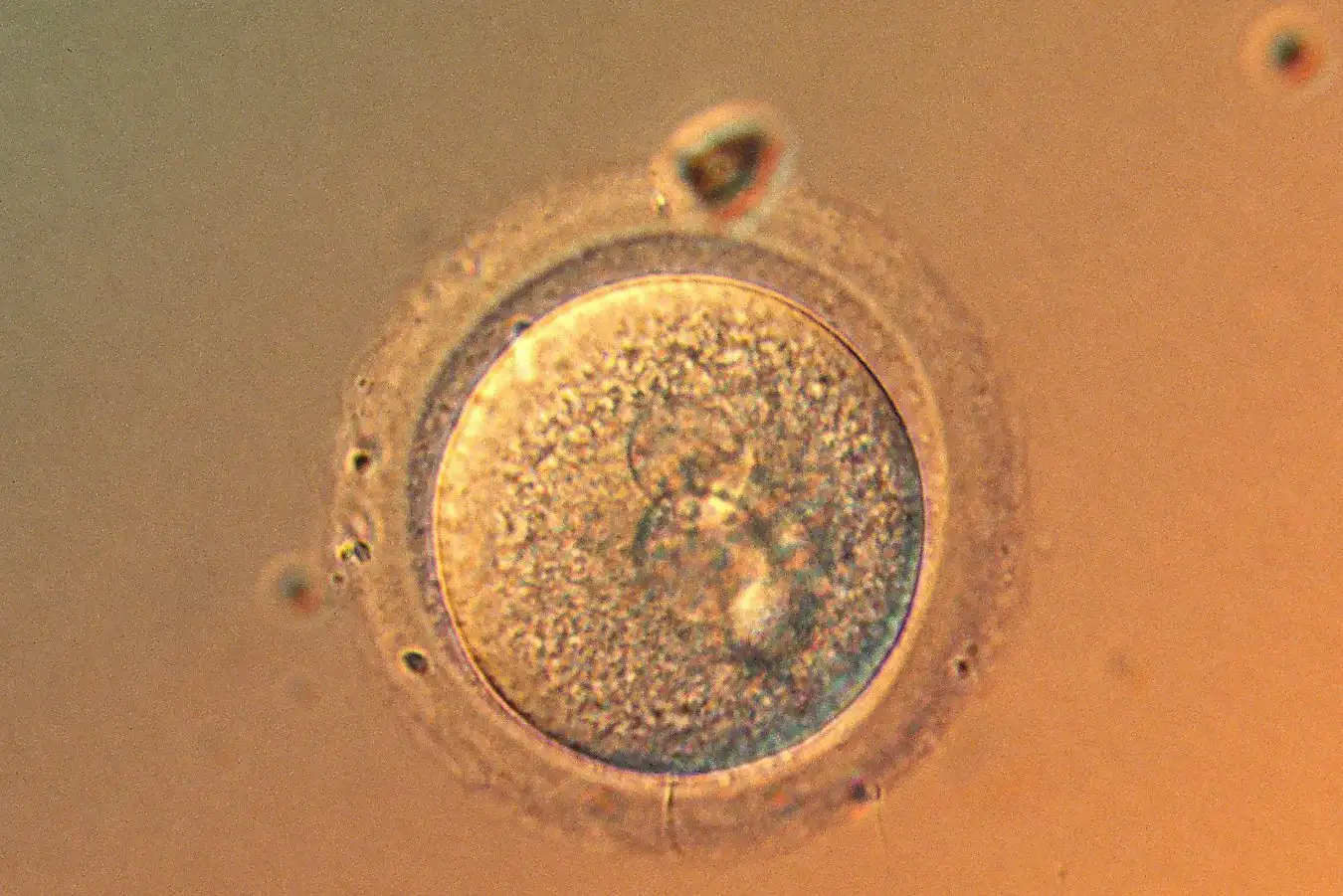
Optical Micrograph of a Human Egg Cell Post-Fertilization
CC Studio/Science Photo Library
In 2018, a controversial revelation arose when a rogue researcher from China claimed to have employed CRISPR technology to create three gene-edited children. Biologists worldwide sharply criticized his actions not for the ethical implications of gene editing itself but for the unsafe, high-risk nature of the CRISPR technique he used. Concerns focused on potential harmful mutations.
Recently, a team of U.S. researchers demonstrated that by utilizing an advanced form of CRISPR known as “base editing,” they could alter healthy embryos without triggering unwanted mutations. However, this breakthrough doesn’t mean we should hastily endorse the use of this technology, as significant hurdles persist.
The DNA structure comprises two strands. The initial version of CRISPR, which employed the Cas9 protein, utilized a guide RNA to target specific genetic locations. Cas9 cuts both strands of DNA, but during the repair process, errors often arise, leading to harmful mutations and disabled genes.
Consequently, CRISPR-Cas9 has been seen as a destructive method, as it can result in incorrect DNA recombinations, resulting in major mutations and chromosomal abnormalities.
Fortunately, numerous improved CRISPR methods have emerged. For instance, CRISPR base editors allow for the modification of a single DNA letter by only cutting one strand. This precision minimizes the risk of unintended consequences. Already, this technology is showing promise in clinical trials, including treatments aimed at significantly elevated cholesterol levels.
However, editing embryos contrasts markedly with treating diseases in adults. In adult tissues, imperfect gene editing can still yield therapeutic benefits—often only a fraction of liver cells must be successfully edited to achieve positive outcomes. Conversely, in a human embryo, all cells must undergo precise edits as they differentiate into all body cells.
In 2017, a Chinese research team published promising findings based on a small study using human embryos discarded due to in vitro fertilization abnormalities. They reported that base editing resulted in the desired genetic alterations in nearly all embryos with minimal unintended effects.
Currently, Dieter Egli from Columbia University and his team conducted a larger-scale study using healthy two-cell embryos, which yielded comparably encouraging results. They successfully made modifications in about 75% of the cells with negligible unintended changes. However, in another case, only about 50% of the cells were edited correctly, often resulting in unwanted changes.
The researchers suspect that the results varied based on the guide RNA design used; improvements in guide RNA design and testing should help mitigate off-target effects.
The foremost challenge remains that base editing does not function uniformly across all cells in each embryo, leading to a condition known as mosaicism. If a mosaic embryo develops into a child, only some cells may have the intended edits, leaving the risk of inherited diseases still present. The three gene-edited children in China may exhibit mosaic characteristics.
This is problematic since, at present, there is no reliable method to ensure that gene-edited embryos avoid mosaicism. For embryos at risk of serious inherited diseases, a single cell can undergo genetic testing after IVF; however, this approach falls short for mosaics, where testing a single cell may not provide a complete picture.
While these recent findings are encouraging, they do not provide sufficient reassurance for regulators to sanction germline gene editing as it currently stands. Addressing the mosaicism issue is imperative.
How might this be achieved? One potential solution involves utilizing gene-edited sperm or eggs. By applying genetic modifications before fertilization, mosaicism could potentially be avoided. Although this approach has yet to be implemented in humans, a startup claims to produce sperm from stem cells in the lab; if validated, this could enable genetic editing of those stem cells.
This innovative approach may pave the way for genuinely safe gene editing in future children. However, ethical considerations surrounding the practice remain complex.
Topics:
Source: www.newscientist.com