


Close Menu
HitechubHitechub
    What's Hot
    Science

    Astronomers Discover Clearest Evidence of an Exoplanet’s Magnetic Field Yet

    Wheels

    BMW XM surprises in a moose avoidance test

    Space

    (VIDEO) Incredible flight of the Parker Solar Probe

    Important Pages:
    • About Us
    • Privacy Policy
    • Terms & Conditions
    Facebook X (Twitter) Instagram Pinterest
    Facebook X (Twitter) Instagram
    HitechubHitechub
    Saturday, June 6
    • Technology
      1. AI
      2. Gadgets
      3. View All

      This is the most popular CEO in the world

      Sectors in which “Chat-GPT” is most often used

      AI Pioneer Expresses Concern About Potential for AI to Surpass Humanity

      Artificial intelligence has begun to “swallow” professions

      What’s new in Android 14

      Europeans have about 700 million old mobile phones in their drawers

      Here’s how you can tell if your phone is being tapped

      “Sneaker X” – computer case in the shape of a sneaker

      Russian Gamers Unite to Prevent Nuclear War: Join the Fight Online

      Challenges of Space Travel: Why Journeying to Space is So Difficult

      NASA Astronaut Casts Historic Vote from Space

      Discover the Future of Comfort: What If You Could Wear a Chair?

    • Science
      1. Space
      2. Wheels
      3. View All

      Galaxies in the universe are growing more slowly than they should

      “Espace” presented the new lander “Apex 1.0”

      The largest asteroid sample ever collected has arrived on Earth

      (VIDEO) Incredible flight of the Parker Solar Probe

      Toyota wants to make a new generation battery with a range of up to 1,200 km

      Meet Toyota’s lunar “baby” that could make exploring the Moon easier

      Microlino – Is this the perfect city car?

      Alfa Romeo 4C gets an electric successor

      SpaceX Postpones Launch of New Starship Prototype: Here’s What You Need to Know

      Can Your Brain Communicate While You Sleep? Discover Findings from This Fascinating Experiment

      Revealing Evidence: We May Not Be Earth’s First Advanced Civilization

      Exploring the Health Benefits of Turmeric and Curcumin: Do They Really Deliver?

    HitechubHitechub
    Home » Is Gene Editing for Babies Now Safe? Current Insights and Considerations
    Science

    Is Gene Editing for Babies Now Safe? Current Insights and Considerations

    Share Facebook Twitter Pinterest WhatsApp
    Share
    Facebook Twitter LinkedIn Pinterest WhatsApp

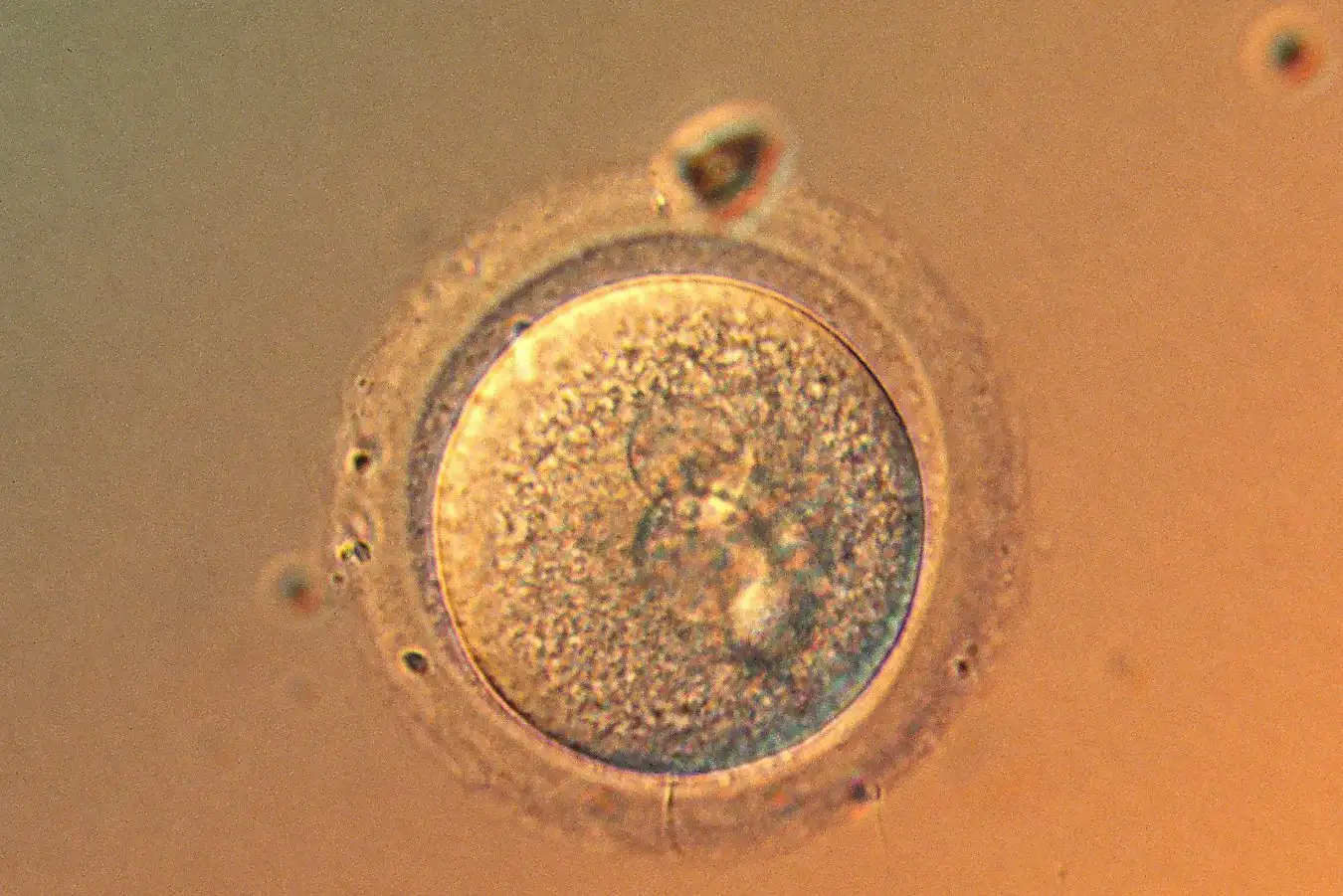
    Optical Micrograph of a Human Egg Cell Post-Fertilization

    CC Studio/Science Photo Library

    In 2018, a controversial revelation arose when a rogue researcher from China claimed to have employed CRISPR technology to create three gene-edited children. Biologists worldwide sharply criticized his actions not for the ethical implications of gene editing itself but for the unsafe, high-risk nature of the CRISPR technique he used. Concerns focused on potential harmful mutations.

    Recently, a team of U.S. researchers demonstrated that by utilizing an advanced form of CRISPR known as “base editing,” they could alter healthy embryos without triggering unwanted mutations. However, this breakthrough doesn’t mean we should hastily endorse the use of this technology, as significant hurdles persist.

    The DNA structure comprises two strands. The initial version of CRISPR, which employed the Cas9 protein, utilized a guide RNA to target specific genetic locations. Cas9 cuts both strands of DNA, but during the repair process, errors often arise, leading to harmful mutations and disabled genes.

    Consequently, CRISPR-Cas9 has been seen as a destructive method, as it can result in incorrect DNA recombinations, resulting in major mutations and chromosomal abnormalities.

    Fortunately, numerous improved CRISPR methods have emerged. For instance, CRISPR base editors allow for the modification of a single DNA letter by only cutting one strand. This precision minimizes the risk of unintended consequences. Already, this technology is showing promise in clinical trials, including treatments aimed at significantly elevated cholesterol levels.

    However, editing embryos contrasts markedly with treating diseases in adults. In adult tissues, imperfect gene editing can still yield therapeutic benefits—often only a fraction of liver cells must be successfully edited to achieve positive outcomes. Conversely, in a human embryo, all cells must undergo precise edits as they differentiate into all body cells.

    In 2017, a Chinese research team published promising findings based on a small study using human embryos discarded due to in vitro fertilization abnormalities. They reported that base editing resulted in the desired genetic alterations in nearly all embryos with minimal unintended effects.

    Currently, Dieter Egli from Columbia University and his team conducted a larger-scale study using healthy two-cell embryos, which yielded comparably encouraging results. They successfully made modifications in about 75% of the cells with negligible unintended changes. However, in another case, only about 50% of the cells were edited correctly, often resulting in unwanted changes.

    The researchers suspect that the results varied based on the guide RNA design used; improvements in guide RNA design and testing should help mitigate off-target effects.

    The foremost challenge remains that base editing does not function uniformly across all cells in each embryo, leading to a condition known as mosaicism. If a mosaic embryo develops into a child, only some cells may have the intended edits, leaving the risk of inherited diseases still present. The three gene-edited children in China may exhibit mosaic characteristics.

    This is problematic since, at present, there is no reliable method to ensure that gene-edited embryos avoid mosaicism. For embryos at risk of serious inherited diseases, a single cell can undergo genetic testing after IVF; however, this approach falls short for mosaics, where testing a single cell may not provide a complete picture.

    While these recent findings are encouraging, they do not provide sufficient reassurance for regulators to sanction germline gene editing as it currently stands. Addressing the mosaicism issue is imperative.

    How might this be achieved? One potential solution involves utilizing gene-edited sperm or eggs. By applying genetic modifications before fertilization, mosaicism could potentially be avoided. Although this approach has yet to be implemented in humans, a startup claims to produce sperm from stem cells in the lab; if validated, this could enable genetic editing of those stem cells.

    This innovative approach may pave the way for genuinely safe gene editing in future children. However, ethical considerations surrounding the practice remain complex.

    Topics:

    Source: www.newscientist.com

    Share. Facebook Twitter Pinterest LinkedIn WhatsApp
    Previous ArticleAfter a Decade of Research, Scientists Uncover East Asia’s Tallest Tree
    Next Article Unconventional Yet Effective Techniques to Overcome Fear of Flying: Insights from Psychologists

    Related Posts

    Science

    SpaceX Postpones Launch of New Starship Prototype: Here’s What You Need to Know

    Science

    Can Your Brain Communicate While You Sleep? Discover Findings from This Fascinating Experiment

    Science

    Revealing Evidence: We May Not Be Earth’s First Advanced Civilization

    Science

    Exploring the Health Benefits of Turmeric and Curcumin: Do They Really Deliver?

    Science

    Jupiter’s Electron Acceleration Near-Light Speed: Unveiling the Origins of Cosmic Rays

    Science

    Reviving Frozen Rat Chromosomes in Mice: A Breakthrough in Genetic Research

    Science

    Arrest Made in Rape and Murder Case of 40-Year-Old Woman Linked to Forensic Genealogy Investigation

    Science

    Discover the Truth: ‘Everyone is Lying to You for Money’ – An Essential Cryptocurrency Exposé

    Add A Comment
    Leave A Reply Cancel Reply

    Stay In Touch
    • Facebook
    • Twitter
    • Instagram
    • Pinterest
    Top Picks
    Science

    Transforming Polystyrene with Sunlight and Sulfur: Innovative Upcycling Techniques – Sciworthy

    Every year, over 20 million tons of polystyrene plastic are manufactured globally, yet only a…

    New discoveries in physics suggest that we are living in a simulation

    Eyelash Trimming for Men: The Rising Trend That’s Confusing Ophthalmologists

    Unusual planet with no atmosphere discovered

    The unusual robot conductor of a concert in Seoul

    Most Popular
    Science

    Breakthrough Pancreatic Cancer Drug Doubles Survival Rates: A Revolutionary Treatment

    Space

    5 Fascinating Facts About Space

    Categories
    • AI (13)
    • Gadgets (10)
    • Science (91)
    • Space (9)
    • Technology (37)
    • Wheels (9)
    Our Picks
    Science

    How Earth’s Water Enabled the Evolution of Intelligent Life – Cyworthy

    Technology

    How Cell Phones and Screens Disrupt Your Child’s Sleep: Tips for Better Rest

    © 2026 Hitechub.
    • Home
    • About Us
    • Privacy Policy
    • Terms & Conditions

    Type above and press Enter to search. Press Esc to cancel.

    We are using cookies to give you the best experience on our website.

    You can find out more about which cookies we are using or switch them off in .

    Ad Blocker Enabled!
    Ad Blocker Enabled!
    Our website is made possible by displaying online advertisements to our visitors. Please support us by disabling your Ad Blocker.
    Go to mobile version
    Hitechub
    Powered by  GDPR Cookie Compliance
    Privacy Overview

    This website uses cookies so that we can provide you with the best user experience possible. Cookie information is stored in your browser and performs functions such as recognising you when you return to our website and helping our team to understand which sections of the website you find most interesting and useful.

    Strictly Necessary Cookies

    Strictly Necessary Cookie should be enabled at all times so that we can save your preferences for cookie settings.