


Close Menu
HitechubHitechub
    What's Hot
    Technology

    How much does it really cost to make an iPhone?

    Science

    Pigeons Utilize Superparamagnetic Immune Cells in Their Livers to Detect Earth’s Magnetic Field

    Science

    Keto Diet: A Promising Approach for Anorexia Recovery

    Important Pages:
    • About Us
    • Privacy Policy
    • Terms & Conditions
    Facebook X (Twitter) Instagram Pinterest
    Facebook X (Twitter) Instagram
    HitechubHitechub
    Sunday, June 7
    • Technology
      1. AI
      2. Gadgets
      3. View All

      This is the most popular CEO in the world

      Sectors in which “Chat-GPT” is most often used

      AI Pioneer Expresses Concern About Potential for AI to Surpass Humanity

      Artificial intelligence has begun to “swallow” professions

      What’s new in Android 14

      Europeans have about 700 million old mobile phones in their drawers

      Here’s how you can tell if your phone is being tapped

      “Sneaker X” – computer case in the shape of a sneaker

      Russian Gamers Unite to Prevent Nuclear War: Join the Fight Online

      Challenges of Space Travel: Why Journeying to Space is So Difficult

      NASA Astronaut Casts Historic Vote from Space

      Discover the Future of Comfort: What If You Could Wear a Chair?

    • Science
      1. Space
      2. Wheels
      3. View All

      Galaxies in the universe are growing more slowly than they should

      “Espace” presented the new lander “Apex 1.0”

      The largest asteroid sample ever collected has arrived on Earth

      (VIDEO) Incredible flight of the Parker Solar Probe

      Toyota wants to make a new generation battery with a range of up to 1,200 km

      Meet Toyota’s lunar “baby” that could make exploring the Moon easier

      Microlino – Is this the perfect city car?

      Alfa Romeo 4C gets an electric successor

      Top New Science Fiction Novels to Read in June 2026: Featuring Adrian Tchaikovsky and M. John Harrison

      Vulture Discovered Hiding Medieval Treasure in Its Nest

      Can Geoengineering Thicken Arctic Sea Ice? Exploring Duration and Impacts

      Decades of Battle: The US Faces a Resurgence of Flesh-Eating Screwworms

    HitechubHitechub
    Home » New Hyaenodont Species Discovered by Paleontologists in Pakistan
    Science

    New Hyaenodont Species Discovered by Paleontologists in Pakistan

    Share Facebook Twitter Pinterest WhatsApp
    Share
    Facebook Twitter LinkedIn Pinterest WhatsApp

    Exciting Discoveries in Paleontology: Fossil Remains of Three Hyaenodont Species Found in Miocene Deposits of Pakistan
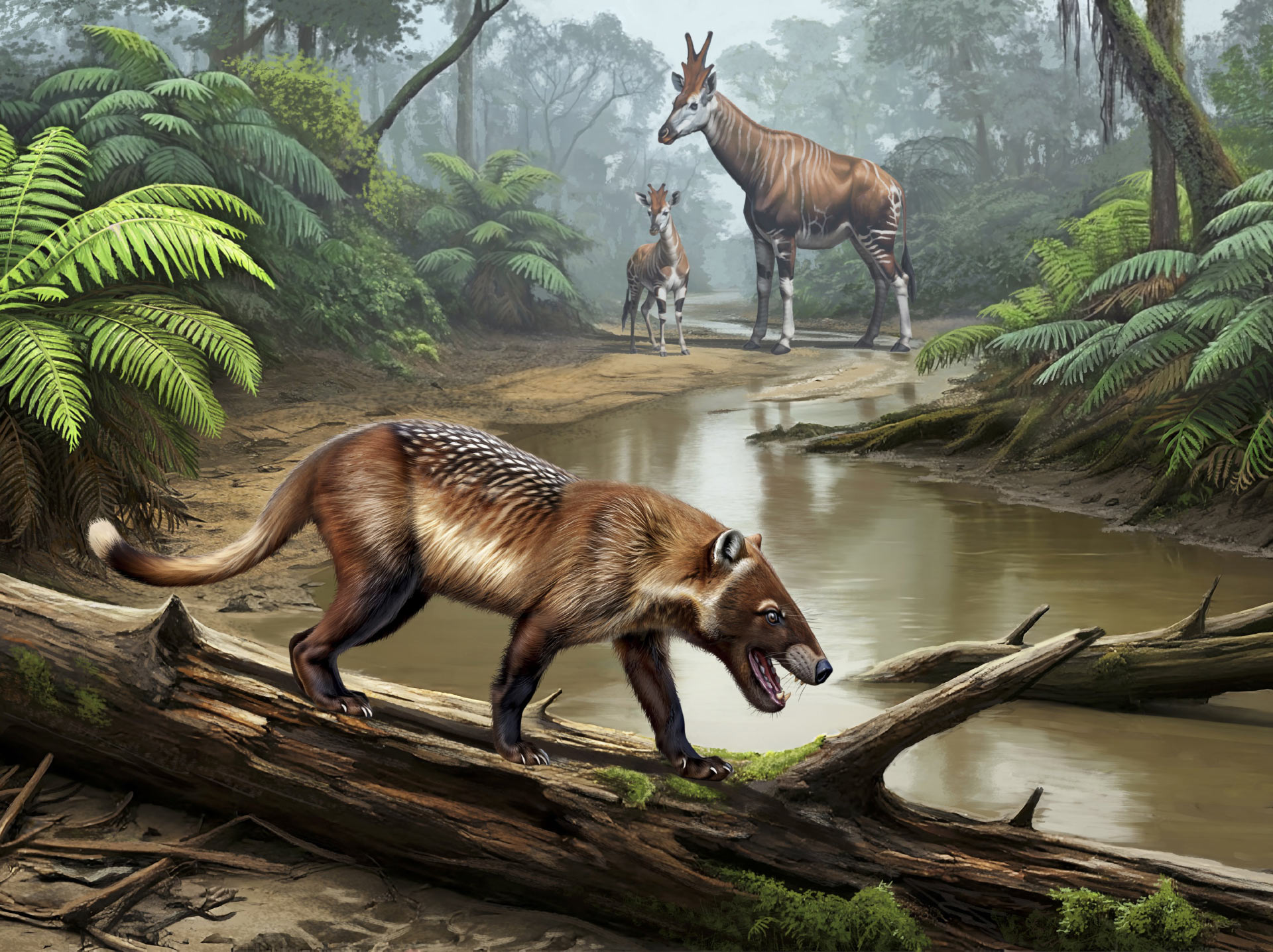

    Metapterodon anari: New Hyaenodont Species

    Metapterodon anari. Image credit: Steven Jasinski / SergeyAtrox1.

    “Hyaenodontids evolved alongside early carnivores like cats and dogs, dominating their ecological niches before the rise of modern mammalian predators,” said Professor Stephen Jasinski from Harrisburg University of Science and Technology.

    In their latest study, Professor Jasinski and his team analyzed fossils from three distinct hyaenodont species that thrived between 14 million and 9.5 million years ago.

    These remarkable specimens were unearthed from the Chinji and Nagri Formations along the Siwalik River in Pakistan.

    One notable hyaenodontid, potentially identified as Megistotherium or Hyainailouros, could have reached weights of up to 500 kg—comparable to a polar bear.

    Among the fossils were juvenile teeth from a young specimen whose permanent teeth had yet to emerge, complicating accurate identification.

    Previously identified teeth from the Hyaenodon genus further enrich our understanding. This genus is widely known across North America, Europe, and Asia, but these are the first specimens found in this region.

    These fossils represent the youngest known examples of this genus and may indicate a new species, pending further material for confirmation.

    The hyaenodonts are believed to have weighed around 30 kg, comparable in size to a small gray wolf or a leopard.

    Paleontologists have also identified teeth from a smaller hyaenodont genus called cyanodonts, notably Metapterodon.

    Previously only identified in African fossils, the emergence of this genus during the Miocene has now been validated.

    The newly named Metapterodon anari may be one of the youngest hyaenodont fossils documented to date.

    “Metapterodon anari holds significant value for both its taxonomic classification and its temporal context,” stated Professor Jasinski.

    “This species represents one of the last hyaenodontids and provides insights into the dynamic period when these mammalian predators faced growing competition from emerging carnivores.”

    The adult size of Metapterodon anari reached approximately 15 kg, akin to a large red fox or coyote.

    “The significance of these fossils extends beyond their classification to their geographical implications,” the research team emphasized.

    “These findings underscore a vital connection between Africa and Europe during the Miocene, suggesting migration patterns of hyaenodonts from neighboring regions, such as China.”

    “The Miocene Hyaenodonts of Pakistan provide vital data regarding the coexistence of these predators and the competitive pressures they faced.”

    “All these species exhibit carnivorous traits, making meat their primary diet, which may have led to their eventual competitive exclusion by more dominant carnivores.”

    These fossils also shed light on the ecological landscape of Miocene South Asia. This era was marked by cooling global temperatures and significant shifts in animal communities, laying the groundwork for contemporary ecosystems.

    “Fossils do more than tell tales of ancient life; they offer insights into past biological changes and how organisms adapted,” concluded Professor Jasinski.

    “Examining these specimens can provide valuable clues regarding future ecological changes and strategies for adaptation.”

    The team’s findings are published in the journal PALS.

    _____

    K. Mahmoud et al. A brief description of Hyaenodonta from the mid to late Miocene deposits of the Siwalik region of Pakistan and Hyaenodonta of the Indian subcontinent. PALS published online on April 16, 2026. doi: 10.1007/s12542-025-00766-5

    Source: www.sci.news

    Share. Facebook Twitter Pinterest LinkedIn WhatsApp
    Previous ArticleHow a Tiger and Goat Became Best Friends Instead of Foes
    Next Article 490-Million-Year-Old Arthropod Fossil Reveals Missing Link in Fossil Record

    Related Posts

    Science

    Top New Science Fiction Novels to Read in June 2026: Featuring Adrian Tchaikovsky and M. John Harrison

    Science

    Vulture Discovered Hiding Medieval Treasure in Its Nest

    Science

    Can Geoengineering Thicken Arctic Sea Ice? Exploring Duration and Impacts

    Science

    Decades of Battle: The US Faces a Resurgence of Flesh-Eating Screwworms

    Science

    Alice Roberts: Embracing Our Animalistic Nature – Insights on Human Behavior

    Science

    490-Million-Year-Old Arthropod Fossil Reveals Missing Link in Fossil Record

    Science

    How a Tiger and Goat Became Best Friends Instead of Foes

    Science

    Hubble Discovers Active Spiral Galaxy Messier 88: A Breathtaking Cosmic Insight

    Add A Comment
    Leave A Reply Cancel Reply

    Stay In Touch
    • Facebook
    • Twitter
    • Instagram
    • Pinterest
    Top Picks
    Science

    7 Reasons We Overtrust AI and the Hidden Costs We’re Facing

    Engaging with technology company leaders developing AI tools might lead you to believe that these…

    Now you can talk to ChatGPT – and he will answer you

    Decades of Battle: The US Faces a Resurgence of Flesh-Eating Screwworms

    Discover Early Paleocene Fish Fossils: Bridging the 10 Million-Year Gap Post-Dinosaur Extinction

    Coin tossing is not as perfectly fair as it is thought to be

    Most Popular
    Science

    Combatting Fungal Brown Rot with Bacteria: A Sciworthy Exploration

    Gadgets

    Best Gaming Laptops 2023: Powerful Portables for PC Games

    Categories
    • AI (13)
    • Gadgets (10)
    • Science (111)
    • Space (9)
    • Technology (37)
    • Wheels (9)
    Our Picks
    Science

    Common Tooth Brushing Mistakes: Are You Doing It Wrong? Learn the Correct Technique!

    Technology

    Use Google like it’s 1998: This page takes you back to the beginning

    © 2026 Hitechub.
    • Home
    • About Us
    • Privacy Policy
    • Terms & Conditions

    Type above and press Enter to search. Press Esc to cancel.

    We are using cookies to give you the best experience on our website.

    You can find out more about which cookies we are using or switch them off in .

    Ad Blocker Enabled!
    Ad Blocker Enabled!
    Our website is made possible by displaying online advertisements to our visitors. Please support us by disabling your Ad Blocker.
    Go to mobile version
    Hitechub
    Powered by  GDPR Cookie Compliance
    Privacy Overview

    This website uses cookies so that we can provide you with the best user experience possible. Cookie information is stored in your browser and performs functions such as recognising you when you return to our website and helping our team to understand which sections of the website you find most interesting and useful.

    Strictly Necessary Cookies

    Strictly Necessary Cookie should be enabled at all times so that we can save your preferences for cookie settings.