


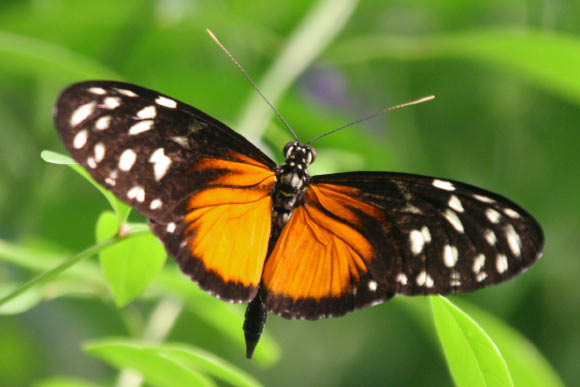
A dedicated team of entomologists from the University of Bristol and the Smithsonian Tropical Research Institute has synthesized decades of research from butterfly nests, field studies, and lab experiments to present the most thorough analysis of Heliconius butterflies to date. This vibrant genus of tropical butterflies, prevalent across Central and South America, is known for its significantly elongated lifespan, which can be up to three times longer than that of its close relatives. Remarkably, Heliconius Hewitsoni has been documented to live for as long as 348 days in captivity.
Heliconius butterflies are renowned for their stunning colors and are found across tropical and subtropical regions of Central and South America, with some species extending into the southern United States.
Often referred to as “longwings,” these butterflies are characterized by their elongated wings.
Unlike many butterflies that primarily consume nectar, which is high in sugar but low in protein, Heliconius butterflies adopt a unique feeding strategy. They incorporate pollen into their nectar intake, using their proboscis to collect pollen and employing saliva to extract essential amino acids.
This remarkable feeding behavior was first documented in 1972 by evolutionary biologist Lawrence Gilbert. The additional amino acids obtained from pollen are believed to contribute to various distinct traits, including prolonged lifespan, consistent egg production, and improved chemical defenses.
The longevity of many Heliconius species in the wild spans several months, considerably outliving other members of the Heliconiini tribe, which typically have a lifespan of around six weeks.
While the exact reasons behind their extended lifespan remain elusive, it is hypothesized that their retention of pollen-feeding behaviors into adulthood may be a contributing factor.
According to Dr. Jessica Foley, a researcher at the University of Bristol, “Insects represent the most diverse group of animals, showcasing remarkable morphological and ecological diversity.”
She elaborates, “Lifespan variation is extreme, with maximum lifespans ranging from just a few days in adult mayflies to decades in reproductive castes of specific ants and termites.”
“This highlights an approximately 5,000-fold difference among insects, contrasting with around 100-fold variation observed in mammals.”
“Heliconius butterflies not only exhibit longer lifespans but also appear to age more slowly, allowing them to outlive their evolutionary relatives that branched off more recently.”
In a recent study, Dr. Foley and her team confirmed that while Heliconius butterflies’ unique pollen-based diet contributes to their longevity, they also noted another surprising revelation: Heliconius butterflies lived about three weeks longer than their shorter-lived relatives, even in the absence of dietary pollen.
This finding suggests that evolved genetic changes, rather than solely dietary factors, drive their extraordinary lifespan.
To uncover the mechanisms behind this longevity, the researchers assessed not only survival duration but also physiological changes with aging.
When grip strength served as an indicator of physical condition, findings revealed that a closely related species, Dorias Julia, which does not consume pollen, experienced a significant loss of grip strength—around 25%—within five weeks. Conversely, Heliconius Hekale displayed no measurable decline in grip strength throughout its prolonged lifespan.
The lifespan discrepancy between the two genera showcases a remarkable 25-fold difference, rivaling known variances among closely related species, and parallels findings in certain fish species.
Insects present an exciting opportunity for the exploration of mutations related to longevity due to their relatively short lifespans, making them ideal subjects for long-term research that would span decades if conducted on mammals.
Scientists are hopeful that Heliconius butterflies will emerge as a new model organism for aging research. Their rich genomic resources pave the way for extensive studies on the molecular mechanisms underlying ‘extended healthspan.’
“The implications of this lifespan extension open up avenues for identifying the biological underpinnings of longevity,” stated Dr. Foley.
“Comparing Heliconius butterflies to their short-lived counterparts provides a natural evolutionary framework to explore the mechanisms of lifespan extension, establishing a promising model for understanding aging biology.”
For more details, you can read the team’s findings in Nature Communications.
_____
J. Foley et al. 2026. Evolution of longevity and slowing of aging in a genus of tropical butterflies. Nat Commun 17, 5077; doi: 10.1038/s41467-026-73635-7
Source: www.sci.news