


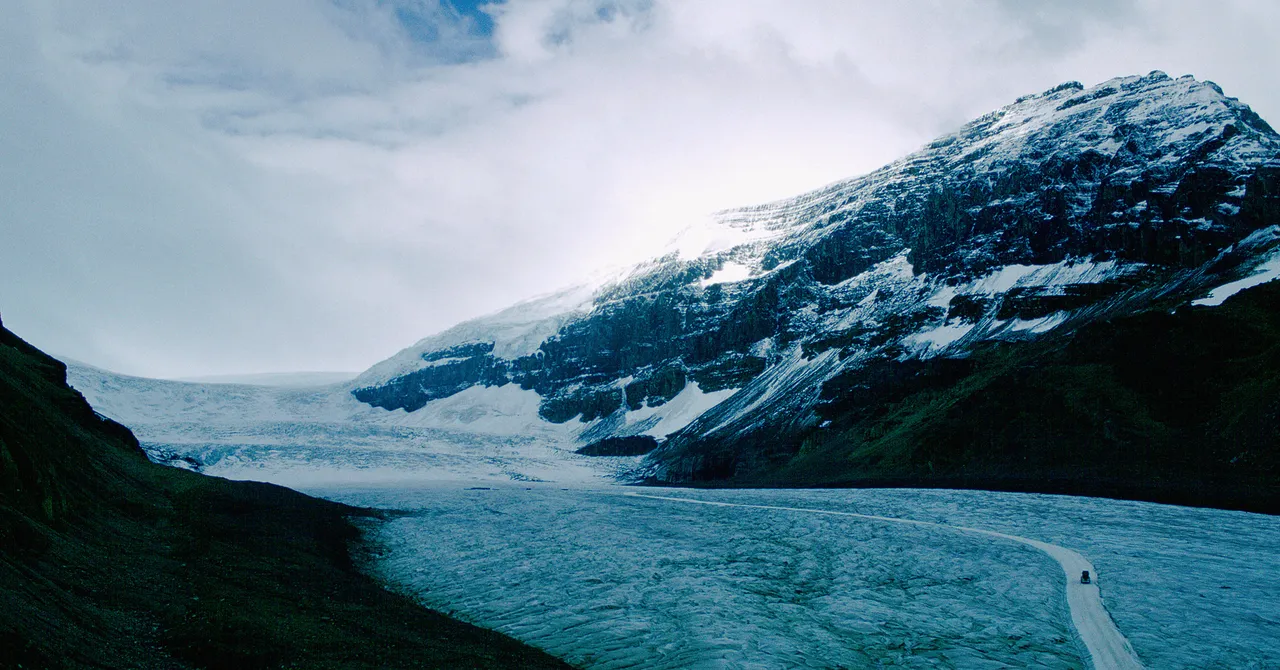
Barnes Ice Cap Grew for 2,000 Years Before Modern Retreat
Dead moss preserved beneath the Barnes Ice Cap is helping scientists reconstruct how the ice moved across the landscape—and offers new evidence of long-term climate change.
How Moss Recorded the Ice Cap’s Expansion
“After the ice cap retreated, the moss eventually colonized this newly exposed land,” says Nicholas Young, a paleoclimatologist at Columbia University’s Lamont-Doherty Earth Observatory and lead author of the new paper.
“These mosses are living there and things are normal, but eventually the ice cap starts to re-expand. The ice covers the moss and kills it.” Traces of the dead moss remained preserved on newly exposed land, allowing Young and his team to piece together a timeline of the ice cap’s movement.
Using these records, Young and his co-authors estimate that the glacier began expanding again about 2,000 years ago. The finding could signal the beginning of a new ice age.
Modern Retreat Reversed 2,000 Years of Expansion
That expansion changed course in the 1960s, when the ice sheet began to shrink again—an occurrence that is not consistent with the start of another ice age. Researchers examined historic aerial photographs showing the ice reversing course and retreating significantly from its newer edge.
The edge of the Barnes Ice Cap has retreated by an average of 4 meters per year since the 1980s. The retreat coincides with a rapid increase in carbon emissions and ice loss around the world. The Barnes Ice Cap is a particularly striking example because it had been expanding before the 1960s.
“The retreat of this modern glacier has reversed 2,000 years of net expansion, which is a significant chunk of time,” Young says.
Scientists Say More Global Comparisons Are Needed
Meredith Kelly, a professor of earth sciences at Dartmouth College, described the study’s data as “amazing” and said it revealed “a clear pattern of what the ice sheet was doing.” However, Kelly said she would like to compare some of the findings with data from other sites around the world to develop a more complete picture of how Earth was moving toward a period of potential ice growth before human-caused warming began.
Although scientists have a general understanding of what causes the onset of potential ice growth, the exact mechanisms still require further research.
What the Findings Mean for Climate Change
Young said the evidence presented in the paper could also test a decades-old claim made by climate change deniers that evidence of climate change is a hoax.
In the early 1970s, scientists met at a conference at Brown University to discuss hypotheses about when the next ice age would occur. Young says two of the paper’s co-authors attended the meeting. The scientists concluded that an ice age was imminent and sent a warning letter to President Richard Nixon.
“I think this study actually helps to show that scientists were right about the progression of ice ages,” Young said.
Media coverage of the conference and the cold spell of the 1970s have long been cited by climate change deniers as “proof” that global warming is not happening. The new research, however, adds to the evidence that natural ice growth and modern, human-driven warming can occur at different times—and that recent glacier retreat is a significant reversal of a much longer period of expansion.
Source: www.wired.com