


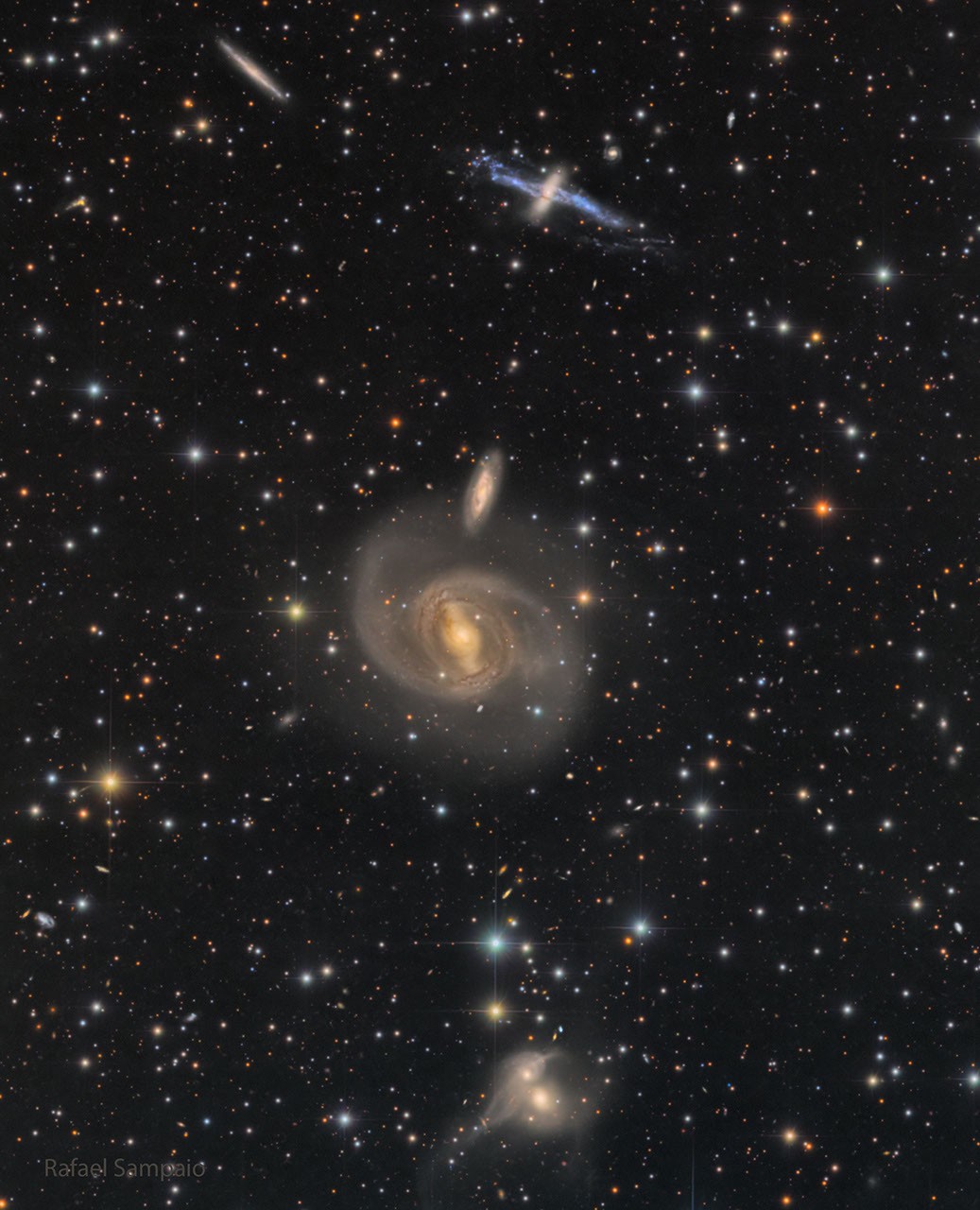
Explanation: These three pairs of galaxies showcase different stages of galactic interaction. The two galaxies at the top appear to be separate and not currently interacting. However, the upper galaxy with the distinctive blue stripe, NGC 4650A, is a polar ring galaxy. Its unusual structure may have formed after a past galaxy collision. The middle pair, shown in the featured galaxy image, may look as though they are interacting through gravity. However, their relative velocities suggest that a close interaction is unlikely. The larger galaxy, NGC 4650, is a spiral galaxy featuring a bright central bar of stars. At the bottom, the galaxies NGC 4622A and NGC 4622B are actively interacting. In roughly a billion years, they may merge into a single galaxy. All three galaxy pairs are likely members of the larger Centaurus Galaxy Cluster, offering a fascinating look at galaxy formation, collisions, and gravitational interactions.
Tomorrow’s picture: many moons
Source: science.nasa.gov