


This story was produced with the help of Injustice Watch, a Chicago nonprofit newsroom focused on the court system.
Rolando Pérez Samayoa came to the United States in 2023 seeking safety. He said he fled violence in Mexico and initially planned to work and build a life in Alabama. Instead, he was told that Illinois offered protections for immigrants. “There’s some kind of law there,” he said. “It’s supposed to be a sanctuary.”
Samayoa was referring to Illinois’ 2017 TRUST Act, a law designed to limit local law enforcement cooperation with federal immigration and deportation efforts. He traveled to Southern Illinois, found work cleaning a factory and later faced a drunk-driving charge in Marion County. Court records confirm that he attended a hearing after his arrest in October.
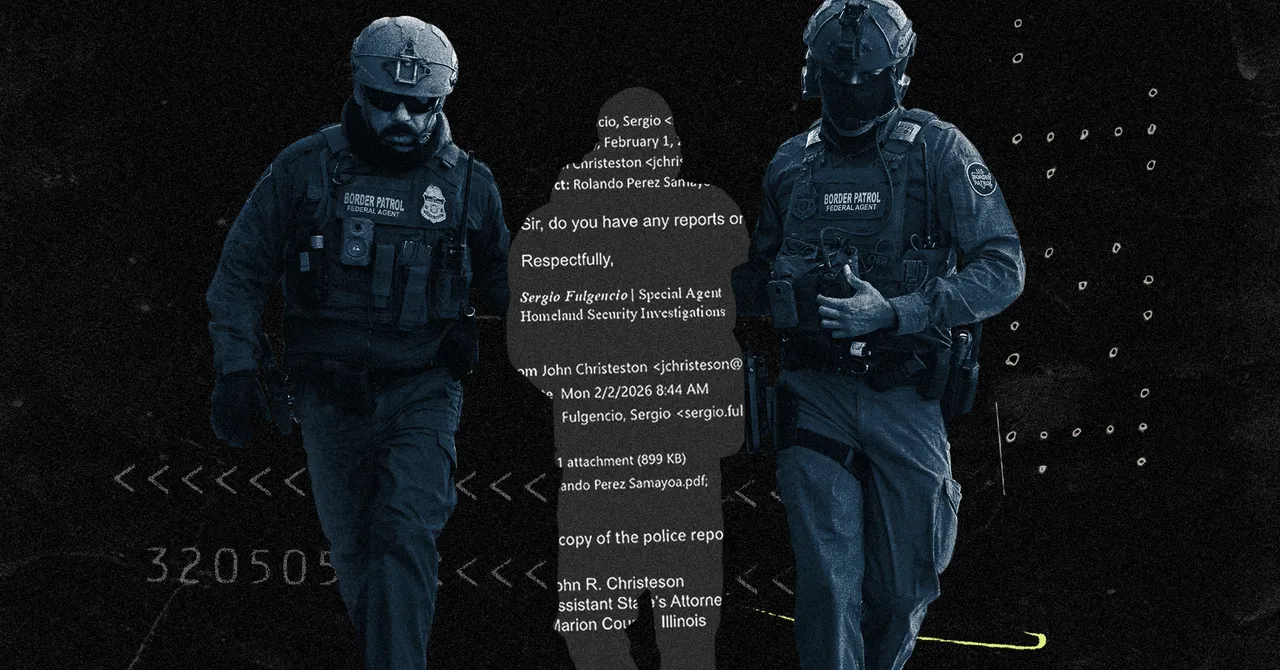
In late January, John Christison, the assistant state’s attorney handling the case, emailed Homeland Security investigators, a division of U.S. Immigration and Customs Enforcement. His message included Samayoa’s date of birth, upcoming court date and home address in Centralia, Illinois.
“Okay, we’ll take care of it, thank you,” federal employee Sergio Fulgencio replied minutes later. Two days afterward, Fulgencio asked for additional information: “Do you have any reports on this man?”
Christison responded by sending the police report and related traffic tickets. Three weeks later, federal agents arrested Samayoa outside his home. His 17-year-old son was also taken into custody.
The email exchange is among dozens reviewed by Injustice Watch. Together, the records reveal a pattern of cooperation between Illinois county prosecutors and federal immigration authorities during the first 15 months of President Donald Trump’s second term.
In at least one of Illinois’ 102 counties, the state’s attorney’s office provided federal immigration officials with sensitive personal information about people facing criminal prosecution. The disclosures occurred without criminal warrants, public reporting, legislative oversight or a clear explanation of how frequently the practice occurred or how many people were affected.
In some instances, prosecutors proactively shared information. In others, they simply responded when Homeland Security officials called. The cooperation involved employees across the political spectrum, from paralegals to elected state’s attorneys, and often took place without the knowledge of defendants or their lawyers.
The Illinois TRUST Act prohibits police and other local agencies from assisting federal immigration authorities with deportations unless agents present a federal criminal warrant. However, the law does not clearly state whether prosecutors and their staff are subject to the same restrictions.
Since President Trump returned to office, his administration has intensified immigration enforcement, detention and deportation efforts. ICE activity has become increasingly visible in workplaces, front yards and courthouses. Illinois, New York and more than a dozen other states have adopted laws limiting cooperation between local law enforcement agencies and federal immigration authorities. But the extent of prosecutorial cooperation in Illinois—one of the nation’s largest sanctuary states—raises questions about how far those protections reach.
Injustice Watch filed Freedom of Information Act requests with all 102 Illinois state’s attorney’s offices and reviewed federal and circuit court records. The documents, totaling more than 5,000 pages, show that prosecutors shared more than names. Emails included photographs, home addresses, court appearances, release dates and times—information that could help ICE locate and arrest defendants.
Eleven offices did not respond to the requests. Some records were produced only after Injustice Watch filed FOIA lawsuits, while other cases remain in litigation.
Written records may represent only part of the communication between prosecutors and immigration officials. Messages containing phrases such as “Thank you for taking my call” suggest that some conversations were conducted by phone and were not documented in email.
The cooperation was not inevitable. Dozens of Illinois county prosecutors operating under the same federal pressure reported having no record of contact with ICE. At least one prosecutor’s office actively chose to keep federal immigration officials out, suggesting that cooperation is a matter of local policy and discretion.
That choice had serious consequences. People reported to ICE were detained and deported, while families were separated.
Source: www.wired.com