


Close Menu
HitechubHitechub
    What's Hot
    Science

    Unlock Your Potential: Science-Backed Secrets to Mastering Any Skill

    Science

    How Parenting Boosts Brain Health for Moms and Dads: Long-Term Benefits

    Wheels

    (Video) The smallest Honda gets a new edition – motocompacto

    Important Pages:
    • About Us
    • Privacy Policy
    • Terms & Conditions
    Facebook X (Twitter) Instagram Pinterest
    Facebook X (Twitter) Instagram
    HitechubHitechub
    Thursday, June 25
    • Technology
      1. AI
      2. Gadgets
      3. View All

      This is the most popular CEO in the world

      Sectors in which “Chat-GPT” is most often used

      AI Pioneer Expresses Concern About Potential for AI to Surpass Humanity

      Artificial intelligence has begun to “swallow” professions

      What’s new in Android 14

      Europeans have about 700 million old mobile phones in their drawers

      Here’s how you can tell if your phone is being tapped

      “Sneaker X” – computer case in the shape of a sneaker

      Russian Gamers Unite to Prevent Nuclear War: Join the Fight Online

      Challenges of Space Travel: Why Journeying to Space is So Difficult

      NASA Astronaut Casts Historic Vote from Space

      Discover the Future of Comfort: What If You Could Wear a Chair?

    • Science
      1. Space
      2. Wheels
      3. View All

      Galaxies in the universe are growing more slowly than they should

      “Espace” presented the new lander “Apex 1.0”

      The largest asteroid sample ever collected has arrived on Earth

      (VIDEO) Incredible flight of the Parker Solar Probe

      Toyota wants to make a new generation battery with a range of up to 1,200 km

      Meet Toyota’s lunar “baby” that could make exploring the Moon easier

      Microlino – Is this the perfect city car?

      Alfa Romeo 4C gets an electric successor

      How Daily Bright Light Exposure Can Help Prevent Dementia

      Instant Stress Relief Techniques: Quick Tips for Finding Peace Instantly

      Discover the Top 17 Must-Read Science Books of 2026

      Ancient Philosophers’ Lost Writings Rediscovered from Unreadable Scrolls

    HitechubHitechub
    Home » Exploring the Surprising Genetic Diversity of Late Neanderthals
    Science

    Exploring the Surprising Genetic Diversity of Late Neanderthals

    Share Facebook Twitter Pinterest WhatsApp
    Share
    Facebook Twitter LinkedIn Pinterest WhatsApp

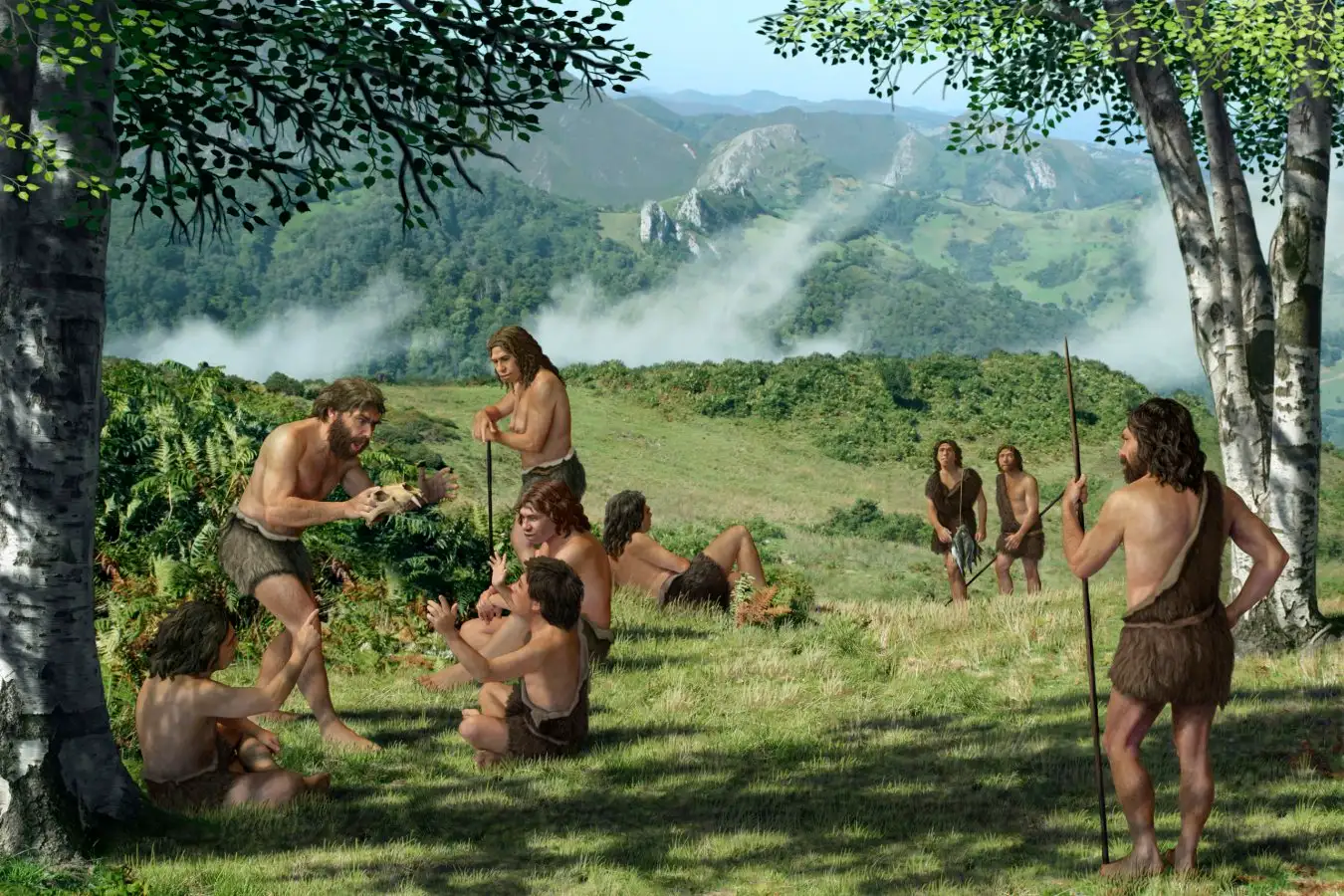
    Ancient DNA Reveals Neanderthal Social Structures

    Mauricio Anton/Science Photo Library

    The last surviving Neanderthals in northwestern Europe may have lived in genetically diverse and closely interconnected groups, implying that inbreeding was not the primary cause of Neanderthal extinction approximately 40,000 years ago.

    Research on Neanderthal genetics (Homo neanderthalensis) faces challenges due to a scarcity of well-preserved specimens for DNA analysis, with only four high-quality genomes available; three of these are from the fringes of the Siberian geographic range. These limitations mean that our understanding of their social structures is somewhat constrained. However, existing genomic data indicates that as Neanderthal populations dwindled, they may have become more inbred, potentially contributing to their decline.

    Alba Bossams Mesa and colleagues at the Max Planck Institute for Evolutionary Anthropology in Leipzig, Germany, sequenced DNA from 27 Neanderthal remains recovered from seven sites in Belgium and two in France, dating from 52,500 to around 40,000 years ago. One high-quality genome reveals that a woman was cannibalized in Belgium’s Goyet Cave about 45,000 years ago.

    “These newly analyzed Neanderthal genomes are pivotal as they represent some of the latest known Neanderthals, offering fresh insights into their genetic diversity at the time of their extinction,” states Chris Stringer from the Natural History Museum in London.

    Bossams Mesa and his team determined that these 27 remains corresponded to at least 11 different Neanderthals. Although all Neanderthals of this era were less genetically diverse than modern humans, there was no indication of an increased burden of harmful mutations or reduced genetic diversity.

    This finding contrasts with other Neanderthal populations, such as those from the Altai region in Siberia, which displayed evidence of inbreeding. “These northwestern Neanderthals are closer to the time of their extinction and exhibit more genetic diversity than their eastern counterparts,” notes Bossams Mesa.

    Genetic analyses further revealed that these Neanderthals were more closely related to each other compared to later Neanderthal groups in Croatia and southern Russia, diverging from a common ancestor approximately 54,000 years ago.

    Neanderthal skeletal remains from Spy Cave in Belgium

    Neanderthal Skeletal Remains from Spy Cave in Belgium

    P. Semal, Royal Belgian Institute of Natural Sciences, CC-BY 4.0

    In broader terms, the Altai Neanderthals may not reflect the overall diversity of their species. Instead, the northwestern Neanderthals likely formed part of a larger, interconnected population, as noted by Bossams Mesa. Life and population histories among Neanderthals probably varied significantly across regions during periods marked by ecological and demographic transitions.

    Modern humans appeared in Europe roughly 47,000 years ago and would have coexisted with these Neanderthal groups for numerous generations. Interestingly, the genomic analysis of these European Neanderthals shows no traces of modern human DNA, despite clear evidence of interbreeding occurring in other regions.

    “This situation raises intriguing questions about the dynamics between Neanderthals and modern humans, which remain partially understood,” remarks Tarshika Vimala from the University of California, Berkeley.

    Bossams Mesa suggests several theories could elucidate this finding. One possibility is that interbreeding primarily transpired in another area, such as the Levant. Alternatively, there may have been social factors or genetic incompatibilities that restricted the survival of hybrids within Neanderthal populations.

    Stringer posits that the patterns of gene flow into modern human groups support his theory that late Neanderthals were losing reproductive viability to Homo sapiens, potentially leading to their extinction.

    In a thought-provoking conclusion, Bossams Mesa suggests that the legacy of Neanderthals should not be regarded simply as extinction; “Even if traces of them remain in our DNA, they haven’t entirely disappeared,” she asserts.

    Topics:

    Source: www.newscientist.com

    Share. Facebook Twitter Pinterest LinkedIn WhatsApp
    Previous ArticleUnexplained Phenomenon: Mysterious 26-Second Earth’s Rhythm Leaves Scientists Puzzled
    Next Article Why You Might Be Wrong About Petting Your Cat: Discover the Right Techniques!

    Related Posts

    Science

    How Daily Bright Light Exposure Can Help Prevent Dementia

    Science

    Instant Stress Relief Techniques: Quick Tips for Finding Peace Instantly

    Science

    Discover the Top 17 Must-Read Science Books of 2026

    Science

    Ancient Philosophers’ Lost Writings Rediscovered from Unreadable Scrolls

    Science

    How Phages Could Enhance Vaccine Immunity While Targeting Cancer Cells

    Science

    Record-Breaking IBM Chip Achieves 100 Billion Transistors Using Innovative Technology

    Science

    Revolutionary Method for Detecting Volcanic Eruptions | Sciworthy Insights

    Science

    Study Finds Modified Mediterranean Diet Boosts Healthy Lifespan in Mice

    Add A Comment
    Leave A Reply Cancel Reply

    Stay In Touch
    • Facebook
    • Twitter
    • Instagram
    • Pinterest
    Top Picks
    Science

    As Africa Splits in Two, Magma Surge Accelerates – Insights from Sciworthy

    The African continent is divided by tectonic plates in the heart of Ethiopia. Recent investigations…

    The largest asteroid sample ever collected has arrived on Earth

    Arrest Made in Rape and Murder Case of 40-Year-Old Woman Linked to Forensic Genealogy Investigation

    Boost Your Mood Daily with a Glass of Fruit Juice: Study Insights

    Unconventional Yet Effective Techniques to Overcome Fear of Flying: Insights from Psychologists

    Most Popular
    Science

    New Scientist Recommends ‘Organ Speak’ by Julia Enders: An In-Depth Exploration of Our Body’s Organs

    Science

    Promising Results for Experimental Fentanyl Vaccine in Early-Stage Clinical Trials

    Categories
    • AI (13)
    • Gadgets (10)
    • Science (359)
    • Space (9)
    • Technology (37)
    • Wheels (9)
    Our Picks
    Science

    Discover the Truth: ‘Everyone is Lying to You for Money’ – An Essential Cryptocurrency Exposé

    Science

    New discoveries in physics suggest that we are living in a simulation

    © 2026 Hitechub.
    • Home
    • About Us
    • Privacy Policy
    • Terms & Conditions

    Type above and press Enter to search. Press Esc to cancel.

    We are using cookies to give you the best experience on our website.

    You can find out more about which cookies we are using or switch them off in .

    Ad Blocker Enabled!
    Ad Blocker Enabled!
    Our website is made possible by displaying online advertisements to our visitors. Please support us by disabling your Ad Blocker.
    Go to mobile version
    Hitechub
    Powered by  GDPR Cookie Compliance
    Privacy Overview

    This website uses cookies so that we can provide you with the best user experience possible. Cookie information is stored in your browser and performs functions such as recognising you when you return to our website and helping our team to understand which sections of the website you find most interesting and useful.

    Strictly Necessary Cookies

    Strictly Necessary Cookie should be enabled at all times so that we can save your preferences for cookie settings.