


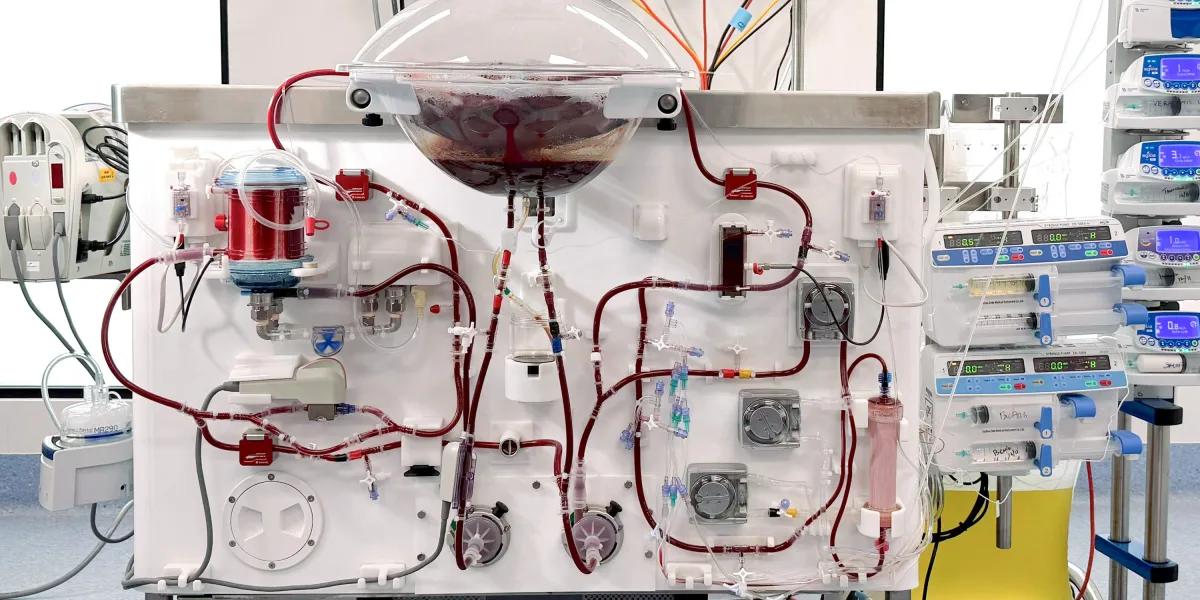
Researchers are extending the time human organs can remain viable outside the body, with automated perfusion systems helping a liver survive for seven weeks at approximately normal body temperature. The work builds on earlier liver-preservation records and could move transplantation closer to what the researchers describe as “indefinite liver preservation,” although the latest study is still awaiting formal publication.
Automated systems extend liver preservation
Normothermia refers to a body temperature of approximately 37 °C. The previous record for keeping an internal organ alive outside the body was set several years ago in Switzerland. That organ was also a liver, but it survived for about two weeks.
Most organs intended for transplantation can survive for only a few hours in special ice containers, requiring rapid transport to their destination. Over the past decade, however, surgeons have increasingly used perfusion systems that pump warm or cold liquid through organs. These systems can potentially double the time available before transplantation.
Pulitano said the key to breaking the record was automating the systems used to keep the organ functioning. At a conference in Switzerland earlier this year, a research team in Sydney reported that it had perfused 55 human livers sequentially. Some livers were connected to systems requiring manual adjustment, while those connected to an automated system survived for seven weeks. The average survival time tripled to about four weeks.
Perfusion supports organs outside the body
Perfusion already allows doctors to restart the hearts of deceased people and keep them beating outside the body. Paulo Martins, a transplant physician at the University of Oklahoma, said about half of transplanted kidneys are now perfused, although the process can add $100,000 to transplant costs.
Although the study is awaiting formal publication, the ultimate goal is what Pulitano and colleagues call “indefinite liver preservation.”
Organs may begin repairing themselves
Scientists have identified potential medical benefits from keeping organs on life support longer than normal. Perfused organs apparently begin repairing themselves, becoming stronger within a day or so. That finding led the Swiss team to transplant a damaged liver in 2022 after perfusion continued for three days.
Waldemar Hoffmann, CEO and co-founder of Apersys, a startup created to commercialize the technology, said this was the longest period an internal organ had remained outside the body before a successful transplant.
Source: www.technologyreview.com